
Digital multimeters (DMMs) have become the cornerstone of modern electrical and electronic diagnostics. Whether you are a hobbyist, a student, or a seasoned professional, understanding the practical advantages of digital multimeters can dramatically improve your troubleshooting skills and accuracy. The rapid shift from analog to digital technology has turned DMMs into indispensable tools, offering enhanced precision, greater functionality, and a user-friendly experience.
If you’ve ever wondered why digital multimeters have become the go-to device for both basic and advanced measurement tasks, this guide is for you. We’ll explore their key benefits, practical features, and real-world examples to provide a comprehensive, beginner-friendly, and expert-level understanding.
You’ll not only learn what sets DMMs apart, but also how to harness their full potential for your projects and professional work.
Key Takeaways
- Digital multimeters provide higher accuracy and reliability compared to analog models.
- Their versatility allows for measurement of voltage, current, resistance, and more, often in a single device.
- Advanced features like auto-ranging and data logging make them suitable for both beginners and experts.
- Portability and safety features enhance usability in a wide range of environments.
- Integration with modern technology, such as connectivity and PC interfacing, brings additional value to advanced users.
Credit: www.learningaboutelectronics.com
The Basics Of Digital Multimeters
Understanding digital multimeters starts with grasping their fundamental functions and how they compare to traditional analog meters. This section introduces the essential concepts and lays the groundwork for deeper insights throughout the article.
What Is A Digital Multimeter?
A digital multimeter is an electronic measuring instrument that combines several measurement functions in one unit. At its core, a DMM measures:
- Voltage (Volts)
- Current (Amperes)
- Resistance (Ohms)
Most models extend these capabilities to include measurements such as:
- Capacitance
- Frequency
- Temperature
- Continuity and diode testing
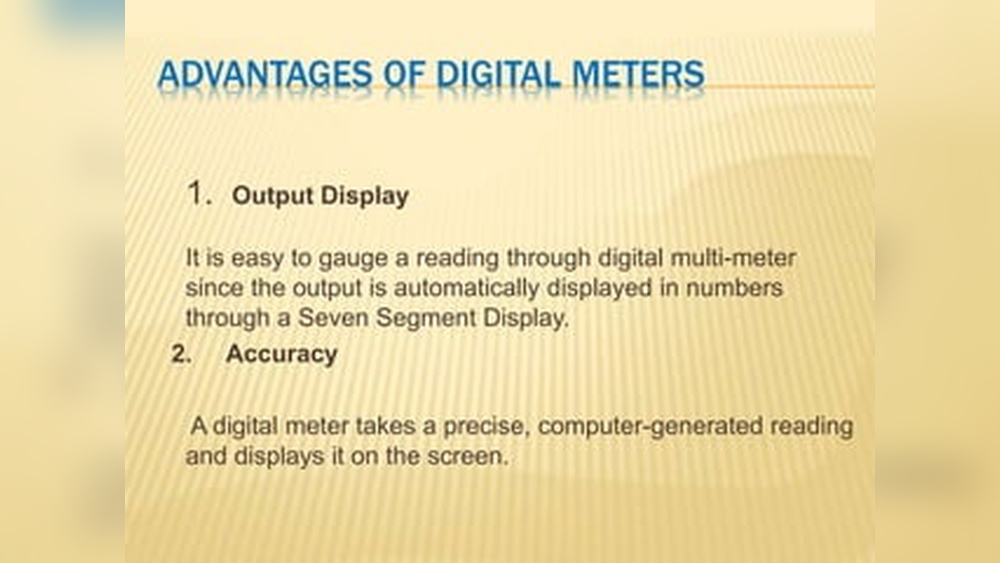
Unlike analog meters, which use a moving needle to display readings, digital multimeters present results on a digital display, typically an LCD or LED.
How Does A Digital Multimeter Work?
Digital multimeters use an analog-to-digital converter (ADC) to transform the analog signals from electrical circuits into digital information that can be displayed numerically. This conversion process not only increases measurement accuracy but also enables the device to perform advanced calculations and display results in real time.
Essential Components
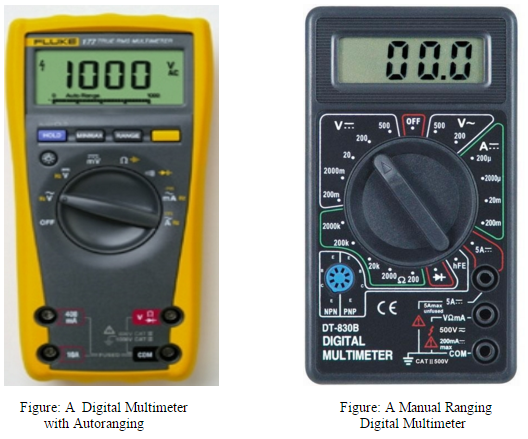
The basic components of a typical DMM include:
- Display screen: Shows numerical measurements and units.
- Rotary switch or buttons: Allows users to select the measurement function.
- Input jacks: Where test leads are inserted.
- Test leads: Probes that connect the DMM to the circuit or component being measured.
Analog Vs. Digital Multimeters: A Quick Comparison
To highlight the advantages of DMMs, it’s important to compare them to traditional analog multimeters.
| Feature | Analog Multimeter | Digital Multimeter |
|---|---|---|
| Display | Moving needle | Digital LCD/LED |
| Accuracy | Lower (parallax errors possible) | High (precise digital readout) |
| Functionality | Basic (V, A, Ω) | Advanced (capacitance, frequency, temperature, etc.) |
| Ease of Use | Requires interpretation | User-friendly |
| Portability | Generally bulkier | Compact and lightweight |
| Safety Features | Limited | Advanced (fused, alerts, auto-off) |

Credit: uk.rs-online.com
Superior Accuracy And Reliability
One of the most compelling advantages of digital multimeters is their exceptional accuracy and reliability. Here, we’ll discuss what this means in practical terms and how it benefits users at every skill level.
Precision Measurement
Digital multimeters offer higher resolution and accuracy than analog counterparts. Most DMMs provide readings with up to four decimal places, making them ideal for tasks that require fine measurement, such as electronics testing and laboratory work.
- Example: Measuring voltage drops across sensitive electronic components demands accuracy within a few millivolts, which digital multimeters can easily provide.
Elimination Of Human Error
Analog meters require users to visually align a needle with a scale, a process prone to parallax errors. DMMs eliminate this issue with clear, digital readouts, reducing the risk of misinterpretation.
- Pro Tip: Always check the resolution (number of display digits) when choosing a DMM for precision work.
Stability And Consistency
Digital multimeters feature automatic zeroing and are less susceptible to drift over time, ensuring consistent results even after repeated use. Their internal calibration routines further enhance long-term reliability.
Data-driven Comparison
Let’s look at the typical accuracy specifications of entry-level and professional DMMs.
| Model Type | Accuracy (DC Voltage) | Resolution |
|---|---|---|
| Entry-Level DMM | ±0.5% of reading + 2 digits | 0.1 mV |
| Professional DMM | ±0.025% of reading + 1 digit | 0.01 mV |
| Analog Multimeter | ±2.0% of full scale | Limited by scale division |
Real-world Example: Fault Diagnosis In Solar Panels
A solar installation technician uses a DMM to check the output voltage of photovoltaic panels. The high precision ensures that even minor faults, such as partial shading or micro-cracks, are detected early, preventing power losses and costly repairs.
Versatility And Multi-functionality
Digital multimeters are celebrated for their wide range of functions, consolidating several meters into a single, portable device. Let’s explore how this versatility benefits both beginners and experts.
Wide Range Of Measurement Functions
A typical DMM can measure:
- AC/DC voltage
- AC/DC current
- Resistance
- Continuity
- Diode testing
- Capacitance
- Frequency
- Temperature (with thermocouple attachment)
This extensive functionality reduces the need to own or carry multiple single-purpose instruments.
Auto-ranging Capability
Many modern digital multimeters are auto-ranging, they automatically select the best measurement range for the detected signal. This feature simplifies operation for beginners and saves time for professionals.
- Example: When measuring an unknown voltage, the DMM will adjust its range to display the most accurate reading without user intervention.
Additional Features For Advanced Users
For advanced applications, some DMMs include:
- Data logging: Store measurement values over time for analysis.
- True RMS (Root Mean Square) measurement: Accurately measures non-sinusoidal AC signals, essential in industrial environments.
- Hold functions: Temporarily freeze the displayed value to record hard-to-reach measurements.
Real-world Example: Field Service Engineer
A field service engineer troubleshooting an HVAC system relies on a DMM to measure current, voltage, resistance, and capacitance in various components. The ability to switch between functions instantly streamlines the diagnostic process and minimizes equipment downtime.
Comparison Table: Dmm Functions At A Glance
| Measurement Function | Entry-Level DMM | Advanced DMM |
|---|---|---|
| Voltage (AC/DC) | Yes | Yes |
| Current (AC/DC) | Yes | Yes |
| Resistance | Yes | Yes |
| Continuity/Diode Test | Yes | Yes |
| Capacitance | No | Yes |
| Frequency | No | Yes |
| Temperature | No | Yes |
| Data Logging | No | Yes |

Credit: www.teachmint.com
User-friendly Design And Operation
Digital multimeters are engineered with user experience in mind, making them accessible to beginners while offering advanced options for seasoned professionals.
Intuitive Interface
Most DMMs feature a simple rotary selector and labeled buttons, making it easy for users to select the desired function. Backlit displays and large digits further enhance readability, even in dim environments.
- Example: A student in an electronics lab can quickly switch between voltage and resistance measurements with a single twist of the dial.
Safety Features
Safety is paramount in electrical measurement. DMMs commonly include:
- Fused inputs: Protect against overloads.
- Non-contact voltage detection: Alerts users to live circuits without physical contact.
- Auto power-off: Extends battery life and prevents accidental damage.
Clear Visual Indicators
Digital displays often incorporate bar graphs, icons, and audible beeps to indicate continuity, polarity, and errors. This feedback helps prevent mistakes and increases confidence, especially for beginners.
Portability And Ergonomics
Modern DMMs are lightweight and compact, often fitting comfortably in a pocket or tool pouch. Rubberized casings and ergonomic grips make them suitable for extended use in the field.
My Experience: Learning With A Dmm
When I first started in electronics, the straightforward design of my DMM gave me the confidence to experiment without fear of damaging equipment or misreading values. The clear, instant feedback made learning both safe and enjoyable.
Advanced Measurement Capabilities
Beyond the basics, digital multimeters are equipped with features that cater to advanced users and specialized applications. These functions make DMMs valuable tools for research, industrial maintenance, and precision engineering.
True Rms Measurement
True RMS capability allows a DMM to accurately measure AC signals, even if the waveform is distorted or non-sinusoidal. This is crucial in environments with variable speed drives or electronic ballasts.
- Pro Tip: Always use a true RMS meter when working with complex AC loads to avoid inaccurate readings.
Data Logging And Connectivity
Many advanced DMMs offer data logging features, allowing you to record measurements over time. Some even include USB or wireless connectivity for transferring data to a PC or cloud-based system for further analysis.
- Example: An engineer troubleshooting intermittent faults in an industrial process can log voltage fluctuations over several hours and analyze patterns using specialized software.
Min/max/average Recording
The min/max/average functions capture transient events and fluctuations that may be missed during manual observation. This is especially useful in automotive diagnostics and environmental monitoring.
Remote Monitoring And Control
High-end DMMs may be integrated into a network, enabling remote monitoring and control. This is valuable in hazardous or hard-to-reach environments, such as substations or chemical plants.
Case Study: Automotive Diagnostics
An automotive technician uses a DMM with min/max recording and temperature measurement to diagnose a faulty alternator. The tool’s ability to log voltage changes during engine operation pinpoints the exact moment the alternator fails, saving time and reducing guesswork.
Safety And Durability
Digital multimeters are designed with safety and longevity in mind, making them reliable companions in demanding environments.
Overload Protection
Integrated fuses and circuit breakers shield both the user and the instrument from accidental overloads. This is critical when measuring high current circuits or troubleshooting unknown systems.
Category Ratings
DMMs are rated according to CAT (Category) safety standards, which define their suitability for different environments:
- CAT I: Electronic devices
- CAT II: Appliances, portable tools
- CAT III: Distribution panels, fixed installations
- CAT IV: Utility connections, outdoor lines
Always select a DMM with the appropriate rating for your application to ensure maximum safety.
Rugged Construction
Professional-grade DMMs feature impact-resistant housings, sealed buttons, and moisture protection. These enhancements protect the device from drops, dust, and harsh weather conditions.
Example: Electrician In Construction
An electrician working on a construction site benefits from a CAT III-rated, rugged DMM that withstands drops and exposure to dust. The added safety features provide peace of mind when measuring high-energy circuits.
Compliance With Global Standards
Reputable DMMs comply with international safety standards such as IEC 61010. Always look for third-party certification marks to verify compliance.
- For more on standards, visit the Wikipedia page on Digital Multimeters.
Cost-effectiveness And Value
While digital multimeters range in price, they consistently deliver excellent value by consolidating multiple instruments and offering long-term reliability.
Initial Investment Vs. Long-term Savings
Although professional DMMs may have a higher upfront cost, their accuracy, durability, and multi-functionality translate to lower maintenance and replacement expenses over time.
Reduced Need For Multiple Tools
A single DMM can replace several single-purpose meters, minimizing clutter and reducing the risk of lost or damaged tools.
Lower Training Costs
Beginner-friendly features and clear readouts reduce the learning curve, decreasing the need for extensive training and minimizing user errors.
Widespread Availability And Support
Digital multimeters are widely available, with extensive documentation, tutorials, and support communities. This makes it easy for users at all skill levels to get help when needed.
Example: Educational Institutions
Schools and training centers often choose DMMs because they simplify the teaching process and provide reliable results, facilitating hands-on learning for large groups of students.
Integration With Modern Technology
Digital multimeters continue to evolve, incorporating features that enhance connectivity and compatibility with modern digital systems.
Wireless And Bluetooth Connectivity
Some DMMs offer Bluetooth or Wi-Fi connectivity, enabling:
- Wireless data transfer to smartphones or tablets
- Real-time monitoring via mobile apps
- Cloud-based data storage and sharing
Pc Interfacing And Software Support
Advanced models include USB ports or RS-232 interfaces for direct connection to computers. This integration allows for:
- Automated testing and reporting
- Customizable data visualization
- Remote troubleshooting support
Compatibility With Iot And Automation
As the Internet of Things (IoT) expands, DMMs with networking capabilities can be integrated into automated diagnostic systems, streamlining maintenance in smart factories and laboratories.
Example: Industrial Automation Engineer
An industrial engineer uses a DMM with Ethernet connectivity to monitor multiple systems from a central control room. This real-time oversight reduces response times and helps maintain optimal production levels.
- Learn more about IoT integration in measurement devices from Fluke’s official blog.
Frequently Asked Questions
What Is The Difference Between Auto-ranging And Manual-ranging In Digital Multimeters?
Auto-ranging DMMs automatically select the best measurement range based on the input signal, making operation simpler and reducing the risk of incorrect range selection. Manual-ranging DMMs require the user to choose the appropriate range, which can be beneficial for experienced users who want more control, especially in specialized testing scenarios.
Can Digital Multimeters Measure Both Ac And Dc Signals?
Yes, most digital multimeters can measure both AC (alternating current) and DC (direct current) voltage and current. Always verify the specifications of your specific model to ensure it supports the measurements you need, and be sure to select the correct function on the dial before testing.
How Should I Maintain And Calibrate My Digital Multimeter For Long-term Accuracy?
To maintain accuracy, regularly check your DMM against a known reference (such as a voltage standard) and have it professionally calibrated at least once a year if you use it in critical applications. Keep the device clean, replace batteries as needed, and store it in a protective case to avoid damage from drops or moisture.
Why Is “true Rms” Important In A Digital Multimeter?
True RMS allows for accurate measurement of AC signals, regardless of their waveform shape. This is essential when dealing with electronic devices that produce non-sinusoidal waves, such as variable frequency drives or certain lighting systems. Non-True RMS meters may provide incorrect readings in these scenarios, potentially leading to misdiagnosis.
Are Digital Multimeters Safe For Beginners To Use On Household Circuits?
Digital multimeters are generally safe for beginners, provided they follow the manufacturer’s safety instructions. Always use a DMM with the appropriate CAT rating for household circuits (typically CAT II or CAT III), double-check your settings before testing, and start with voltage measurements before attempting current measurements to minimize risk.
Digital multimeters are at the heart of electrical and electronic diagnostics, offering a blend of precision, versatility, and user-friendly design that appeals to both beginners and experts. Their continuous evolution, incorporating advanced safety features, connectivity, and integration with digital platforms, ensures they remain relevant and valuable tools in every toolkit.
Whether you’re learning the basics or pushing the boundaries in industrial automation, a quality DMM is a smart investment for accurate, reliable measurements and efficient problem-solving.