
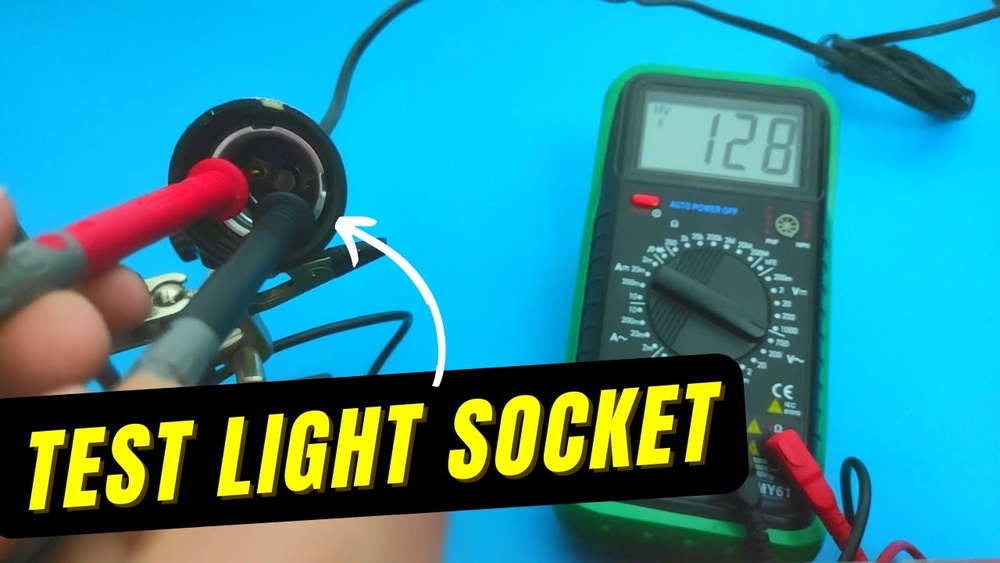
Can A Multimeter Be Used As A Test Light?
Diagnosing electrical issues in vehicles, appliances, or home circuits often comes down to using the right tools. Two of the most common tools for electrical testing are the multimeter and the test light. While both serve the fundamental purpose of checking for voltage and continuity, they operate differently and have distinct strengths and limitations. Many beginners wonder whether a multimeter can replace a test light, and professionals often debate their preferred tool for specific jobs.
This article explores whether a multimeter can truly be used as a test light, how they differ, when each tool is appropriate, and how to safely use a multimeter in place of a test light. From basic explanations for beginners to advanced guidance for professionals, you’ll find everything you need to make informed decisions in your electrical diagnostics.

Credit: www.youtube.com
Key Takeaways
- A multimeter can perform many functions of a test light, but there are important differences in sensitivity, safety, and application.
- Test lights are simple, quick, and effective for basic voltage presence checks, especially in automotive circuits.
- Multimeters offer advanced measurement capabilities such as voltage, current, resistance, and continuity, suitable for both AC and DC systems.
- Safety and accuracy vary: Multimeters are generally safer and more precise, while test lights can potentially damage sensitive electronics.
- Choosing between them depends on the task: Understanding each tool’s limitations ensures better diagnostics and prevents costly mistakes.
- Proper usage techniques and precautions are essential, especially when substituting a multimeter for a test light.

Credit: www.youtube.com
Understanding Multimeters And Test Lights
Accurate electrical diagnostics rely on knowing your tools. Let’s break down what multimeters and test lights are, how they work, and their core differences.
What Is A Multimeter?
A multimeter is a versatile electronic measuring instrument that combines several functions in one unit. Most common types are digital multimeters (DMMs), which measure:
- Voltage (AC and DC)
- Current (Amperes)
- Resistance (Ohms)
- Continuity (audible or visual indication)
- Sometimes additional features like diode and capacitance testing
Multimeters are widely used in automotive, home, and industrial settings due to their precision and versatility.
What Is A Test Light?
A test light (or test lamp) is a simple device consisting of a probe, a wire lead, and a small light bulb or LED. When the probe contacts a voltage source and the ground wire is connected, the bulb lights up if voltage is present.
- Designed primarily for low-voltage DC circuits (such as automotive wiring)
- Simple, quick, and easy to use
- Visual indication only (no exact voltage reading)
Test lights are popular in automotive diagnostics for tasks like checking fuses or tracing voltage along a wire.
Key Differences
Here’s a side-by-side comparison of the main differences:
| Feature | Multimeter | Test Light |
|---|---|---|
| Measurement Type | Voltage, current, resistance, continuity, more | Voltage presence only |
| Display | Digital or analog readout | Light bulb or LED illuminates |
| Precision | High (exact measurement) | Low (presence/absence only) |
| Application | AC & DC circuits, electronics | Primarily DC (automotive) |
| Safety | High (does not load circuit) | Can load or damage sensitive circuits |
| Cost | Varies ($10, $500+) | Low ($5, $20) |

Credit: www.thespruce.com
How Does A Test Light Work?
Understanding the basic function of a test light helps clarify when and why it’s used, and its limitations compared to a multimeter.
Basic Principle
A test light is essentially a simple circuit. When you touch the probe to a power source and the alligator clip to a ground, current flows through the bulb. If voltage is present, the bulb lights up.
- No voltage = No light
- Voltage present = Light illuminates
Types Of Test Lights
- Incandescent Bulb Test Lights: Use a small filament bulb; draws more current, may not work on very low voltage or sensitive circuits.
- LED Test Lights: Lower current draw, safer for modern electronics, brighter and longer-lasting.
- High-Voltage Test Lights: Designed for household AC circuits, but rarely used today due to safety concerns.
Common Uses
- Checking for voltage at fuses, connectors, or wires in automotive wiring
- Verifying ground connections
- Testing simple switches
Limitations
- Cannot measure voltage level, only presence
- Can damage sensitive electronics (especially older incandescent types)
- Limited to DC circuits (unless rated for AC)
Using A Multimeter As A Test Light: Beginner’s Guide
For beginners, the idea of using a multimeter as a test light might seem intimidating. However, with a few simple steps, you can safely check for voltage presence in most circuits.
Step-by-step Guide
- Set the Multimeter to Voltage Mode
- For automotive or DC circuits, set to DC volts (V⎓).
- For home or AC circuits, set to AC volts (V~).
- Insert the Probes Correctly
- Black probe in the “COM” (common/ground) port.
- Red probe in the voltage (VΩmA) port.
- Touch the Probes
- Black probe to ground or negative terminal.
- Red probe to the point you want to test.
- Read the Display
- If voltage is present, you’ll see the number on the screen.
- If not, it will show zero (or very close to zero).
Pro Tip: Always start with the highest voltage range if unsure. For example, if testing a car’s 12V circuit, set to 20V DC range.
Advantages For Beginners
- No risk of overloading the circuit (multimeters draw almost no current).
- Exact voltage reading helps with troubleshooting.
- Continuity and resistance modes add diagnostic power beyond a test light.
Example: Testing A Car Fuse
Suppose your car’s radio isn’t working. To check if the fuse is blown:
- Turn the ignition to “on.”
- Set the multimeter to DC volts (20V range).
- Place the black probe on a metal ground (like a door hinge).
- Touch the red probe to both sides of the fuse.
- If you see ~12V on both sides, the fuse is good. Zero volts on one side means the fuse is blown.
Common Beginner Mistakes
- Wrong mode selection (e.g., using AC volts on a DC system)
- Probes in the wrong ports
- Not checking the battery in the multimeter
Advanced Guide: Multimeter As A Diagnostic Test Light
For advanced users, a multimeter offers far more than a simple test light. Understanding its capabilities allows for in-depth diagnostics and safer troubleshooting.
Measuring Voltage Drop
Unlike a test light, a multimeter can measure voltage drop across connections, wires, or switches, critical for diagnosing resistance issues and poor connections.
- Place probes on either side of the component or wire.
- If you see more than a small drop (e.g., >0.2V in a 12V circuit), there may be resistance due to corrosion or a failing connector.
Simulating Test Light Load
A test light draws current, which can reveal “false positives” a multimeter might miss (e.g., a tiny wire break that passes voltage but not current). Advanced users can simulate this by:
- Using a load resistor across the probes to mimic test light current draw.
- Observing if voltage drops significantly under load, indicating a bad connection.
Diagnosing Modern Electronics
Modern automotive and electronic systems often use low-current, computer-controlled circuits. Test lights, especially incandescent types, can trigger faults or even damage control modules. A multimeter’s high input impedance avoids this risk.
Warning: Never use an incandescent test light on airbag, ECU, or sensor circuits, use a multimeter.
Combining Continuity And Voltage Testing
- Use continuity mode to check if a wire or switch is conducting.
- Use voltage mode to verify power presence.
- Combine both for thorough troubleshooting (e.g., check ground continuity, then check for voltage at the load).
Advanced Example: Diagnosing A Door Lock Circuit
A car’s power door lock isn’t working. Here’s an advanced diagnostic sequence:
- Check fuse voltage (as above).
- With the lock switch pressed, measure voltage at the actuator plug.
- If voltage is present but the lock doesn’t move, switch to continuity mode and check the ground path.
- If continuity fails, trace the wire for breaks.
This systematic approach is only possible with a multimeter, not a test light.
Real-world Examples And Case Studies
Seeing these tools in action brings their differences into focus. Here are three scenarios from automotive and home diagnostics.
Example 1: Automotive Headlight Troubleshooting
A car’s headlight doesn’t work. Using a test light, you probe the headlight connector, no light. You check the fuse, and it lights up. The issue seems to be between the fuse and the headlight.
- Test light: Fast for voltage presence, but cannot tell you if there’s a voltage drop due to a corroded connector.
- Multimeter: Measures exact voltage at the headlight plug. If it reads less than 12V, you know there’s high resistance somewhere.
Example 2: Diagnosing A Home Outlet
A wall outlet isn’t powering devices. A test light (if rated for AC) can show if voltage is present, but it won’t tell you if the voltage is low (e. g. , 80V instead of 120V).
- Multimeter: Reads precise voltage, allowing you to identify under-voltage problems, which often signal wiring issues.
Example 3: Checking A Ground Connection
You suspect a poor ground in an automotive circuit. A test light can show ground presence, but not quality.
- Multimeter: In voltage mode, check from the suspected ground to battery negative while the circuit is under load. Any voltage above 0.2V indicates a bad ground.
Safety Considerations And Best Practices
Electrical testing involves risk, especially for beginners. Following safety protocols ensures your diagnostics are effective and hazard-free.
Safe Multimeter Usage
- Always check meter settings before connecting to a circuit.
- Start at the highest voltage range if unsure.
- Inspect probes and leads for damage.
- Never use the current (amperes) setting to check voltage, it can blow the meter fuse or cause a short.
Test Light Hazards
- Incandescent test lights draw current, which can damage sensitive electronics.
- Never use a test light on airbag or ECU circuits.
- LED test lights are safer for modern electronics, but still check manufacturer recommendations.
General Precautions
- Disconnect power (when possible) before probing unknown circuits.
- Wear eye protection and avoid loose clothing near electrical work.
- Consult wiring diagrams to avoid accidental shorts.
When Not To Substitute
- Never use a test light where a multimeter is recommended (e.g., computer circuits).
- For high-voltage AC circuits, always use a multimeter rated for the voltage.
Comparing Test Light And Multimeter Performance
To help you decide when to use each tool, here’s a practical performance comparison:
| Task | Test Light | Multimeter |
|---|---|---|
| Checking fuse voltage | Fast, easy | Fast, precise |
| Diagnosing voltage drop | Not possible | Possible, accurate |
| Testing ground quality | Basic | Detailed (quantifies voltage drop) |
| Working on sensitive electronics | Risky (may damage) | Safe |
| Speed for simple checks | Very fast | Fast, but requires setup |
| AC circuit testing | Rarely used | Common |
Pros And Cons: Multimeter Vs. Test Light
Summing up, let’s break down the main advantages and drawbacks:
| Tool | Pros | Cons |
|---|---|---|
| Multimeter |
|
|
| Test Light |
|
|
Expert Tips And Best Use Cases
In my experience, understanding when to use each tool is key to effective and safe diagnostics.
When To Use A Multimeter
- Diagnosing complex faults (voltage drop, resistance, continuity)
- Working with computer-controlled or sensitive electronics
- Testing AC circuits in household or industrial settings
- Verifying exact voltage levels
When To Use A Test Light
- Quick checks for voltage presence in robust DC circuits
- Automotive fuse testing (older vehicles)
- Tracing wires for power (when exact voltage isn’t needed)
Advanced Tips
- Use an LED test light for modern automotive systems to avoid overloading circuits.
- Add a load resistor to your multimeter probes when you want to mimic test light functionality for current draw testing.
- Double-check meter settings before each test, incorrect settings can lead to errors or damage.
- Keep both tools handy: Sometimes, speed is more important than precision, and vice versa.
Example: Professional Mechanic’s Workflow
A professional mechanic may use a test light for a quick check at a fuse box, then switch to a multimeter for detailed diagnosis if a problem is found. This hybrid approach maximizes both efficiency and accuracy.
Frequently Asked Questions
Can A Multimeter Damage Sensitive Electronic Circuits?
A properly used multimeter is generally safe for sensitive electronics because it draws minimal current (high input impedance). However, using the current (amperes) mode incorrectly or connecting to high-voltage circuits beyond the meter’s rating can cause damage. Always consult your multimeter’s manual for safe operation.
How Do I Use A Multimeter To Check For A Good Ground Connection?
To check a ground, set your multimeter to DC voltage. Touch one probe to a known good ground (such as the battery negative terminal) and the other to the suspected ground point. With the circuit powered and under load, a voltage reading above 0.2V suggests a poor ground connection. For a more detailed guide, see WikiHow’s multimeter guide.
Are There Situations Where A Test Light Is Better Than A Multimeter?
Yes, a test light excels in situations where speed and simplicity are valued over precision. For example, quickly checking fuse panels or tracing power in robust, non-computerized automotive wiring. However, always consider the risk of damage to modern electronics.
What Settings Should I Use On A Multimeter For Test Light Functions?
For test light functionality, use the DC voltage setting (V⎓) for automotive or battery circuits, and the AC voltage setting (V~) for household circuits. Always start with the highest voltage range, then adjust downward as needed for better accuracy. Consult your multimeter’s manual or Fluke’s official guide for details.
Can I Use A Test Light On Hybrid Or Electric Vehicles?
No. Hybrid and electric vehicles use high-voltage systems and sensitive electronics. Even LED test lights may not be safe or effective. Always use a multimeter rated for high-voltage and follow manufacturer-specific procedures when working on these vehicles. For safety, consult a certified technician.
Using the right tool for electrical diagnostics can save time, prevent damage, and ensure your safety. While a multimeter can often replace a test light, and provides far more information, there are cases where a test light is faster and more convenient.
By understanding their differences, strengths, and limitations, you’ll be better equipped for any electrical troubleshooting task, whether you’re a beginner or a seasoned technician.