
Automobiles have become increasingly complex, blending mechanical engineering with advanced electronics. From controlling ignition timing to monitoring air-fuel ratios, modern vehicles rely on intricate electrical systems. Diagnosing and maintaining these systems requires precision, and the multimeter is the technician’s most reliable tool.
Whether you’re a hobbyist working on your own car or a seasoned automotive professional, mastering the multimeter is essential for accurate troubleshooting, efficient repairs, and safe service.
This article will equip you with a comprehensive understanding of the purpose of a multimeter in automobile service. We’ll explore its functions, practical applications, expert techniques, and real-world examples, all tailored for beginners and advanced users. By the end, you’ll know not only how to use a multimeter but why it’s indispensable for automotive diagnostics and repair.
Key Takeaways
- Multimeters are critical for diagnosing and maintaining automotive electrical systems.
- They measure voltage, current, and resistance, essential for troubleshooting vehicle issues.
- Proper multimeter use prevents misdiagnosis and unnecessary part replacement.
- Advanced functions like continuity testing and diode checks enhance service accuracy.
- Safety and correct handling are vital for both beginners and professionals.
- Practical examples and case studies highlight the multimeter’s value in real-world automotive service.
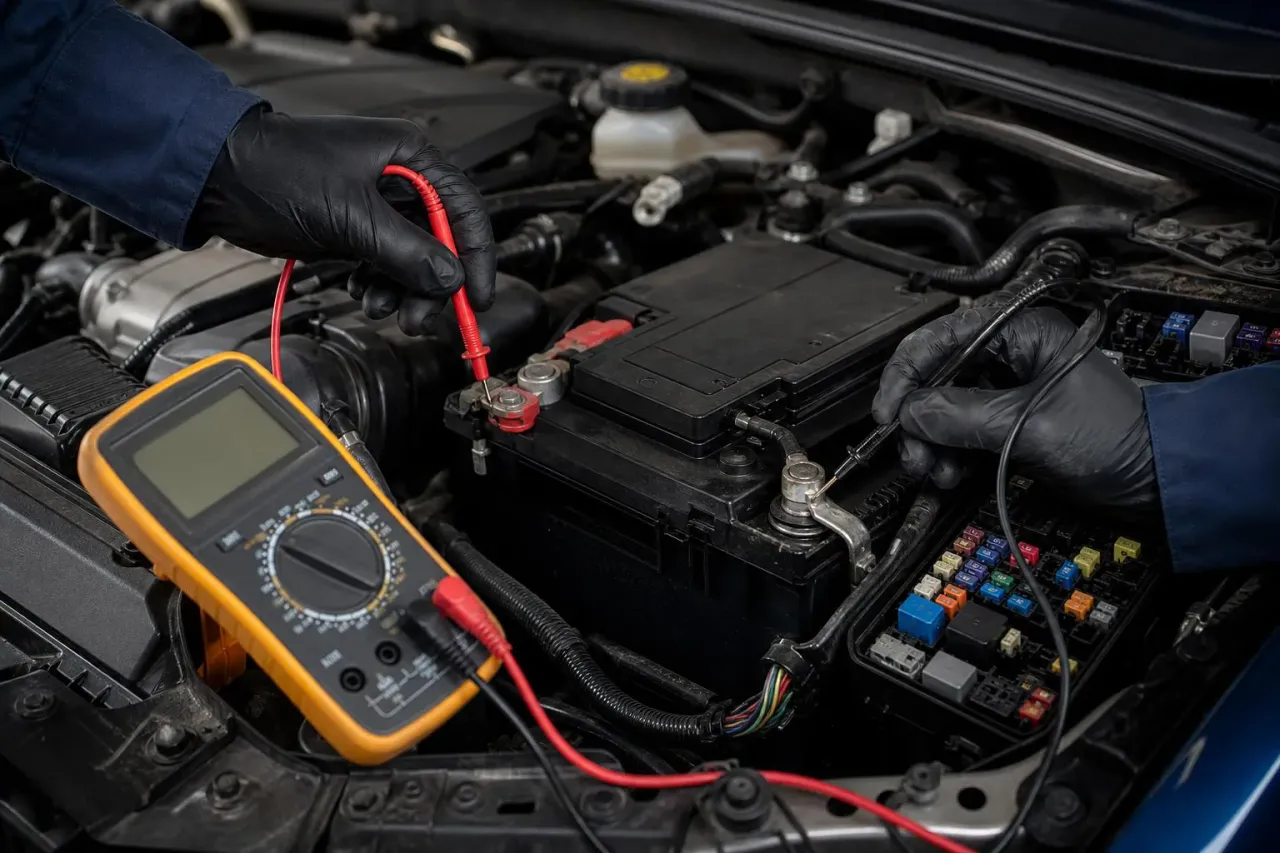
Credit: legacyautoboulder.com
Understanding The Multimeter: Functions And Types
The multimeter is an electronic measuring instrument combining several functions in one device. In automobile service, it’s the go-to tool for electrical testing and troubleshooting.
What Is A Multimeter?
A multimeter measures electrical parameters such as voltage (V), current (A), and resistance (Ω). It typically features a digital display, test probes, and rotary switches to select measurement modes. There are two main types:
- Analog Multimeters: Use a moving needle to indicate readings. Preferred for observing trends or changes in readings.
- Digital Multimeters (DMM): Provide precise numeric values and are most commonly used in automotive applications.
Key Functions
- Voltage Measurement: Checks battery voltage, alternator output, and sensor signals.
- Current Measurement: Assesses circuit load, parasitic drain, and charging system performance.
- Resistance Measurement: Tests continuity in wiring, verifies sensor operation, and detects faulty connections.
- Additional Features: Many DMMs offer diode testing, continuity buzzers, and temperature measurement.
Types Of Multimeters For Automotive Service
| Feature | Analog Multimeter | Digital Multimeter |
|---|---|---|
| Display | Needle | LCD Numeric |
| Accuracy | Lower | Higher |
| Durability | Robust | Varies |
| Cost | Less expensive | Ranges from $20 to $200 |
| Automotive Suitability | Basic | Preferred |
Pro Tip:
For automotive service, digital multimeters are recommended. Their accuracy and advanced features make them ideal for both beginner and advanced diagnostics.

Credit: us.gooloo.com
Essential Multimeter Applications In Automobile Service
A multimeter’s purpose in automobile service is broad, spanning simple battery checks to complex electronic diagnostics.
Battery Testing And Charging System Analysis
One of the most frequent uses is testing battery voltage. A healthy car battery typically measures 12.6V when fully charged (vehicle off) and 13.7, 14.7V when charging (engine running). Testing alternator output ensures proper charging and prevents battery drain.
- Beginner Steps: Set the multimeter to DC voltage, connect probes to battery terminals, and read the display.
- Advanced Suggestions: Measure voltage drop across cables to diagnose hidden resistance or poor connections.
Diagnosing Electrical Faults
Electrical problems, such as blown fuses, bad grounds, or faulty sensors, are common in vehicles.
- Continuity Testing: Checks if wiring or components are intact. Place probes at both ends; a beep or low resistance means good continuity.
- Voltage Drop Analysis: Identifies high resistance in circuits by comparing voltage at different points.
Sensor And Actuator Testing
Modern cars use sensors (oxygen, throttle position, temperature) and actuators (injectors, relays).
- Sensor Output Verification: Measure sensor voltage or resistance to confirm operation.
- Actuator Function Testing: Check voltage/current supplied to actuators for proper engagement.
Real-world Example: Diagnosing A Starting Issue
A vehicle fails to start, and the battery appears fine. Using a multimeter, a technician tests the starter circuit voltage and finds a significant drop, indicating a corroded cable. Repairing the cable restores proper starting.
Safety Checks And Preventing Damage
Incorrect diagnosis can lead to unnecessary part replacement or further damage.
- Fuse Testing: Quickly identify blown fuses without removal.
- Ground Verification: Ensure reliable grounding for all electrical components.
Pro Tip:
Always check manufacturer specifications for sensor values and voltage ranges before testing. This prevents misinterpretation and ensures accurate diagnostics.
Step-by-step Guide: Using A Multimeter In Automotive Service
Both beginners and experts benefit from a structured approach to multimeter usage. Here’s a practical guide for essential automotive tasks.
1. Setting Up The Multimeter
- Select the correct measurement mode (voltage, current, resistance).
- Insert probes in the right ports (usually black for COM, red for V/Ω/mA).
- Set the range appropriately (auto-range or manual).
2. Measuring Voltage
- Switch to DC voltage mode.
- Touch the red probe to the positive terminal and black to the negative.
- Read the value. For battery testing, compare with standard values (12.6V for fully charged).
3. Measuring Resistance And Continuity
- Switch to resistance or continuity mode.
- Place probes across the component or circuit.
- A low resistance or beep indicates good continuity.
4. Measuring Current
- Select current mode.
- Move the red probe to the current port.
- Break the circuit and connect probes in series.
- Read current value; typical parasitic drain should be below 50 milliamps for most vehicles.
Example: Testing A Fuel Injector
A technician suspects a faulty injector. By measuring resistance across the injector terminals, the multimeter shows 15 ohms, matching manufacturer specs. If resistance was out of range, replacement would be required.
5. Diode And Temperature Testing (advanced)
Many DMMs offer diode and temperature modes.
- Diode Test: Verify correct functioning of alternator rectifiers or electronic components.
- Temperature Measurement: Useful for checking coolant sensors or ambient temperature probes.
Warning:
Never measure current across the battery terminals directly; this can damage the meter or cause injury.

Credit: milehighcarhelper.com
Advanced Multimeter Techniques For Automotive Diagnostics
For seasoned technicians or those wanting to deepen their skills, advanced multimeter techniques unlock greater diagnostic power.
Voltage Drop Testing
Voltage drop testing is vital for finding hidden resistance in circuits. For example, a starter may receive less voltage than expected due to corroded cables. Measure voltage at both ends and compare; more than 0.5V drop suggests a problem.
Can Bus Diagnostics
Modern vehicles use CAN (Controller Area Network) Bus for communication. Multimeters can check for proper voltage levels (typically 2.5V, 2.7V) on CAN lines, helping diagnose network faults.
Sensor Signal Analysis
Many sensors produce variable voltage signals. By monitoring real-time changes, technicians can spot irregularities, such as a throttle position sensor stuck at one value.
Real-world Example: Diagnosing A Faulty Oxygen Sensor
A car fails emissions testing. The technician measures the oxygen sensor’s output voltage and finds it stuck at 0.2V, outside the normal range (0.1, 0.9V fluctuating). Replacing the sensor resolves the issue.
Current Draw And Parasitic Drain
Excessive battery drain is a common issue. By measuring current flow with the multimeter, hidden sources of drain, like glove box lights or aftermarket accessories, are easily identified.
Pro Tip:
Use the min/max recording feature on advanced DMMs to track intermittent faults, especially for sensors with fluctuating signals.
Comparison Table: Multimeter Features For Automotive Service
Choosing the right multimeter depends on your needs and budget. Here’s a comparison of features relevant to automotive service:
| Feature | Basic Multimeter | Advanced Automotive Multimeter |
|---|---|---|
| Voltage Measurement | Yes | Yes |
| Current Measurement | Yes | Yes |
| Resistance Measurement | Yes | Yes |
| Continuity Test | Limited | Audible/Visual |
| Diode Test | No | Yes |
| Temperature Measurement | No | Yes |
| Auto Range | No | Yes |
| Min/Max Recording | No | Yes |
| CAN Bus Testing | No | Yes |
| Price Range | $20, $40 | $100, $200 |
Common Multimeter Mistakes And How To Avoid Them
Even experienced technicians make errors with multimeters. Understanding these pitfalls ensures safe and effective diagnostics.
Incorrect Range Selection
Choosing the wrong measurement range can produce misleading results or damage the meter. Always verify settings before connecting probes.
Probe Placement Errors
Swapping probe positions or contacting the wrong terminals may cause short circuits or inaccurate readings.
Measuring Current Incorrectly
Current measurements require breaking the circuit and connecting the meter in series. Measuring across a power source (like battery terminals) is dangerous.
Ignoring Safety Precautions
Not wearing gloves, working in wet conditions, or failing to disconnect power can lead to shocks or equipment damage.
Example: Fuse Misdiagnosis
A technician replaces a fuse without checking for underlying causes. Using a multimeter, they discover a short circuit in the wiring, preventing repeated fuse failure.
Pro Tip:
Read the multimeter’s manual carefully and practice with low-voltage circuits before moving to automotive systems.
Multimeter Selection Guide: Choosing The Right Tool
Selecting the right multimeter ensures reliable results and ease of use. Consider the following factors:
Accuracy And Resolution
Higher accuracy is essential for sensitive diagnostics, such as sensor readings. Look for meters with ±0.5% or better accuracy.
Durability And Safety Ratings
Automotive environments are harsh. Opt for meters with CAT III or CAT IV safety ratings and robust construction.
Functionality
Features like auto-range, min/max recording, and temperature measurement add value. For advanced diagnostics, select meters with CAN Bus compatibility.
User Interface
Clear displays, intuitive controls, and audible continuity indicators help beginners and experts alike.
Example: My Experience With Multimeter Selection
When I tested entry-level and professional-grade meters, I found that spending slightly more for advanced features saved time and prevented misdiagnosis, especially when working on modern vehicles with complex electronics.
Pro Tip:
Check reviews and specifications from reputable sources, such as Fluke, before purchasing.
Multimeter Maintenance And Calibration
Regular maintenance and calibration are critical for accurate measurements and long-term reliability.
Cleaning And Storage
- Wipe probes and body with a dry cloth.
- Store in a protective case to prevent dust and moisture damage.
Battery Replacement
- Replace batteries as needed. A low battery can cause erratic readings.
Calibration
Professional calibration ensures accuracy, especially for advanced diagnostics. Many manufacturers recommend annual calibration for automotive use.
Example: Calibration Impact
A technician using an uncalibrated meter misdiagnosed a sensor fault. After calibration, readings matched manufacturer specs, preventing unnecessary replacement.
Pro Tip:
Schedule calibration annually and check with certified calibration labs for best results.
Real-world Examples And Case Studies
Understanding the multimeter’s purpose is easier with real-world context. Here are three case studies illustrating its impact in automobile service.
Case Study 1: Battery Drain Diagnosis
A customer complains of frequent battery drain. The technician uses a multimeter to measure parasitic draw and finds 120 milliamps, well above the recommended 50 milliamps. Tracing the circuit reveals a faulty glove box light switch, which is replaced, resolving the issue.
Case Study 2: Alternator Performance Verification
After replacing an alternator, a technician tests charging voltage. The multimeter shows only 13.2V instead of the expected 14.2V. Investigating further, the technician finds a loose connection at the alternator plug, tightens it, and confirms proper charging.
Case Study 3: Airbag System Diagnosis
An airbag warning light is illuminated. Using a multimeter, the technician measures resistance across the airbag circuit. Readings show infinite resistance, indicating an open circuit due to a damaged connector. Repairing the connector restores system function.
Pro Tip:
Document findings and readings for each step; this builds diagnostic history and aids future troubleshooting.
Frequently Asked Questions
What Is The Most Important Function Of A Multimeter In Automotive Service?
The most important function is measuring voltage. This allows technicians to check battery health, charging system performance, and sensor signals, which are crucial for diagnosing electrical issues in vehicles.
Can I Use A Household Multimeter For Car Diagnostics?
While basic household multimeters can measure voltage and continuity, they often lack automotive-specific features like current measurement, CAN Bus testing, and higher safety ratings. Always verify the meter’s voltage and current capacity before use.
How Often Should I Calibrate My Automotive Multimeter?
For accuracy, calibration should be performed annually or more frequently if the meter is used extensively. Consult your manufacturer’s guidelines, and use certified calibration services for best results.
What Safety Precautions Should I Take When Using A Multimeter On A Vehicle?
Always disconnect power when measuring resistance or continuity, wear gloves, avoid wet conditions, and use meters with proper CAT safety ratings. Never measure current across battery terminals directly, as this can damage the meter and cause injury.
Is It Necessary To Invest In A High-end Automotive Multimeter?
For beginners, a mid-range meter with basic functions is sufficient. Advanced technicians working on modern vehicles with complex electronics benefit from high-end meters featuring auto-range, min/max recording, and specialized automotive testing modes. Choose based on your needs and budget.
Automotive service is evolving, and a multimeter remains the linchpin of electrical diagnostics. Whether you’re troubleshooting a dead battery, verifying sensor signals, or tracking down elusive faults, the multimeter’s purpose is clear: it empowers technicians and enthusiasts to work confidently, efficiently, and safely. Mastering its use bridges the gap between guesswork and precision, ensuring every vehicle stays reliable and roadworthy.