

A multimeter is one of the most versatile and essential tools in the world of electronics, electrical engineering, and DIY repair. For beginners, the device may seem daunting at first glance, bristling with symbols, dials, and probes. Yet, at its core, the multimeter is a remarkably intuitive instrument designed to measure several key electrical properties, most notably, voltage, current, and resistance.
With the right guidance, even someone completely new to electrical work can unlock the full potential of this tool.
A common question from newcomers and even some seasoned users is: Can a multimeter be used as a voltmeter? The short answer is yes. In fact, every digital or analog multimeter is specifically equipped to function as a voltmeter. However, understanding exactly how and when to use a multimeter for voltage measurement, as well as how to do it safely and accurately, requires a bit more insight. Whether you’re troubleshooting a dead outlet, testing batteries, or working on a complex circuit, knowing how to leverage your multimeter as a voltmeter is an invaluable skill.
Key Takeaways
- A multimeter can always be used as a voltmeter, making it a multi-purpose tool for electrical measurements.
- Using a multimeter as a voltmeter is beginner-friendly, but understanding settings and safety is crucial for accurate results.
- Advanced users can use multimeters for specialized voltage measurements, such as in high-frequency or sensitive circuits.
- Comparing dedicated voltmeters and multimeters reveals differences in precision, versatility, and cost.
- Real-world scenarios, from household troubleshooting to automotive diagnostics, illustrate the practical value of using a multimeter as a voltmeter.
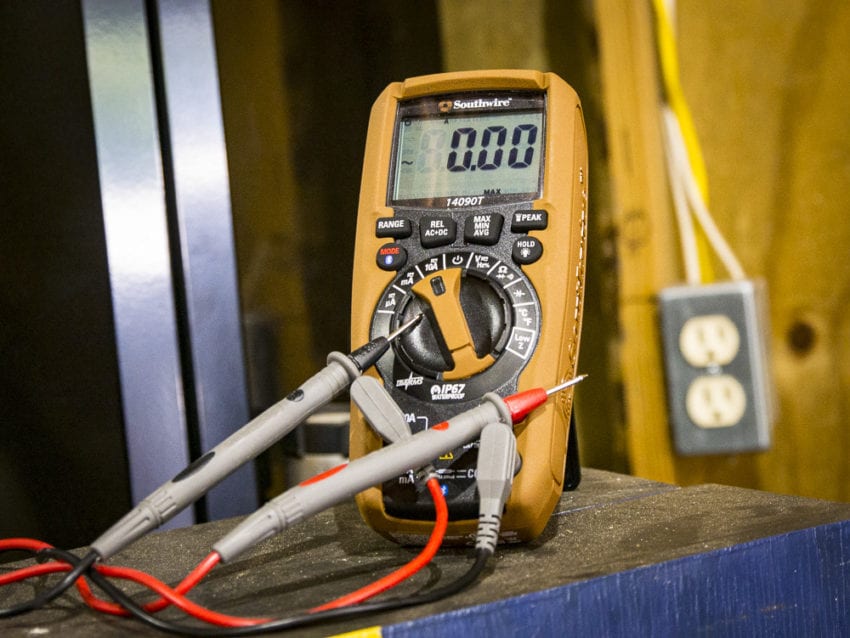
Credit: www.protoolreviews.com
Understanding Multimeters And Voltmeters
A clear understanding of what makes a multimeter and a voltmeter distinct, and how they overlap, is essential for both beginners and seasoned practitioners.
What Is A Multimeter?
A multimeter is an electronic measuring instrument that combines several measurement functions into a single unit. The most common types are the digital multimeter (DMM) and the analog multimeter. Both are capable of measuring:
- Voltage (voltmeter function)
- Current (ammeter function)
- Resistance (ohmmeter function)
Advanced models may also measure capacitance, frequency, temperature, or even test diodes and transistors.
What Is A Voltmeter?
A voltmeter is a specialized instrument designed solely for measuring the electrical potential difference (voltage) between two points in an electrical circuit. Voltmeters can be analog (using a moving needle display) or digital (showing readings on an LCD).
Key Differences
While a voltmeter is dedicated to voltage measurement, a multimeter integrates this function with additional measurement capabilities. The ability to switch between different modes is what sets a multimeter apart, making it indispensable for professionals and hobbyists alike.
| Feature | Multimeter | Voltmeter |
|---|---|---|
| Measurement Functions | Voltage, Current, Resistance, and more | Voltage only |
| Display Type | Analog or Digital | Analog or Digital |
| Typical Accuracy | 0.5% to 2% (DMM) | Up to 0.01% (Lab-grade) |
| Cost | $10, $300 (consumer grade) | $20, $2000 (basic to lab-grade) |
| Use Case | General diagnostics, repair, education | Precise voltage measurement |
Example: Everyday Multimeter Usage
When I first began working with electronics, my multimeter was my go-to for everything from checking AA batteries to diagnosing faulty light switches. The ability to switch from measuring voltage to current or resistance without changing tools saved time and avoided confusion.

Credit: www.kele.com
How To Use A Multimeter As A Voltmeter: Step-by-step Guide
Mastering the use of a multimeter as a voltmeter is straightforward with a few clear steps. For beginners, this can feel intimidating, but following a methodical approach ensures both safety and accuracy.
1. Preparation And Safety
- Choose the right multimeter: Digital models are recommended for beginners due to ease of reading.
- Inspect your probes: Ensure the leads are undamaged, clean, and plugged into the correct ports (usually “COM” for common/ground and “VΩ” for voltage).
- Set the multimeter to voltage mode: Select “V” on the dial; choose DC (straight line) or AC (wavy line) depending on your application.
- Check the voltage range: Start with the highest voltage range if you’re unsure of the expected voltage, then step down for more precise readings.
- Personal safety: Never touch bare probe tips during measurement. Wear rubber-soled shoes, and avoid working in wet environments.
2. Measuring Dc Voltage
Common in batteries, electronic devices, and low-voltage circuits.
- Insert the black probe into the COM port and the red probe into the VΩ port.
- Set the dial to “V” with a straight line (DC).
- Place the black probe on the circuit’s ground/negative side and the red probe on the positive side.
- Read the voltage displayed.
Example: Testing a 1.5V AA battery, place the probes on each terminal. A healthy battery should read close to its rated voltage.
3. Measuring Ac Voltage
Used in household outlets and mains wiring.
- Set the dial to “V” with a wavy line (AC).
- Insert the probes as before.
- Touch the black probe to the neutral or ground slot, and the red probe to the live slot.
- Read the voltage; a North American outlet should display close to 120V.
Warning: Extreme caution is required when measuring AC mains voltage. Use one hand when possible and never let probes touch each other during measurement.
4. Advanced Techniques For Experienced Users
- Measuring small signal voltages: Use the lowest range for millivolt (mV) readings.
- Differential measurements: Some multimeters offer differential voltage functions for comparing two points in complex circuits.
- Data logging: Advanced DMMs can record voltage changes over time, useful for diagnostics.
- True RMS measurement: For accurate readings of non-sinusoidal AC signals, use a True RMS multimeter.
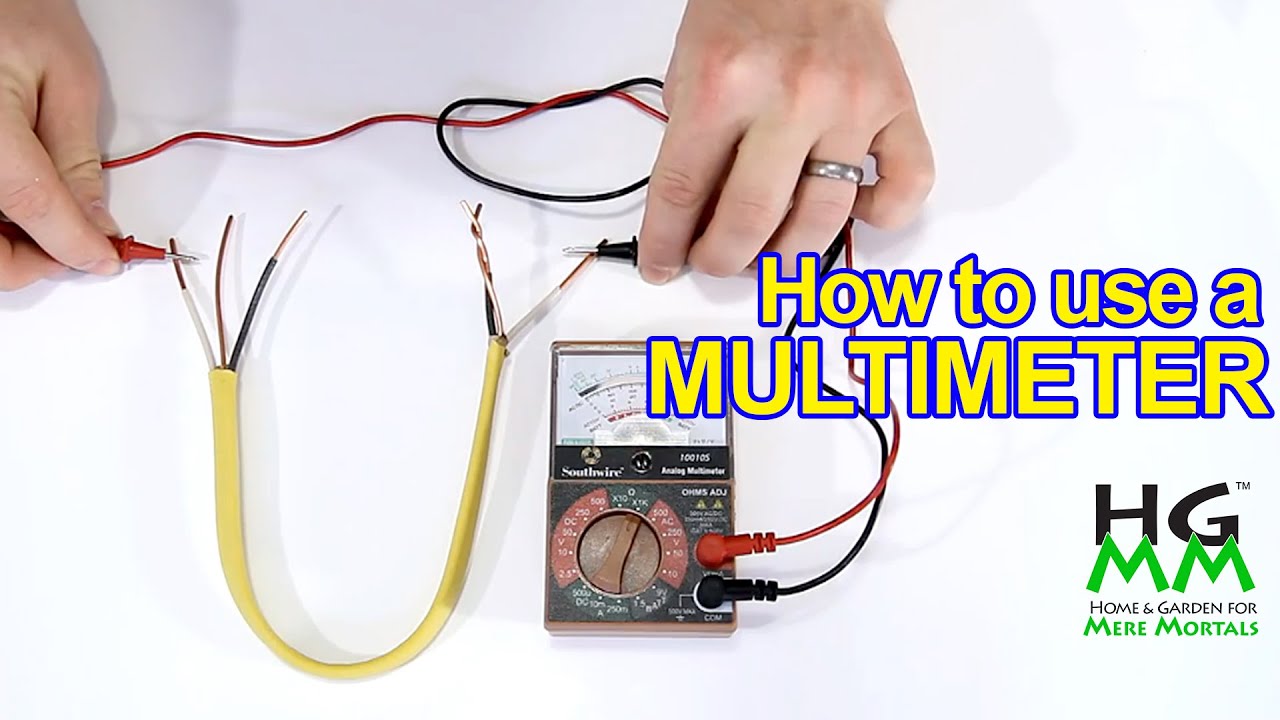
Credit: www.youtube.com
Practical Applications: Multimeter As A Voltmeter In The Real World
Using a multimeter as a voltmeter is invaluable across countless scenarios, from simple home fixes to advanced troubleshooting.
1. Household Troubleshooting
- Checking outlet voltage: Quickly determine if an outlet is live and delivering the correct voltage.
- Testing wall switches: Confirm if a switch is properly energizing a fixture.
- Battery health: Measure the voltage of batteries to decide if replacement is needed.
2. Automotive Diagnostics
- Car battery testing: A healthy 12V battery should show 12.6, 12.8V at rest.
- Alternator output: With the engine running, measure voltage at the battery terminals; 13.7, 14.7V indicates proper charging.
- Sensor checks: Test voltage at various engine sensors for troubleshooting.
Example: When diagnosing a car that wouldn’t start, I used my multimeter’s voltmeter mode to identify a failing alternator by measuring charging voltage.
3. Electronics And Hobby Projects
- Arduino/Raspberry Pi projects: Ensure supply voltages are stable and within expected ranges.
- Circuit debugging: Identify where voltage drops occur in breadboard setups.
- LED testing: Confirm forward voltage and proper operation.
4. Industrial And Professional Use
- Panel voltage checks: Confirm correct voltage at control panels or distribution boards.
- Process automation: Verify sensor supply voltages and outputs.
- Maintenance routines: Regular voltage checks prevent downtime.
Multimeter Vs. Dedicated Voltmeter: Which Should You Use?
Both instruments can measure voltage, but there are key differences that affect which is the best tool for the job.
Advantages Of Using A Multimeter
- Versatility: One device covers multiple measurement needs.
- Cost-effective: No need to buy separate instruments.
- Portability: Compact size for field work or home use.
Advantages Of Using A Dedicated Voltmeter
- Precision: High-end voltmeters can offer greater accuracy and stability, especially in laboratory settings.
- Simplicity: No risk of choosing the wrong mode; always ready to measure voltage.
- Specialization: Some voltmeters are designed for very high or very low voltages.
Situational Comparison Table
| Scenario | Multimeter | Voltmeter |
|---|---|---|
| Home electrical troubleshooting | ✔️ Recommended | Not necessary |
| Lab-grade voltage calibration | Possible, but less accurate | ✔️ Preferred |
| Field repairs (automotive, appliances) | ✔️ Highly recommended | Optional |
| Educational purposes | ✔️ Versatile for all topics | Only voltage lessons |
Pro Tip:
If your work demands extreme precision (such as calibrating reference voltages in a laboratory), a dedicated voltmeter is the preferred tool. For nearly all other applications, a multimeter’s convenience and flexibility make it the better choice.
Advanced Tips For Accurate Voltage Measurement
Even experienced users can benefit from a refresher on best practices for obtaining reliable voltage readings with a multimeter.
1. Select The Right Range
Always start with the highest available voltage range if you’re uncertain of the expected value. This prevents potential damage to the meter and protects you from unexpected surges. Once you have a reading, switch to a lower range for improved resolution.
2. Ensure Proper Probe Placement
Consistent, secure contact with test points is vital. For sensitive circuits, even a slight movement can introduce noise or momentary shorts. Use probe holders or alligator clips when possible.
3. Minimize Loading Effect
Every voltmeter (including the one in your multimeter) draws a tiny current from the circuit under test. This is called the loading effect. High-quality digital multimeters have extremely high input impedance (often 10 megaohms or more), minimizing their impact on the circuit.
- For high-impedance circuits (like guitar pickups or sensor outputs), always use a DMM with high input impedance.
- Avoid using analog multimeters for delicate electronics, as their lower input impedance can distort readings.
4. Account For Environmental Factors
Temperature, humidity, and electromagnetic interference can affect voltage measurements, especially in sensitive or high-frequency applications. Shielded cables and stable environments help maintain accuracy.
5. Use True Rms For Ac Measurements
Modern AC signals can be non-sinusoidal, especially in circuits with electronic dimmers, inverters, or variable-speed motors. A True RMS multimeter is essential for accurate voltage readings in such cases.
Safety Considerations When Measuring Voltage
Working with electrical circuits always carries inherent risks. A few critical safety practices can prevent accidents and protect both the user and the equipment.
1. Understand Your Multimeter’s Limits
Every multimeter has maximum voltage ratings, often labeled as CAT II, CAT III, or CAT IV. These indicate the types of circuits the device is safe to test. Exceeding these ratings can result in meter damage or personal injury.
2. Always Disconnect Power Before Changing Settings
Switching measurement modes or probe placement while the circuit is energized can cause shorts or dangerous arcs. Always disconnect power before adjusting your meter or test setup.
3. Inspect Equipment Regularly
Check your meter, leads, and probes for cracks, exposed wires, or worn insulation. Damaged equipment increases the risk of electric shock.
4. One-hand Rule
When working on high-voltage circuits, use only one hand to reduce the risk of current passing through your chest in the event of accidental contact. Keep your other hand away from conductive surfaces.
5. Personal Protective Equipment
For industrial or high-voltage work, wear insulated gloves, safety glasses, and use insulated tools. Follow all facility safety protocols.
Example: In my experience as a field technician, a brief lapse in probe placement on a live panel resulted in a blown fuse and a stern reminder of why methodical safety habits are non-negotiable.
Real-world Examples And Case Studies
Nothing reinforces a concept like seeing it applied in practical contexts. Here are three scenarios that showcase the utility and best practices of using a multimeter as a voltmeter.
Example 1: Diagnosing A Dead Wall Outlet
A homeowner discovers that a living room outlet isn’t powering a lamp. With the multimeter set to AC voltage, the user inserts the probes into the outlet’s slots. The display reads “0V”, indicating no power. Tracing the circuit breaker panel reveals a tripped breaker, which is reset.
Retesting the outlet shows 120V, confirming the fix.
Example 2: Troubleshooting A Car That Won’t Start
A mechanic suspects a dead battery. Measuring DC voltage across the battery terminals with the multimeter shows only 10. 8V. Since a healthy 12V battery should be above 12. 4V, the battery is replaced. The car starts immediately. Further, with the engine running, voltage at the terminals now reads 14.
2V, indicating that the alternator is charging properly.
Example 3: Testing An Arduino Power Supply
A hobbyist’s project isn’t working as expected. Setting the multimeter to DC voltage, the user checks the 5V rail on the breadboard and finds only 3. 8V. The problem is traced to a weak USB power adapter. Upgrading to a rated 5V adapter restores the correct voltage, and the project works as intended.
Troubleshooting Common Issues When Measuring Voltage
Even with the best tools, users sometimes encounter challenges. Here’s a quick reference guide to common issues and solutions.
| Issue | Possible Cause | Solution |
|---|---|---|
| No reading on display | Blown fuse, dead battery, wrong mode | Check and replace fuse/battery, verify mode selection |
| Inaccurate readings | Wrong range, weak battery, poor probe contact | Adjust range, replace battery, clean probes |
| Display flickers | Loose connections, electrical noise | Secure probes, use shielded cables |
| Multimeter won’t power on | Dead battery, internal fault | Replace battery, seek professional repair |
| Unexpected high reading | Measuring in wrong mode (e.g., AC instead of DC) | Double-check mode and range settings |
Enhancing Your Measurement Skills: Tips For Beginners And Experts
Developing proficiency with a multimeter takes practice. Here’s how both new and advanced users can get the most from their instrument.
For Beginners
- Start with simple tasks: Practice measuring household batteries and known voltage sources.
- Read the manual: Familiarize yourself with your specific model’s functions and limitations.
- Watch video tutorials: Platforms like YouTube offer visual demonstrations, ideal for beginners.
- Label your probes: Use colored tape to avoid confusion between positive and negative leads.
- Join online forums: Communities such as the Electronics Stack Exchange are excellent for troubleshooting and advice.
For Advanced Users
- Invest in quality probes: Gold-plated or silicone-insulated probes improve accuracy and durability.
- Use measurement logging: Advanced DMMs can export data for analysis and troubleshooting.
- Understand calibration: Regularly calibrate your meter for sustained accuracy, especially in professional settings.
- Leverage advanced features: Some meters offer features like min/max recording, relative mode, or dual display, explore these for complex diagnostics.
Learning Resources
For a deeper dive into multimeter theory and safe practices, the Fluke Multimeter Learning Center is an authoritative external source.
Frequently Asked Questions
How Accurate Is A Multimeter Compared To A Voltmeter?
While most consumer-grade digital multimeters offer accuracy within 0.5, 2%, high-end laboratory voltmeters can be even more precise, sometimes with errors as low as 0.01%. For general-purpose tasks, a quality multimeter is accurate enough, but if you require highly precise measurements (such as in calibration labs or for scientific research), a dedicated voltmeter is preferable. Always check the manufacturer’s datasheet for accuracy specifications.
Can I Use A Multimeter To Measure Voltage In High-voltage Circuits Safely?
Multimeters are rated for maximum voltages and category ratings (CAT II, III, IV). Always verify that your meter is suitable for the voltage and environment you’re testing. For high-voltage industrial or utility circuits, use a meter with an appropriate category rating, wear personal protective equipment, and follow all facility safety procedures. If in doubt, consult an electrician or safety specialist.
What Should I Do If My Multimeter Gives Inconsistent Voltage Readings?
Inconsistent readings can be caused by loose probe connections, weak batteries, electrical interference, or a malfunctioning meter. Start by checking your probe placement and securing connections. If the issue persists, replace the meter’s battery. For ongoing problems, try measuring a known voltage source to verify calibration.
Persistent inconsistency may indicate a need for professional servicing or replacement.
Why Does My Multimeter Display A Negative Voltage?
A negative voltage reading usually means that the test leads are reversed: the black (COM) probe is on the positive terminal, and the red probe is on the negative terminal. Simply swap the probes to get a positive value. In some cases, especially when measuring in complex circuits, a negative voltage might be correct, such as when testing dual-rail power supplies or certain reference points.
Is It Safe To Leave A Multimeter Connected To A Circuit For Extended Periods?
Most multimeters are designed for temporary spot measurements rather than continuous monitoring. Leaving a meter connected for long periods can drain its battery, introduce loading effects, or, in rare cases, overheat internal components. For continuous monitoring, consider using a specialized data-logging voltmeter or an inline voltage monitor designed for long-term use.
Using a multimeter as a voltmeter is both straightforward and immensely powerful, bridging the gap between basic diagnostic tasks and advanced troubleshooting in electronics and electrical work. For beginners, the process is accessible, safe, and educational when proper steps are followed.
Advanced users can extract even greater value by leveraging specialized features and best practices. Whether you’re checking a battery, diagnosing automotive issues, or working on complex circuits, the ability to measure voltage accurately empowers you to solve problems efficiently and confidently.
With a blend of practical experience and attention to safety, the humble multimeter proves to be an indispensable ally for anyone working with electricity.