
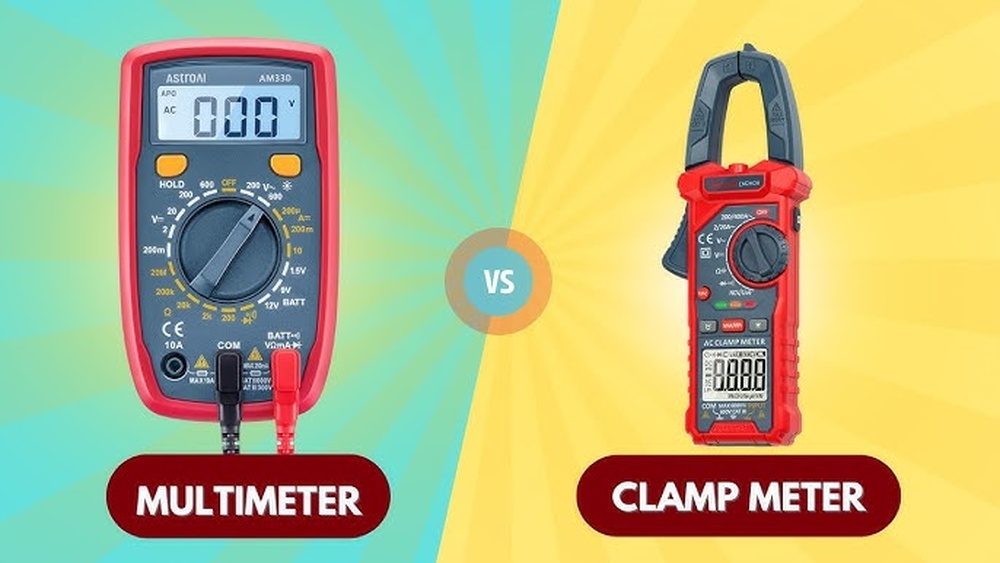
Are you standing at the crossroads of electrical measurement, trying to decide whether to buy a clamp meter or a multimeter? This is a common dilemma for both beginners and experienced technicians. The right tool can make the difference between accurate, safe diagnostics and costly mistakes.
Choosing the best fit depends on your needs, budget, and the types of measurements you encounter most often.
This article is your comprehensive guide, beginner-friendly yet rich with advanced insights. We’ll unpack the fundamentals, compare features, and offer real-world guidance, so you can make a confident, well-informed decision. Whether you’re a DIY hobbyist, an electrical engineer, or somewhere in between, you’ll find clear explanations, actionable tips, and expert perspectives.
Let’s explore the strengths and limitations of clamp meters and multimeters, so you can pick the right tool for your electrical toolkit.
Key Takeaways
- Clamp meters excel at measuring current safely without breaking the circuit, making them ideal for high-current and industrial applications.
- Multimeters offer versatility for voltage, resistance, and continuity measurements, and are often preferred for electronics, automotive, and general troubleshooting.
- Choosing between the two depends on your primary use case, safety requirements, and whether you need to measure live current or perform in-depth diagnostics.
- Advanced users often own both tools, leveraging each for its unique strengths.
- Beginners should consider ease of use, safety features, and what types of measurements they’ll perform most often.
- Real-world examples and comparison tables in this guide will clarify which device aligns best with your goals.
Understanding The Basics: Clamp Meter Vs. Multimeter
What Is A Clamp Meter?
A clamp meter is a specialized electrical test tool primarily designed for measuring current. Its hallmark feature is the hinged “clamp” jaw, which opens to encircle a conductor (wire) without physical contact or circuit interruption. This allows for non-intrusive, safe current measurement, even in live circuits.
Clamp meters typically also measure voltage and resistance, but their main advantage is current measurement, especially useful for high-current circuits (up to hundreds or thousands of amps) in industrial or commercial settings. Modern clamp meters often feature digital displays, data logging, and advanced functions for power analysis.
What Is A Multimeter?
A multimeter (often called a DMM, or digital multimeter) is a versatile, handheld instrument used to measure a wide range of electrical parameters, including:
- Voltage (AC/DC)
- Current (AC/DC)
- Resistance
- Continuity
- Diode testing
- Capacitance and frequency (on advanced models)
Multimeters come in analog and digital versions, with digital being the overwhelming standard today. They require direct contact with the circuit, using two probes to touch the test points. This makes multimeters ideal for precise, low-current, and component-level diagnostics.
Key Differences At A Glance
To help clarify the fundamental differences, here’s a summary table:
| Feature | Clamp Meter | Multimeter |
|---|---|---|
| Current Measurement | Measures high current non-intrusively | Measures current up to 10A (usually), requires breaking circuit |
| Voltage/Resistance | Basic to advanced (varies by model) | Comprehensive, highly accurate |
| Safety | Safer for live, high-current measurements | Safe for low-current/voltage; more risk with high current |
| Size/Portability | Larger, clamp mechanism | Compact, pocket-sized models available |
| Best For | Electricians, industrial, HVAC | Hobbyists, electronics, general diagnostics |

Credit: powertech.com.bd
When To Choose A Clamp Meter
Measuring High Current Safely
Clamp meters shine when you need to measure current in live, high-power circuits. Industrial electricians, HVAC technicians, and maintenance crews rely on clamp meters to check motor loads, troubleshoot panels, and verify circuit operation, without disconnecting wires or shutting down equipment.
Example: Industrial Panel Troubleshooting
Imagine a scenario where a factory machine keeps tripping a circuit breaker. Using a clamp meter, you can safely measure the current draw on each phase while the equipment is running. This real-time insight helps pinpoint overloads or imbalances, reducing downtime and improving safety.
Working With Live Circuits
The non-contact design of clamp meters is a game changer for safety. By clamping around a conductor, you avoid direct exposure to dangerous voltages and currents. This is especially important for:
- Commercial electricians servicing distribution boards
- Facilities managers checking building systems
- HVAC technicians working on compressors and fans
Pro Tip: Always ensure the clamp meter’s category rating (CAT II, CAT III, CAT IV) matches the environment you’re working in for maximum safety.
Measuring Multiple Conductors
Advanced clamp meters can measure inrush current, power factor, and even detect harmonics, features critical in industrial troubleshooting. Some models can measure leakage current, helping to locate insulation faults.
Limitations Of Clamp Meters
Despite their strengths, clamp meters have limitations:
- Lower accuracy for voltage/resistance compared to multimeters
- Limited low-current sensitivity (usually not precise below 1A)
- Bulkier than compact multimeters
These constraints mean clamp meters are best as a complement, not a replacement, for detailed electronics work.

Credit: powertech.com.bd
When To Choose A Multimeter
Precision For Electronics And Low Current
A multimeter is the Swiss army knife of electrical measurement, perfect for:
- Electronics hobbyists assembling kits or repairing devices
- Automotive technicians checking sensors and circuits
- Electricians diagnosing household wiring
Multimeters excel at low-current and component-level measurements, offering high resolution and accuracy. For example, measuring the resistance of a sensor or the voltage across a battery is where multimeters outperform clamp meters.
Versatility Across Measurements
Multimeters offer a wide range of functions in a single device. Besides current, voltage, and resistance, many models include:
- Continuity testing with audible alerts
- Diode and transistor checks
- Capacitance, frequency, and temperature measurement
This versatility makes them indispensable for anyone working with electronics, appliances, or vehicles.
Example: Diagnosing A Faulty Power Adapter
Suppose your laptop charger stops working. With a multimeter, you can:
- Measure the output voltage to verify it’s within specs.
- Check for continuity on the cord and plug.
- Test internal fuse or components for open/short circuits.
All with one compact tool, something a clamp meter cannot accomplish.
Safety And Limitations
While multimeters are safe for low-voltage work, measuring current requires breaking the circuit and routing it through the meter, a process that can be risky and is not recommended for high-current circuits. Always use proper safety precautions and select the correct settings to avoid damaging the meter or causing injury.
Advanced Features For Professionals
Higher-end multimeters offer true RMS measurement, data logging, and interface options for software analysis. Some integrate with smart devices for remote monitoring, ideal for advanced diagnostics.

Credit: mestekinstruments.com
Detailed Comparison: Clamp Meter Vs. Multimeter
Measurement Capabilities
| Function | Clamp Meter | Multimeter |
|---|---|---|
| AC Current | Up to 1000A+ | Typically up to 10A |
| DC Current | Available on select models | Yes, with circuit break |
| AC/DC Voltage | Most models | All models |
| Resistance | Basic to advanced | High accuracy |
| Continuity | Often included | Standard |
| Frequency/Capacitance | Some models | Advanced models |
Accuracy And Sensitivity
- Multimeters are generally more accurate for voltage, resistance, and low-current measurements.
- Clamp meters have lower resolution for small currents, but excel in high-current environments.
For example, if you need to measure a 0. 1A signal in a sensor, a multimeter is the better choice. For a 100A motor circuit, a clamp meter is essential.
Safety Considerations
- Clamp meters provide safer current measurement in high-power circuits, reducing the risk of electrical shock.
- Multimeters are safe for low-voltage, low-current, and component testing, but require circuit interruption for current measurement.
Pro Tip: Always check the instrument’s safety ratings and fuses before use. Never try to measure high current with a standard multimeter.
Cost And Value
- Entry-level clamp meters start around $30, $50, with professional models exceeding $200.
- Digital multimeters range from $15 for basic units to over $500 for laboratory-grade models.
Multimeters offer broader functionality per dollar, while clamp meters are justified for their unique current-measuring abilities.
Portability And Convenience
- Multimeters are generally more compact and fit in a pocket or small pouch.
- Clamp meters are bulkier due to the clamp jaw, but modern designs are increasingly ergonomic.
For fieldwork, consider weight, size, and carrying case options.
Practical Scenarios: Which Tool Is Best?
Homeowner And Diy Enthusiast
If you’re installing outlets, fixing appliances, or building electronics kits, a multimeter covers most needs. It’s ideal for:
- Checking outlet voltage
- Testing batteries
- Diagnosing small appliances
A clamp meter is rarely necessary unless you’re checking high-current devices like central air conditioners or main service panels.
Automotive Technician
For diagnosing vehicle electrical systems, a multimeter is indispensable. It measures low-voltage circuits, sensors, and continuity checks. However, a clamp meter with DC measurement is valuable for:
- Checking starter and alternator current draw
- Measuring battery charging current
Advanced automotive electricians often carry both tools for comprehensive diagnostics.
Industrial Electrician
Clamp meters are essential for industrial and commercial electricians. They’re used daily for:
- Load balancing
- Troubleshooting motor circuits
- Verifying breaker panel currents
A multimeter is also necessary for voltage, continuity, and resistance checks. Most professionals own both and select the right tool for each job.
Case Study: Hvac Field Service
In my experience as an HVAC technician, carrying both a clamp meter and a multimeter is the gold standard. The clamp meter is used to verify compressor and fan currents, while the multimeter checks control voltages, sensor resistances, and continuity.
This dual-tool approach maximizes diagnostic accuracy and safety.
Advanced Guide: Features, Specifications, And Buying Tips
Key Features To Consider
For Clamp Meters
- AC/DC Current Measurement: Essential for modern electrical systems; not all clamp meters measure DC current.
- True RMS Capability: Accurate for non-sinusoidal waveforms, common in variable speed drives.
- Inrush Current Measurement: Useful for motors and compressors.
- Jaw Opening Size: Determines maximum conductor size you can measure.
- Data Logging/Bluetooth: For advanced monitoring and diagnostics.
For Multimeters
- Auto-ranging: Simplifies use, especially for beginners.
- Backlit Display: Critical for dark environments.
- Input Protection/Fused Inputs: Prevents damage from overloads.
- Min/Max Hold: Captures fluctuating readings.
- Temperature Probe: Valuable for HVAC and electronics work.
Specification Table: What To Look For
| Specification | Clamp Meter | Multimeter |
|---|---|---|
| Max Current (AC/DC) | 400A, 1000A+ | 10A (typical) |
| Voltage Range | 600V, 1000V | 600V, 1000V |
| Resistance | Up to 60MΩ (varies) | Up to 200MΩ+ |
| Accuracy | ±2.0% (typical) | ±0.5% (typical) |
| Safety Rating | CAT III/IV | CAT II/III |
Beginner Tips For First-time Buyers
- List your common tasks: Are you mainly measuring voltage, checking batteries, or working with high-current systems?
- Choose auto-ranging models: They’re more forgiving and faster for beginners.
- Look for clear displays: Large, backlit screens reduce mistakes.
- Prefer reputable brands: Fluke, Klein Tools, and Extech are reliable choices.
- Read reviews: User feedback on Amazon or electrical forums can reveal real-world strengths and weaknesses.
Advanced Suggestions For Professionals
- Invest in true RMS meters for accurate readings on non-linear loads (like computers or variable speed drives).
- Data logging and wireless connectivity enable trend analysis and remote monitoring, critical for preventive maintenance.
- High safety category ratings (CAT IV) are necessary for work on main panels and industrial environments.
- Calibration and certification: Ensure your instrument can be calibrated for compliance and traceability.
Real-world Case Studies
Case Study 1: Facility Maintenance Troubleshooting
A building engineer is tasked with diagnosing an intermittent power failure in an office block. Using a clamp meter, she quickly identifies a circuit drawing excessive current during peak hours. With a multimeter, she narrows down the fault to a failed ballast in a lighting fixture.
The combination of both tools enables fast, accurate repairs with minimal downtime.
Case Study 2: Electronics Repair Shop
An electronics technician receives a batch of malfunctioning power supplies. He uses a multimeter to check output voltages and continuity. When one supply shows erratic performance, a clamp meter with a milliamp range detects a leaky component drawing unexpected current, something the multimeter alone might not reveal due to circuit design.
Case Study 3: Solar Panel Installation
A solar installer needs to verify both voltage output and current flow in photovoltaic strings. The clamp meter measures live current in DC cables without disconnecting them, while the multimeter checks panel voltage and array continuity. Using both tools ensures the system operates safely and efficiently.
Common Mistakes And How To Avoid Them
Using The Wrong Tool
Attempting to measure high current with a standard multimeter can blow fuses, damage the meter, or even cause injury. Always use a clamp meter for high-current applications.
Incorrect Range Selection
Beginners often set the wrong measurement range, leading to inaccurate readings or blown fuses. Auto-ranging meters reduce this risk; otherwise, start at the highest range and step down.
Overlooking Safety Ratings
Never use a CAT II meter in a CAT IV environment (e. g. , main service panels). Always check the safety category and voltage rating before connecting your instrument.
Neglecting Calibration
Professional use requires annual calibration to maintain accuracy. Uncalibrated meters can lead to expensive or dangerous mistakes, especially in industrial settings.
Pro Tip:
Always read the user manual, even if you’re experienced. New features and safety updates can change best practices with each new model.
Integrating Both Tools For Maximum Effectiveness
Many professionals and advanced DIYers eventually own both a clamp meter and a multimeter. This combination provides:
- Safety for high-current and live circuit measurement (clamp meter)
- Precision for low-current, voltage, and component testing (multimeter)
- Redundancy for verification and backup in critical diagnostics
Carrying both ensures you’re prepared for nearly any electrical measurement scenario.
How To Decide Which To Buy First
- If most of your work involves current over 10A, or you frequently test live circuits, start with a clamp meter.
- If you’re focused on electronics, automotive, or household troubleshooting, start with a multimeter.
- If your budget allows, consider a clamp meter with multimeter functions (combo models), though pure multimeters still offer higher accuracy for small signals.
Frequently Asked Questions
What Is The Main Advantage Of A Clamp Meter Over A Multimeter?
The clamp meter excels in measuring current without breaking the circuit or making physical contact with conductors. This significantly increases safety, especially in high-current or live circuits, and is much faster for checking multiple wires in a panel.
Can I Use A Clamp Meter For All The Measurements A Multimeter Can Perform?
Many modern clamp meters offer basic multimeter functions like voltage, resistance, and continuity. However, they usually lack the precision and range of a dedicated multimeter, especially for low-current, capacitance, and frequency measurements. For electronics or component-level work, a multimeter remains essential.
Are There Any Devices That Combine Clamp Meter And Multimeter Functions?
Yes, several manufacturers offer combo clamp meters that include voltage, resistance, and sometimes even capacitance and frequency functions, in addition to current measurement via the clamp. These are convenient for fieldwork but may compromise on accuracy for advanced electronics testing compared to standalone multimeters.
How Do I Safely Measure High Current If I Only Have A Multimeter?
Standard multimeters are not designed to measure high current directly. Some offer current ranges up to 10A, but this requires breaking the circuit and can be dangerous if not done properly. For currents above this, or for live circuits, always use a clamp meter.
For precise measurement, consult the meter’s manual and ensure fuses and safety ratings are appropriate.
What Should I Look For In A Beginner-friendly Meter?
Prioritize auto-ranging, a large backlit display, clear labeling, and robust input protection. Reputable brands and positive user reviews are also important. For clamp meters, choose one with a sufficient jaw opening and clear operating instructions. For multimeters, ensure it covers voltage, resistance, and continuity at a minimum.
If you’re just starting out, consider learning resources such as the Wikipedia Multimeter page for foundational knowledge.
Selecting between a clamp meter and a multimeter doesn’t have to be confusing. Assess your typical tasks, safety requirements, and desired measurement range. For most beginners, a quality digital multimeter is the best starting point, offering versatility and precision. As your needs grow, adding a clamp meter will expand your capabilities, especially for high-current and industrial applications.
With the insights, tables, and examples provided in this guide, you’re now equipped to choose the right tool for your electrical journey.