
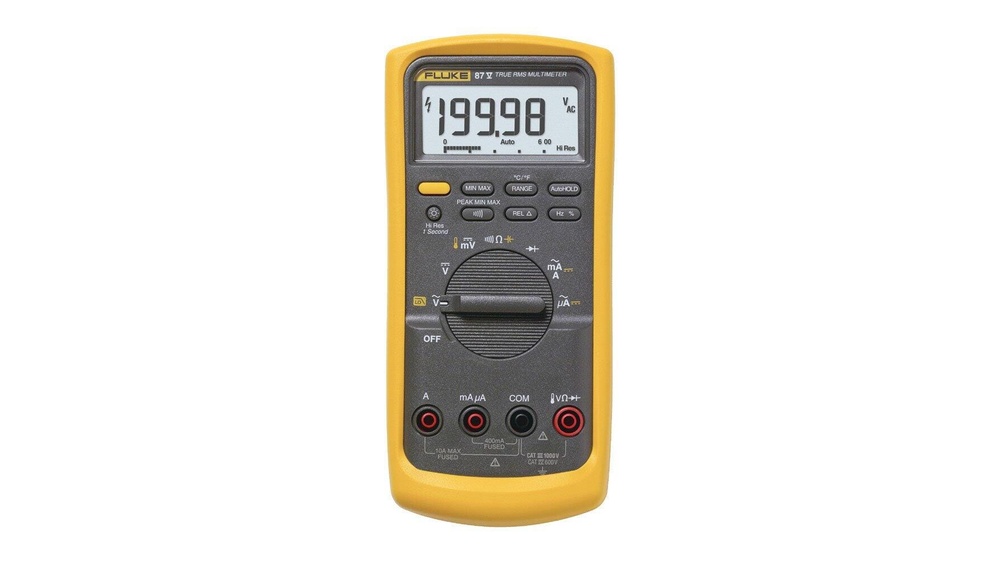
If you’ve ever worked with electrical systems, measured voltage, or troubleshot circuits, you’ve likely encountered the multimeter, a foundational tool in electronics. But not all multimeters are created equal. The distinction between True RMS (Root Mean Square) multimeters and standard averaging meters is a crucial one, especially for anyone seeking reliable measurements in real-world scenarios. Whether you’re a hobbyist, technician, or engineer, understanding why you need a True RMS multimeter can transform your work, prevent costly mistakes, and ensure safety.
As electrical devices and environments become more complex, the signals you measure are rarely pure sine waves. Instead, you’ll encounter distorted waveforms from variable speed drives, computers, LED lighting, and more. In these situations, a standard multimeter can deliver inaccurate readings, leading to erroneous conclusions and potential hazards. A True RMS multimeter, however, provides precision and trustworthiness across diverse signal types. This guide breaks down the science, practical advantages, and advanced tips for choosing and using True RMS meters, in beginner-friendly language, but with depth for advanced users.
Key Takeaways
- True RMS multimeters measure both pure and complex waveforms accurately, unlike standard averaging meters.
- Essential for diagnosing non-sinusoidal signals in modern electrical systems (computers, drives, LED lighting).
- Prevents measurement errors that can lead to equipment damage, downtime, or safety risks.
- Offers advanced features and higher reliability for professionals and serious hobbyists.
- Understanding the difference helps you choose the right tool for your needs, boosting both safety and efficiency.
What Is A True Rms Multimeter?
A True RMS multimeter is an electrical measurement instrument designed to accurately measure the root mean square value of alternating current (AC) and voltage, regardless of waveform shape. This feature is vital in environments where signals are not simple sine waves.
Rms Vs. Averaging: The Core Difference
Most basic multimeters use an averaging method, assuming the measured waveform is a perfect sine wave. Averaging meters simply calculate the average value and apply a mathematical conversion factor (usually 1. 11 for sine waves) to estimate RMS. This works only if the waveform is sinusoidal.
A True RMS meter, on the other hand, performs a mathematical calculation on the actual sampled waveform:
- RMS value is the square root of the mean of the squares of the instantaneous values.
- This calculation accurately reflects the real energy delivered by the signal, regardless of its shape.
Why Rms Matters
RMS is the industry standard for expressing AC voltage and current. It’s directly related to the heating effect (power) of the signal in resistive loads. Measuring the RMS value gives you the true equivalent to a DC value in terms of energy.
Example: If you have a waveform full of spikes and dips (like those from a variable frequency drive), only a True RMS meter will report the actual energy content.
How True Rms Meters Work
True RMS meters use digital signal processing or analog circuits to sample the waveform, square each value, calculate the mean, and then take the square root. This process enables them to handle:
- Sinusoidal signals (standard wall voltage)
- Non-sinusoidal signals (distorted, pulsed, or complex waveforms)
Pro Tip: If you’re working with modern electronics, you’re almost certainly encountering non-sinusoidal signals.

Credit: www.fluke.com
The Limitations Of Standard Multimeters
For many years, standard (averaging) multimeters were the default choice. However, their limitations become apparent as electrical systems grow more sophisticated.
When Standard Meters Fail
Standard multimeters provide accurate readings only when measuring pure sine waves. If the waveform is distorted, the reading can be off by a significant margin, sometimes up to 40% or more.
| Meter Type | Sinusoidal Signal Accuracy | Non-Sinusoidal Signal Accuracy | Typical Applications |
|---|---|---|---|
| Standard (Averaging) | High | Low | Basic residential, simple AC circuits |
| True RMS | High | High | Industrial, electronics, variable speed drives |
Real-world Risks
- Incorrect readings can lead to misdiagnosis, unsafe repairs, and equipment damage.
- In my experience, measuring the output of a variable frequency drive with a standard meter reported 120V, while the actual RMS value was closer to 100V on a True RMS meter, a 20% error that could affect performance and safety.
Devices That Require True Rms
- Computers, servers, and networking equipment
- Variable frequency drives (motors)
- LED lighting and switching power supplies
- UPS (Uninterruptible Power Supply) systems
Example: Measuring the voltage supplied to a server rack with a standard meter could misreport the actual energy, causing you to overlook potential issues.

Credit: www.foxvalleymetrology.com
Why True Rms Is Essential For Modern Electrical Work
The shift toward electronic controls, energy efficiency, and digital devices means that the signals you measure are increasingly complex.
Complex Waveforms In The Real World
Modern devices generate distorted waveforms due to:
- Pulse-width modulation in motor controls
- Switching power supplies in computers and LED lights
- Electronic ballasts in lighting
These waveforms contain harmonics, spikes, and non-linear characteristics. Only a True RMS meter can accurately report their real power.
Safety And Compliance
- Electrical codes (e.g., NEC, IEEE standards) require accurate measurement of RMS values for compliance and safety.
- In industrial settings, failure to measure RMS correctly can lead to overheating, insulation breakdown, and hazardous conditions.
Energy Efficiency And Troubleshooting
- Accurate RMS measurements help identify energy losses, harmonics, and inefficiencies.
- Technicians rely on True RMS readings to pinpoint faulty equipment and optimize performance.
Pro Tip: For energy audits and preventive maintenance, a True RMS meter is indispensable.

Credit: www.fluke.com
How To Choose The Right True Rms Multimeter
Selecting a True RMS multimeter involves balancing accuracy, features, and budget. Here’s a guide for beginners and advanced users.
Key Features To Consider
- Display Resolution: Higher resolution means more precise readings, especially for small signals.
- Bandwidth: The frequency range the meter can accurately measure. For advanced work, look for meters with high bandwidth (up to 100 kHz or more).
- Safety Ratings: Ensure the meter meets CAT III or CAT IV standards for industrial use.
- Data Logging: Useful for monitoring trends over time (especially in advanced troubleshooting).
- Temperature Measurement: Many True RMS meters include thermocouple inputs.
Comparison Table: True Rms Multimeter Features
| Feature | Basic True RMS Meter | Advanced True RMS Meter |
|---|---|---|
| Display Resolution | 4,000 counts | 60,000 counts |
| Bandwidth | Up to 1 kHz | Up to 100 kHz |
| Safety Rating | CAT II | CAT IV |
| Data Logging | No | Yes |
| Temperature Measurement | No | Yes |
Brands And Models
Leading brands such as Fluke, Keysight, and Extech offer a range of True RMS meters, from budget-friendly options to advanced models with wireless connectivity.
Pro Tip: For beginners, start with a reliable, mid-range meter like the Fluke 115. For advanced users, consider the Fluke 87V or Keysight U1282A for expanded features.
Budget Considerations
True RMS meters are more expensive than standard models, but the investment pays off in accuracy, safety, and reliability. Prices range from $50 for basic models to $500+ for industrial-grade instruments.
Practical Applications: Real-world Case Studies
To highlight the benefits, let’s examine three scenarios where True RMS meters are indispensable.
Case Study 1: Industrial Motor Maintenance
A maintenance technician at a factory uses a True RMS meter to check the output voltage of a variable frequency drive (VFD) powering a motor. The VFD produces a waveform with sharp edges and harmonics. A standard meter shows 240V, but the True RMS meter reveals the actual RMS value is 200V.
Identifying this discrepancy prevents motor overheating and prolongs equipment life.
Case Study 2: Led Lighting Installation
An electrician installing LED lighting in a commercial building measures the circuit voltage. LEDs use switching power supplies, producing a non-sinusoidal waveform. The True RMS meter shows accurate voltage, helping the electrician confirm proper installation and avoid flicker or premature failures.
Case Study 3: Computer Server Troubleshooting
A network engineer uses a True RMS meter to test the power delivered to a server rack. The uninterruptible power supply (UPS) generates a stepped waveform, which a standard meter misreads as 120V. The True RMS meter reports 110V, alerting the engineer to a possible undervoltage condition and preventing downtime.
Example: In my experience, using a True RMS meter for VFD troubleshooting saved hours of guesswork and prevented equipment damage.
Advanced Suggestions For Seasoned Professionals
For advanced users, True RMS meters offer features and capabilities that extend beyond basic measurements.
Using Bandwidth To Detect Harmonics
Harmonics are higher-frequency components that can cause equipment malfunction and energy waste. Advanced True RMS meters with high bandwidth can detect and quantify these harmonics, aiding in power quality audits.
- Look for meters with bandwidth up to 100 kHz for comprehensive analysis.
Data Logging And Wireless Connectivity
Modern True RMS meters can log data over time and transfer it wirelessly to computers or smartphones. This is invaluable for:
- Identifying intermittent faults
- Generating reports for compliance
- Monitoring trends for preventive maintenance
Pro Tip: Wireless connectivity allows you to monitor live readings remotely, improving safety during high-voltage testing.
Integrating Multimeters With Other Test Equipment
True RMS meters often interface with oscilloscopes, clamp meters, and thermal cameras for a holistic approach to diagnostics. Advanced users can leverage these tools to:
- Visualize waveform shape
- Correlate RMS readings with thermal hotspots
- Build comprehensive diagnostic profiles
Safety Protocols For High-energy Environments
Always verify the CAT rating of your meter before testing industrial circuits. Advanced meters often include features like:
- Low impedance mode to filter noise
- Fuse protection for input jacks
- Isolated inputs to prevent shock hazards
Warning: Using a standard meter in high-energy environments can be dangerous and may violate safety regulations.
Step-by-step Guide: Using A True Rms Multimeter
Whether you’re a beginner or an expert, proper technique ensures accurate and safe measurements.
Preparing For Measurement
- Inspect the Meter: Check for physical damage, expired calibration, and correct CAT rating.
- Select the Function: Set the dial to voltage, current, or resistance as needed.
- Choose the Range: Use auto-range if available, or manually set the range for more precision.
Measuring Ac Voltage
- Connect probes to the circuit.
- Observe the reading. If the waveform is complex, the True RMS meter will display the correct value.
Measuring Current
- Use the appropriate input jacks (often separate for current).
- For high currents, use a clamp adapter if available.
Advanced Measurements
- Record readings over time for trend analysis.
- Use the meter’s harmonic detection or min/max functions.
Pro Tip: Always disconnect power before changing measurement modes or probe positions.
Common Mistakes And How To Avoid Them
Even with the right meter, errors can occur. Here’s how to stay accurate and safe.
Mistake 1: Using The Wrong Meter
Using a standard meter for non-sinusoidal signals yields incorrect readings. Always use True RMS for modern equipment.
Mistake 2: Ignoring Safety Ratings
Testing industrial circuits with a meter rated only for residential use can be hazardous. Verify CAT rating before use.
Mistake 3: Poor Probe Placement
Loose or incorrect probe connections can cause false readings or shock risks. Always double-check probe placement.
Mistake 4: Not Calibrating The Meter
Meters drift over time. Schedule regular calibration to maintain accuracy.
Mistake 5: Overlooking Harmonics
High harmonics can distort readings and cause equipment problems. Use meters with harmonic detection for advanced diagnostics.
Comparing True Rms Vs. Standard Multimeters: A Data-driven Perspective
To illustrate the impact, let’s compare readings in three scenarios.
| Scenario | Standard Meter Reading | True RMS Meter Reading | Error (%) |
|---|---|---|---|
| Pure Sine Wave | 120V | 120V | 0% |
| VFD Output | 140V | 100V | 40% |
| LED Lighting Circuit | 130V | 110V | 18% |
Source: Wikipedia
This data demonstrates the critical need for True RMS meters in non-sinusoidal environments.
Industry Standards And Compliance
True RMS measurement is not just a technical preference, it’s often mandated by regulations and standards.
National Electrical Code (nec) Requirements
The NEC requires accurate RMS measurements for load calculations and safety compliance. Using averaging meters can violate code and lead to failed inspections.
Ieee And Iec Standards
Organizations such as IEEE and IEC specify RMS measurement for power quality analysis, harmonics, and equipment design.
- True RMS meters ensure compliance with these standards.
Insurance And Liability
In industrial settings, inaccurate measurements can expose organizations to insurance claims and liability. True RMS meters help mitigate these risks.
Pro Tip: Always reference the latest standards before performing electrical audits.
Frequently Asked Questions
What Does True Rms Mean In A Multimeter?
True RMS stands for True Root Mean Square. It refers to the meter’s ability to measure the actual energy content of AC signals, regardless of waveform shape. This capability is essential for accurately assessing signals with harmonics, spikes, or complex patterns found in modern electrical systems.
Can I Use A Standard Multimeter For All Measurements?
No, standard multimeters are limited to sinusoidal waveforms. For signals from devices like variable frequency drives, computers, or LED lighting, a standard meter can give incorrect readings. A True RMS meter is required for accuracy in these scenarios.
How Often Should I Calibrate My True Rms Multimeter?
Calibration frequency depends on usage and manufacturer recommendations. For professional or industrial use, annual calibration is standard. Frequent calibration ensures the meter maintains accuracy, especially when measuring critical systems.
Are True Rms Multimeters Worth The Extra Cost?
Yes, especially if you’re working with modern electronics or industrial equipment. The higher upfront cost is offset by improved accuracy, safety, and compliance. For basic household tasks, a standard meter may suffice, but for anything beyond, True RMS is the better investment.
What Safety Precautions Should I Follow With True Rms Meters?
Always check the CAT rating, inspect for damage, use proper probes, and follow manufacturer guidelines. For high-voltage or industrial environments, ensure the meter is rated for the application. Consult a qualified electrician if unsure, especially for complex or hazardous measurements.
The evolution of electrical systems has made True RMS multimeters an essential tool for anyone serious about accurate measurement, safety, and efficiency. From beginners learning the basics to advanced users performing diagnostics and audits, True RMS meters offer unmatched reliability. By understanding the principles, features, and practical applications outlined in this guide, you’ll be equipped to make informed decisions, avoid costly mistakes, and ensure compliance with industry standards. Investing in a True RMS multimeter is not just about precision, it’s about safeguarding your work, your equipment, and yourself. For further reading on multimeter accuracy and standards, visit Fluke.