
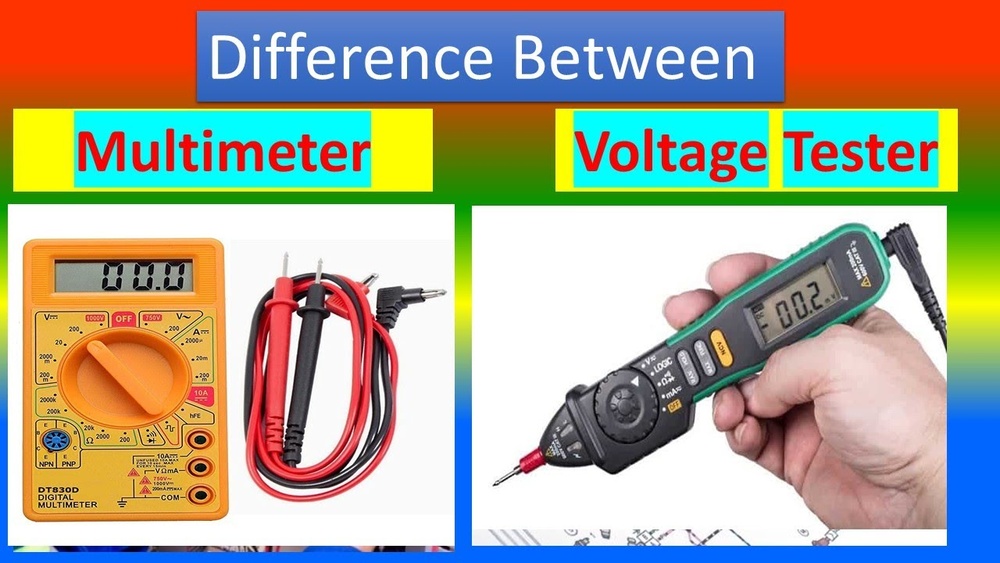
A tangled mess of wires, a sparking outlet, or a flickering light, these are moments when understanding your electrical tools can mean the difference between a quick fix and a costly mistake. For both homeowners and professionals, knowing when to reach for a multimeter versus a voltage tester is crucial. While they often share space in the same toolbox, these devices serve distinct purposes, and using the wrong one can compromise safety, accuracy, and efficiency.
If you’re new to electrical troubleshooting, the technical jargon can feel overwhelming. But with the right guidance and a clear breakdown of differences, anyone can master the basics and even advance to more complex diagnostics. This article strips away the confusion, explaining what sets multimeters and voltage testers apart, how each works, when to use them, and which is best for your needs, whether you’re tightening a loose socket at home or diagnosing intricate circuit issues as a professional.
Key Takeaways
- Multimeters measure multiple electrical properties (voltage, current, resistance), while voltage testers only detect the presence of voltage.
- Voltage testers are simpler, safer, and ideal for quick checks, but multimeters offer deeper diagnostics and precision.
- Understanding the strengths and limitations of each tool can prevent electrical accidents and equipment damage.
- Beginners should start with voltage testers for basic safety checks, advancing to multimeters as skills grow.
- Professionals often use both tools: Testers for rapid screening, multimeters for detailed measurements.
- Choosing the right device involves considering your skill level, the complexity of the task, and safety requirements.

Credit: www.dynamicgroup.net.au
What Is A Multimeter? Core Functions And Types
A multimeter is an essential handheld instrument in the electrical world. Its main purpose is to measure several different electrical properties in circuits and devices. Multimeters combine multiple testing functions into one tool, making them extremely versatile for troubleshooting and diagnostics.
How Multimeters Work
At its core, a multimeter can measure:
- Voltage (Volts): The potential difference between two points.
- Current (Amperes): The flow of electric charge.
- Resistance (Ohms): How much a component resists electrical flow.
Most modern multimeters are digital multimeters (DMMs), displaying readings on an LCD screen. Earlier models, known as analog multimeters, use a moving needle and dial.
When using a multimeter, you typically connect two probes (red for positive, black for negative) to the points you want to measure. The device then calculates and displays the relevant value.
Types Of Multimeters
Multimeters come in several varieties, each suited for different tasks:
- Analog Multimeters
- Use a needle and scale.
- Offer visual feedback on changing measurements.
- Less common today due to lower accuracy and fragility.
- Digital Multimeters (DMMs)
- Display readings on a digital screen.
- Feature higher accuracy, durability, and additional functions.
- Now the industry standard for professionals and hobbyists.
- Auto-Ranging vs. Manual-Ranging
- Auto-Ranging: Automatically selects the correct measurement range, reducing the risk of user error.
- Manual-Ranging: Requires the user to select the correct range, allowing for more control but demanding more knowledge.
- Specialized Multimeters
- Include features like temperature measurement, frequency counters, or data logging.
- Used in advanced diagnostics or engineering applications.
Primary Functions And Features
A multimeter’s versatility is defined by its features:
- Measuring AC/DC Voltage: Essential for household and automotive diagnostics.
- Measuring Current: Crucial for checking circuit loads.
- Measuring Resistance: Used to test fuses, bulbs, and continuity.
- Continuity Testing: Emits a beep if a circuit is complete, a fast way to find broken wires.
- Diode Testing: Checks the health of semiconductor components.
- Extra Features: Backlit displays, data hold, auto-shutoff, and min/max recording.
In my experience as an electronics instructor, starting with a basic DMM is the best way for beginners to learn about electrical properties and develop troubleshooting skills.

Credit: www.fluke.com
What Is A Voltage Tester? Types, Functions, And Safety
A voltage tester is a simple, purpose-built tool designed to answer a single question: Is voltage present? It’s the first line of defense for anyone working with electricity. Unlike multimeters, voltage testers do not measure quantities or values, they only indicate if voltage exists.
Types Of Voltage Testers
There are several types of voltage testers, each with unique applications and features:
- Non-Contact Voltage Testers (NCVT)
- Detect voltage without direct contact with conductors.
- Light up or beep when near live wires.
- Extremely safe and easy for beginners.
- Contact Voltage Testers
- Require direct contact with electrical wires or terminals.
- Often shaped like a screwdriver with a built-in neon lamp.
- Indicate presence of voltage with a visible light.
- Two-Pole Voltage Testers
- Feature two probes connected by a wire.
- Provide more accurate detection and sometimes display approximate voltage values.
- Preferred by professionals for reliability.
- Solenoid Voltage Testers
- Use a solenoid coil to indicate voltage level.
- Known for robustness, but can be bulkier and less precise.
Key Features And Safety Benefits
Voltage testers are designed for:
- Quick, clear indication of live circuits: Instantly show if an outlet, switch, or wire is energized.
- User safety: Many models are insulated, reducing shock risk.
- Single-purpose simplicity: No risk of selecting the wrong setting or range.
Warning: Voltage testers are not substitutes for multimeters when precise measurements are needed. Always confirm device capabilities before use.
Common Uses In Electrical Work
- Verifying if a circuit is safe to work on.
- Checking outlets, switches, and junction boxes for live wires.
- Identifying breaker issues or tripped circuits.
- Locating voltage in automotive or industrial settings.
Example: An electrician arriving at a home to replace a light fixture will first use a non-contact voltage tester to confirm the circuit is dead, ensuring safe working conditions.

Credit: www.differencebetween.net
Multimeter Vs. Voltage Tester: Side-by-side Comparison
Understanding the differences between a multimeter and a voltage tester is crucial for safety, accuracy, and efficient troubleshooting. Below is a detailed side-by-side comparison.
| Feature | Multimeter | Voltage Tester |
|---|---|---|
| Primary Function | Measures voltage, current, resistance, and more | Detects presence of voltage only |
| Complexity | More complex, multiple settings | Very simple, often single button/use |
| Display | Digital or analog readout of values | Light or sound indication |
| Required Skill Level | Beginner to advanced | Beginner friendly |
| Safety | Safe if used correctly; risk if settings are wrong | Very safe, especially non-contact models |
| Cost | Typically $20, $150+ | $5, $40 |
| Common Uses | Diagnostics, repairs, engineering | Quick voltage checks, basic troubleshooting |
| Limitations | Can be complicated for beginners | Does not provide exact values |
When To Use Each Tool
- Use a voltage tester for quick safety checks before working on electrical systems.
- Use a multimeter for detailed troubleshooting, measuring circuit loads, or diagnosing component failures.
Shared And Unique Features
Both tools are essential, but their overlap is limited:
- Multimeters can test for voltage presence, but require correct settings.
- Voltage testers offer immediate feedback, but lack diagnostic depth.
Visual Differences
- Multimeters are generally larger, with screens and multiple dials or buttons.
- Voltage testers are compact, often pen-shaped, and designed for single-handed use.
Pro Tip: For home DIY, start with a non-contact voltage tester. As you gain experience, a multimeter will unlock more advanced diagnostics and repairs.
Real-world Examples And Use Cases
Understanding how each tool performs in real-life situations reinforces when to use which device. Here are practical examples from both residential and professional settings.
Example 1: Home Electrical Outlet Troubleshooting
A homeowner notices that a wall outlet is not powering devices. Here’s how each tool would be used:
- Voltage Tester: The user inserts the tip into the outlet slots. If the tester does not light up or beep, the outlet is likely dead.
- Multimeter: The user sets the device to AC voltage mode and inserts the probes into the outlet. The screen displays the exact voltage (e.g., 120V). If the reading is significantly lower, it could indicate a loose connection.
*Advanced tip:* The multimeter can also measure resistance across the outlet with the power off, checking for a short circuit.
Example 2: Diagnosing A Faulty Light Switch
A professional electrician suspects a faulty switch in a lighting circuit:
- Voltage Tester: Used first for a quick check to confirm the switch is not live.
- Multimeter: Then used to measure continuity across the switch terminals. If there is no beep or reading, the switch is likely defective.
Example 3: Automotive Battery Check
A car owner wants to check if their battery is charged:
- Voltage Tester: Not suitable, as it only indicates presence/absence of voltage.
- Multimeter: Set to DC voltage, the probes are placed on the battery terminals. A reading of 12.6V indicates a fully charged battery; anything below 12V suggests a low or dead battery.
Example 4: Industrial Panel Safety
Before servicing a high-voltage industrial panel, a technician:
- Uses a non-contact voltage tester to check all exposed terminals for live voltage.
- Once confirmed safe, uses a multimeter to verify circuit continuity and perform further diagnostics.
These examples highlight how each tool fits into a safe and effective workflow, from basic checks to advanced problem-solving.
Beginner’s Guide: Choosing And Using Multimeters And Voltage Testers
For those just starting out, selecting the right tool and using it safely is paramount. Here’s a beginner-friendly roadmap with advanced suggestions for growth.
Selecting Your First Device
- Voltage Tester: Ideal for absolute beginners. Look for a non-contact model with a clear LED or audible alert.
- Multimeter: Choose a digital auto-ranging model for ease of use. Ensure it has basic functions (voltage, current, resistance, continuity).
Safe Usage Practices
- Read the Manual: Understand each button, dial, and warning.
- Check Batteries: Low batteries can give false readings.
- Inspect Probes and Leads: Damaged wires can be hazardous.
- Set Correct Mode: Incorrect settings can damage the device or cause injury.
- Test on a Known Source: Confirm your tool is working before trusting its readings.
Step-by-step: Using A Voltage Tester
- Hold the tester by its insulated handle.
- Bring the tip near the wire or outlet.
- Observe for light or sound indicating live voltage.
- Always double-check before touching any wires.
Step-by-step: Using A Multimeter
- Insert probes into the correct ports (COM and VΩmA).
- Select the function (e.g., AC voltage for outlets).
- Place probes on the test points.
- Read the displayed value.
- Disconnect and turn off the device after use.
Advancing Your Skills
- Learn to use the continuity and resistance modes for in-depth troubleshooting.
- Practice on de-energized circuits before testing live systems.
- Study common multimeter symbols and safety ratings (look for CAT II/III/IV ratings for added protection).
Pro Tip: Start simple. Even experienced electricians use voltage testers daily for safety checks before moving to complex diagnostics with a multimeter.
Advanced Insights: Limitations, Accuracy, And Professional Tips
As you grow more confident, understanding the nuances and limitations of each tool will help you avoid pitfalls and achieve better results.
Limitations Of Voltage Testers
- No quantitative data: Cannot measure how much voltage is present, only if it exists.
- Cannot test current or resistance: Useless for diagnosing blown fuses, faulty components, or tracing continuity.
- False positives/negatives: Nearby electromagnetic fields or worn batteries can cause inaccurate indications.
Limitations Of Multimeters
- User error risk: Incorrect settings (e.g., measuring current on a voltage setting) can damage the device or cause harm.
- More complex: Beginners may find the range of functions overwhelming.
- Size and portability: Larger and less convenient for quick checks compared to pen-style testers.
Measuring Accuracy And Safety
- Multimeter accuracy: Most quality DMMs have ±1-2% accuracy for voltage and resistance. For sensitive electronics, use a calibrated device for best results.
- Voltage tester reliability: Dependable for basic checks, but always verify with a multimeter if you suspect an issue.
| Task | Best Tool | Reason |
|---|---|---|
| Check if outlet is live | Voltage Tester | Fast, safe, simple |
| Measure battery voltage | Multimeter | Shows exact value |
| Diagnose circuit breaker trip | Both | Tester for safety; multimeter for further testing |
| Test continuity of a wire | Multimeter | Only device with continuity mode |
Professional Workflow Tips
- Double-check with both tools: For critical tasks, start with a voltage tester, then confirm findings with a multimeter.
- Keep spare batteries: Low power can cause both devices to fail or give false readings.
- Calibrate regularly: Professionals should calibrate multimeters annually for accuracy, especially in regulated industries.
Common Mistakes To Avoid
- Using a voltage tester to measure current or resistance.
- Forgetting to switch multimeter modes, leading to blown fuses or damaged circuits.
- Relying solely on one tool for comprehensive diagnostics.
Pro Tip: For advanced users, consider investing in a multimeter with True RMS capability for accurate measurement of non-sinusoidal AC signals, common in modern electronics.
How To Choose: Which Tool Is Right For You?
Selecting between a multimeter and a voltage tester depends on your needs, experience level, and project complexity.
For Homeowners And Diyers
- Start with a voltage tester for routine safety checks, testing outlets, light switches, and extension cords.
- Upgrade to a multimeter for appliance repairs, car battery checks, or deeper circuit troubleshooting.
For Students And Learners
- Practice on old electronics: Use a multimeter to measure voltages and resistances across different components.
- Experiment with both tools: Understanding the limitations and strengths of each builds confidence.
For Professionals
- Carry both tools: Use a voltage tester for quick safety checks, then switch to a multimeter for advanced diagnostics.
- Invest in quality: Professional-grade multimeters offer better accuracy, safety, and durability.
Decision-making Table
| User Type | Recommended Tool | Rationale |
|---|---|---|
| Beginner/Homeowner | Non-contact voltage tester | Safety and simplicity |
| Intermediate DIYer | Digital multimeter | Basic diagnostics and learning |
| Professional Electrician | Both | Speed and precision |
| Engineering Student | Advanced multimeter | Complex measurements and learning |
Where To Buy And What To Look For
- Trusted retailers and brands: Purchase from reputable sources like Fluke, Klein Tools, or Southwire.
- Certifications: Look for UL, CE, or CAT safety ratings.
- Price vs. features: Beginners can start with affordable models; professionals should invest in advanced features and rugged construction.
For more detailed product specifications and guidance, consult the Wikipedia Multimeter Guide and manufacturer manuals.
Frequently Asked Questions
What Are The Main Dangers Of Using A Multimeter Or Voltage Tester Incorrectly?
Improper use of a multimeter can lead to electric shock, short circuits, or device damage, especially if settings are incorrect or probes are inserted into the wrong ports. Voltage testers are generally safer, but relying on a faulty or uncalibrated tester can create a false sense of security. Always test your device on a known live circuit before use and wear appropriate personal protective equipment.
Can A Voltage Tester Replace A Multimeter For All Electrical Tasks?
No. Voltage testers only detect voltage presence, not specific values, current, or resistance. They are ideal for quick safety checks but cannot diagnose deeper electrical issues, test batteries, or measure circuit continuity. For comprehensive troubleshooting, a multimeter is necessary.
How Can I Tell If My Voltage Tester Or Multimeter Is Accurate?
For multimeters, accuracy is maintained by regular calibration and using quality brands. Some devices offer a calibration certificate or built-in self-checks. Voltage testers should always be tested on a known live source before each use. If the tester fails to indicate voltage when present, replace it immediately.
Are There Smart Or App-connected Versions Of These Tools?
Yes. Smart multimeters and voltage testers with Bluetooth or Wi-Fi connectivity are available. These can sync readings to a smartphone app, log data, or provide remote monitoring, useful for complex projects or teaching environments. For more information, visit the Fluke official website for current models and features.
What Safety Certifications Should I Look For When Buying These Tools?
Look for UL (Underwriters Laboratories), CE (Conformité Européenne), or CAT (Category) safety ratings. The higher the CAT rating (CAT II, III, IV), the more protection the device offers for high-energy environments. These certifications ensure the tool meets industry safety standards for electrical testing.
Selecting the right electrical testing tool is essential for both safety and success, whether you’re a beginner learning the basics or a seasoned professional tackling complex diagnostics. By understanding the distinct roles and strengths of multimeters and voltage testers, you can approach every project with confidence, accuracy, and peace of mind.