
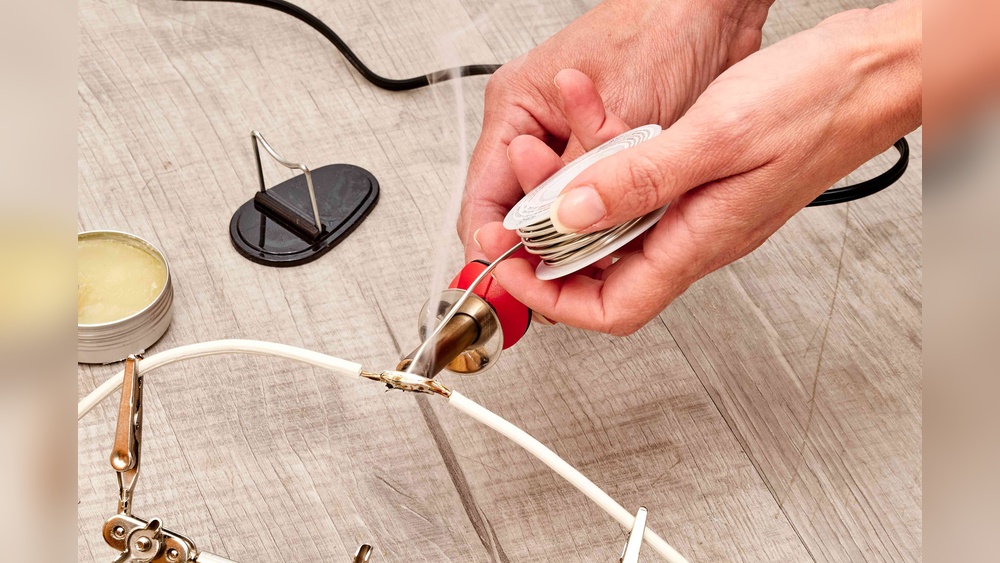
The sight of a soldering iron touching two wires, melting a bead of metal that fuses them together, has become synonymous with electronics repair, DIY projects, and professional manufacturing. But why do people solder wires, even in an age when connectors, crimp terminals, and wireless technologies have advanced so much?
The answer lies in the unique advantages that soldering offers for electrical connectivity, durability, and versatility. From improving signal integrity in high-end audio systems to ensuring safety in automotive wiring, soldering continues to be a cornerstone of electrical work.
In my experience as both a hobbyist and a professional, the decision to solder wires goes beyond tradition. It’s about creating reliable, long-lasting connections that can’t be matched by twisting wires or using quick-connect terminals alone. Whether you’re restoring a vintage radio, assembling a robotics kit, or wiring up a solar panel array, understanding the reasons people turn to soldering can help you choose the right technique for your next project.
Key Takeaways
- Soldering wires provides superior electrical conductivity and mechanical strength compared to many alternative connection methods.
- It is essential for permanent, low-resistance joints in electronics, automotive, aerospace, and industrial applications.
- Soldering ensures safety, longevity, and reliability in environments where vibration, corrosion, or temperature changes are concerns.
- The process requires skill, proper equipment, and an understanding of materials, but yields benefits that justify the learning curve.
- Advances in solder alloys, fluxes, and tools have made soldering more accessible and environmentally friendly than ever.
- Choosing to solder, versus using crimps or connectors, depends on the application, environment, and performance needs.

Credit: www.haltech.com
The Science Behind Soldering Wires
Soldering is more than just melting metal; it’s a carefully engineered process that forms both electrical and mechanical bonds between conductors. Understanding the science behind soldering explains why it’s favored over other connection methods in critical applications.
The Metallurgical Bond
When solder is heated above its melting point, typically between 180°C and 230°C for common lead-free solders, it doesn’t just sit on top of the wires. Instead, it creates a metallurgical bond. This bond forms as the molten solder wets the metal surfaces of the wires, dissolving a very thin layer and diffusing into the base materials. When the solder cools, it solidifies into a joint that conducts electricity almost as well as the original wire.
Role Of Flux In Soldering
A key ingredient in successful soldering is flux. Flux is a chemical cleaning agent that removes oxides from the metal surfaces, allowing the solder to bond cleanly. Without flux, oxidation would prevent the solder from adhering, leading to cold joints, brittle, unreliable connections that often fail under stress.
Electrical Conductivity And Resistance
One primary reason people solder wires is to minimize electrical resistance at the connection point. A well-soldered joint has a resistance nearly identical to that of the wire itself, ensuring minimal signal loss or heat buildup. In contrast, poorly made mechanical connections can introduce unwanted resistance, leading to voltage drops, power loss, or even fires.
Mechanical Strength And Durability
While solder is not as strong as the copper wire itself, it provides ample mechanical strength for most wire-to-wire or wire-to-terminal connections. The joint resists vibration, corrosion, and environmental stresses far better than twisted or taped wires. This mechanical reliability is crucial in automotive, aerospace, and industrial control systems.
| Connection Method | Electrical Resistance | Mechanical Strength | Corrosion Resistance |
|---|---|---|---|
| Soldering | Very Low | Moderate to High | High |
| Crimping | Low (if done properly) | High | Moderate |
| Wire Nut | Moderate | Low to Moderate | Low |
| Twisting Only | High | Low | Low |

Credit: www.reddit.com
Key Reasons People Solder Wires
People choose to solder wires for several compelling reasons, each rooted in the unique benefits soldering offers over other methods.
Superior Electrical Performance
Soldering creates a low-resistance electrical path that is vital for high-performance electronics. In applications where every millivolt counts, such as audio equipment, sensors, and microcontrollers, soldered joints ensure that signals are transmitted faithfully and without distortion.
Long-term Reliability
A soldered joint, when made correctly, can last decades. The airtight seal formed by solder prevents moisture and oxygen from reaching the copper, drastically reducing the risk of corrosion. This makes soldering the preferred method in environments with humidity, temperature swings, or exposure to chemicals.
Miniaturization And Space Efficiency
In modern electronics, space is at a premium. Soldering allows for compact, dense wiring that can’t be achieved with connectors or wire nuts. This is especially important in printed circuit boards (PCBs), where components are mounted and interconnected using tiny soldered joints.
Customization And Repair
Soldering is indispensable for custom electronics projects and repairs. Whether you’re building a custom cable harness, modifying a circuit board, or repairing a broken headphone wire, soldering provides the flexibility to create or restore connections to exact specifications.
Cost-effectiveness
Although there is an initial investment in tools and training, soldering is often more cost-effective for small-scale or one-off jobs. There is no need for specialized connectors, and the materials, solder and flux, are inexpensive and widely available.
Compliance With Industry Standards
In industries such as aerospace, automotive, and medical devices, soldering is often the only method that meets regulatory standards for electrical connections. These standards exist because soldered joints have been proven to withstand rigorous testing for safety and reliability.

Credit: www.reddit.com
Soldering Vs. Other Wire Connection Methods
Choosing between soldering and alternative connection methods depends on the application, required durability, and ease of assembly. Understanding these differences helps clarify why soldering remains a top choice for professionals and enthusiasts.
Soldering Vs. Crimping
Crimping involves using a special tool to compress a metal sleeve around wires, forming a mechanical and electrical bond. While crimping can be fast and reliable, especially in mass production, it requires precise technique and proper tools. Poorly crimped connections can loosen over time.
Soldering, in contrast, guarantees a consistent bond when done correctly, regardless of wire diameter or composition. However, it is slower and requires more skill.
| Feature | Soldering | Crimping |
|---|---|---|
| Speed | Slower | Faster |
| Skill Required | Moderate to High | Moderate |
| Repeatability | High (with experience) | High (with proper tools) |
| Field Repairability | Good | Excellent |
| Use in Vibration | Good (with strain relief) | Excellent |
Soldering Vs. Wire Nuts And Twisting
Wire nuts are commonly used in household electrical work to join wires quickly. Twisting is sometimes used as a temporary fix. Neither method offers the reliability, corrosion resistance, or compactness of a soldered joint.
Example: In automotive wiring, vibration and moisture can quickly cause twisted or wire-nut connections to fail, while soldered joints remain stable for the life of the vehicle.
Soldering Vs. Terminal Blocks And Connectors
Terminal blocks and connectors are favored for modularity and ease of disassembly. However, they add bulk and potential points of failure. Soldering is superior when a permanent, low-profile connection is needed, such as inside compact electronic devices.
When To Choose Soldering
- When a permanent, high-conductivity joint is required
- For projects where space is limited
- In environments with high vibration or moisture
- When repairing or customizing electronics
Real-world Applications And Case Studies
The true value of soldering wires becomes evident in real-world scenarios, where reliability and performance are non-negotiable.
Automotive Wiring Repairs
In vehicle electrical systems, wires are exposed to constant vibration, temperature swings, and moisture. Soldered splices and terminal connections ensure that headlights, sensors, and control modules remain operational. According to the Society of Automotive Engineers (SAE), soldered joints, when paired with heat shrink tubing, significantly reduce the risk of intermittent failures compared to crimp or twist connections.
Aerospace And Defense Electronics
The aerospace industry demands the highest standards of reliability. NASA, for instance, specifies soldered connections for many wire harnesses and PCB assemblies on spacecraft, citing the need for zero-defect, vibration-resistant joints (NASA Technical Reports). Soldering ensures that vital systems, from avionics to life support, remain operational in extreme conditions.
Home Audio And High-fidelity Systems
Audiophiles often prefer soldered connections for speaker cables and component wiring. The low-resistance, noise-free path provided by soldered joints preserves audio quality, eliminating the signal degradation that can occur with push-on connectors or twisted wires.
Example: When rewiring a vintage tube amplifier, I found that replacing corroded twist-and-tape connections with fresh soldered joints dramatically reduced background hum and improved sound clarity.
Diy Electronics And Robotics
For hobbyists and makers, soldering is an essential skill. Custom circuits, sensor modules, and robotics kits all rely on soldered joints for reliable operation. The ability to create tailored wiring solutions empowers innovation and experimentation.
Industrial And Control Systems
Factories and automated systems depend on the long-term reliability of soldered wire connections. Control panels, sensors, and actuators often operate in harsh environments, and soldered joints help minimize downtime caused by loose or corroded connections.
The Soldering Process: Tools, Techniques, And Best Practices
Soldering wires may seem straightforward, but achieving professional results requires proper tools, technique, and attention to detail. Each step in the process influences the quality and durability of the final joint.
Essential Tools For Soldering Wires
- Soldering Iron: The core tool, available in a range of wattages. Temperature-controlled irons offer better precision.
- Solder: Commonly available as lead-free (Sn99.3/Cu0.7) or traditional leaded (Sn63/Pb37) alloys. Diameter and flux core type matter.
- Flux: Either as a paste, liquid, or pre-applied in solder wire. Crucial for cleaning and preparing the joint.
- Wire Strippers: For cleanly removing insulation without damaging conductors.
- Helping Hands/Clamps: To hold wires steady and prevent movement during soldering.
- Heat Shrink Tubing: For insulation and strain relief after soldering.
Step-by-step Soldering Technique
- Strip the Wire: Remove 1/4 to 1/2 inch of insulation, exposing clean copper.
- Twist the Wires (if joining): For splicing, twist wires together to create a stable base.
- Apply Flux: Coat the exposed wire with flux to remove oxides.
- Tin the Wire: Melt a small amount of solder onto the tip of the wire (“tinning”) for better flow.
- Heat and Solder: Place the iron beneath the joint, feed solder into the top until it flows and covers the connection.
- Cool and Inspect: Allow the joint to cool naturally, then inspect for a shiny, smooth appearance.
- Insulate: Slide heat shrink tubing over the joint and shrink it for protection.
Best Practices For Reliable Joints
- Always use the right temperature (typically 350, 400°C for most wires).
- Avoid excessive solder, which can cause short circuits.
- Never move the joint while cooling, as this causes weak “cold solder” joints.
- Use adequate ventilation to avoid inhaling fumes.
- Regularly clean the iron tip for better heat transfer.
Pro Tip: If solder doesn’t flow smoothly, the wire may be dirty or oxidized. Re-clean and reapply flux for best results.
Common Mistakes And How To Avoid Them
- Cold Joints: Dull, cracked, or grainy surfaces indicate poor heat or contamination.
- Overheating: Prolonged heat can damage wire insulation or components.
- Insufficient Solder: Too little solder can leave gaps, while too much can bridge wires.
- Skipping Flux: Always use flux for clean, reliable bonds.
Safety Considerations
- Use eye protection to guard against solder splashes.
- Wash hands after handling solder, especially if using leaded varieties.
- Work in a well-ventilated area to avoid inhaling fumes.
Advances In Soldering Materials And Technology
Modern soldering has evolved significantly, with new materials and tools improving both the safety and effectiveness of the process.
Lead-free Solder Alloys
In response to environmental and health concerns, most consumer electronics now use lead-free solders. These alloys, typically composed of tin, copper, and silver, offer similar performance to traditional leaded solders but require slightly higher temperatures.
According to the European Union’s RoHS directive (Wikipedia), lead content in solder has been restricted in electronics manufacturing since 2006, driving widespread adoption of safer alternatives.
Improved Flux Formulations
Newer no-clean fluxes leave minimal residue, eliminating the need for post-solder cleaning. Water-soluble fluxes simplify cleaning in mass production. These advances reduce the risk of corrosion and electrical leakage.
Precision Soldering Tools
Temperature-controlled irons, soldering stations with digital displays, and advanced tip coatings have made soldering more precise and user-friendly. Soldering robots and automated systems are now used in high-volume manufacturing for consistent, repeatable joints.
Soldering Accessories And Aids
- Desoldering pumps and wick for correcting mistakes
- Pre-tinned wires for faster assembly
- Solder sleeves that combine solder and heat shrink in one step
Environmental And Health Considerations
Manufacturers now offer lead-free and halogen-free solders, reducing environmental impact. Fume extractors and personal protective equipment further improve safety for frequent users.
| Solder Type | Composition | Melting Point (°C) | RoHS Compliance |
|---|---|---|---|
| Lead-Based | Sn63/Pb37 | 183 | No |
| Lead-Free | Sn99.3/Cu0.7 | 227 | Yes |
| Silver-Bearing | Sn96.5/Ag3.0/Cu0.5 | 217 | Yes |
Common Challenges And How To Overcome Them
Soldering wires can present challenges, especially for beginners or in demanding environments. Addressing these issues ensures high-quality results.
Soldering Difficult Metals
Wires made of aluminum, stainless steel, or nickel are harder to solder due to their oxide layers and poor wettability. Specialized fluxes and solders are required for these materials.
Soldering In Confined Spaces
Tight spaces can make it hard to maneuver the iron and see the joint. Using fine-tipped irons, pre-tinned wires, and magnifiers can help.
Dealing With Heat-sensitive Components
Some wires are connected to delicate electronic parts. Heat sinks or alligator clips can be used to absorb excess heat, preventing damage.
Ensuring Mechanical Strength
For wires subject to vibration or movement, adding strain relief, such as looping the wire through a hole before soldering or using heat shrink tubing, prevents flexing at the joint.
Avoiding Cold Solder Joints
Cold joints are the bane of reliability. Always ensure the joint is fully heated and the solder flows smoothly across all surfaces.
How To Decide: When Should You Solder Wires?
The choice to solder wires depends on specific criteria. Understanding these helps you select the best method for your application.
Criteria For Choosing Soldering
- Permanence: Soldering is ideal for permanent connections where disassembly is unlikely.
- Electrical Performance: Where low resistance and high fidelity are needed (e.g., sensors, audio, data lines).
- Size Constraints: Soldering is best when space is limited and bulk connectors won’t fit.
- Environmental Exposure: Soldered joints, when insulated, resist moisture and corrosion.
- Customization: For unique projects or repairs, soldering offers flexibility not matched by standard connectors.
When Not To Solder
- Frequent Disassembly: If the connection needs to be unplugged repeatedly, use connectors.
- Field Repairs: Crimps or terminal blocks may be faster for quick fixes on site.
- High Current Loads: For heavy-gauge wires, crimped or bolted connections may offer greater mechanical strength.
Industry Guidelines
Many industries publish best practice standards for wire connections. For example, the IPC-A-610 standard covers electronic assemblies, while the NEC (National Electrical Code) governs residential wiring, which often prohibits solder-only joints for safety.
Example Scenarios
- Building a Custom Guitar Cable: Soldering ensures low-noise, durable connections that withstand stage use.
- Repairing a Car’s Tail Light: Soldering with heat shrink offers a waterproof, vibration-resistant joint superior to a twist-and-tape repair.
- Prototyping a Robot: Soldered wires save space and reduce weight, key in mobile or aerial robotics.
Frequently Asked Questions
What Is The Difference Between Soldering And Welding Wires?
Soldering and welding are both methods of joining metals, but they differ fundamentally. Soldering uses a filler metal (solder) with a melting point below 450°C to join wires without melting the base metals. Welding involves melting the base metals themselves, typically at much higher temperatures, to form a single piece. Welding is used for structural joints, while soldering is chosen for electrical and small-scale mechanical connections.
Is Soldering Wires Safe For High-voltage Applications?
While soldering provides excellent electrical connectivity, it is not always recommended as the sole method for high-voltage wiring due to potential joint failure from heat or mechanical stress. In high-voltage scenarios, connections are often bolted or crimped and sometimes soldered as an additional measure. Always consult electrical codes and standards when working with high voltage.
How Does Soldering Affect Wire Flexibility?
Soldered joints are less flexible than bare wire because the solder creates a rigid section. If the wire is repeatedly bent at the joint, it can fracture over time. To maintain flexibility, use strain relief methods such as looping the wire or adding heat shrink tubing to distribute stress away from the joint.
Can Soldered Wire Connections Be Waterproofed?
Yes, soldered wire connections can be made water-resistant or even waterproof by covering them with adhesive-lined heat shrink tubing or potting compounds. This is common in marine, automotive, and outdoor electrical installations to prevent corrosion and ensure long-term reliability.
What Should I Do If My Soldered Joint Looks Dull Or Cracked?
A dull or cracked joint often indicates a cold solder joint, which is unreliable and prone to failure. To fix it, reheat the joint with the soldering iron, add a small amount of fresh solder and flux, and allow it to cool undisturbed. The finished joint should appear shiny and smooth for optimal performance.
The art and science of soldering wires remain central to electrical work, from the smallest DIY project to the most demanding aerospace systems. By understanding why soldering is chosen, mastering the technique, and recognizing its strengths and limitations, you can make informed decisions that ensure the safety, performance, and longevity of your electrical connections.
Whether you’re a seasoned professional or just starting out, soldering is a skill worth developing for anyone serious about electronics.