
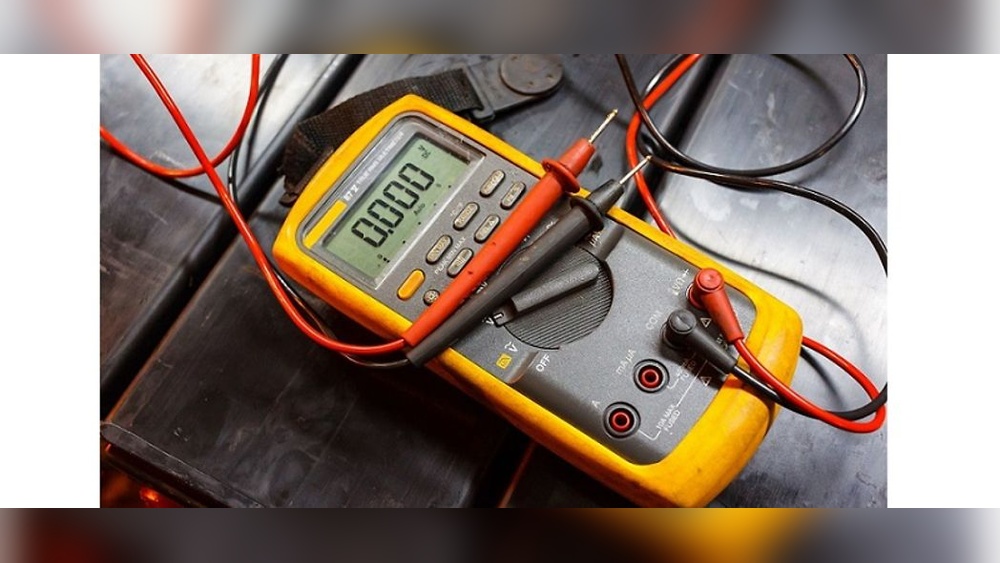
A multimeter and an ohmmeter are two foundational instruments in the toolkit of anyone working with electronics or electrical systems, from hobbyists to professional engineers. Yet, for many beginners, the distinction between these devices can feel blurry. Both tools are used to measure properties of electrical circuits, but their specific functions, features, and applications differ significantly.
Understanding these differences is essential not only for accurate measurements but also for ensuring safety and efficiency in any electrical project.
As technology advances and electrical systems become more complex, selecting the right tool for a given task is more important than ever. Whether you’re troubleshooting a faulty wire in a home appliance or conducting sophisticated tests in a laboratory, knowing when to use a multimeter versus an ohmmeter can save you time, money, and frustration.
This article offers a comprehensive, beginner-friendly explanation of each tool, their respective uses, and advanced suggestions for getting the most out of your measurements, supported by data tables, real-world examples, and expert tips.
Key Takeaways
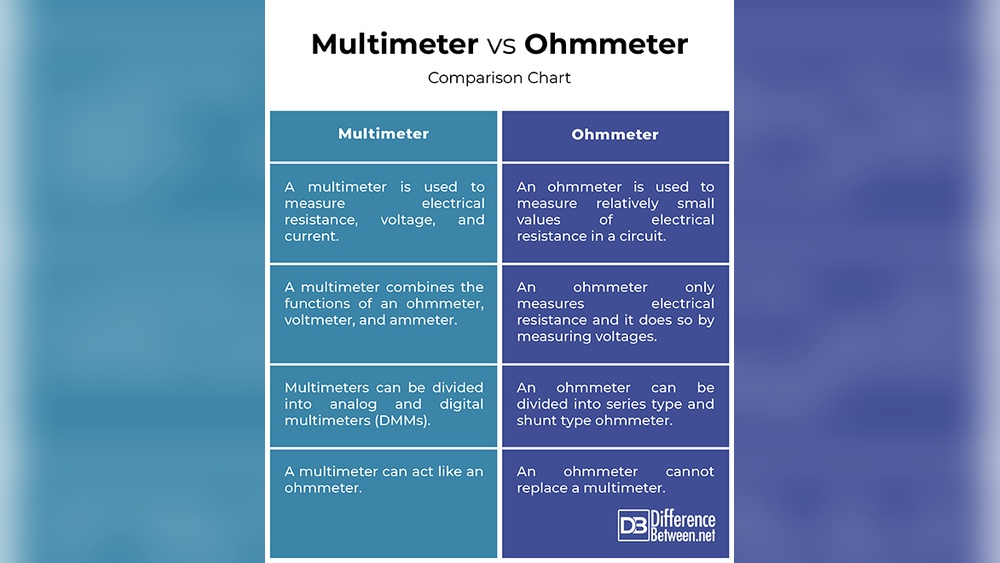
- A multimeter combines several functions, including measuring voltage, current, and resistance, while an ohmmeter is specialized for measuring resistance only.
- Multimeters are more versatile and commonly used for diagnostics, making them a staple for most users, whereas ohmmeters provide more precise resistance measurements in specialized scenarios.
- Both digital and analog versions exist for each device, but digital models are now standard due to greater accuracy and usability.
- Choosing between a multimeter and an ohmmeter depends on your needs: General troubleshooting favors a multimeter, while precise resistance testing may require a dedicated ohmmeter.
- Proper technique and calibration are essential for accurate readings, regardless of the device.
Understanding The Multimeter
A multimeter is a multifunctional device that enables users to measure several electrical properties within a single unit. Its core capabilities include measuring voltage (voltmeter), current (ammeter), and resistance (ohmmeter function), making it an indispensable tool for both troubleshooting and regular maintenance.
What Is A Multimeter?
A multimeter, sometimes called a VOM (Volt-Ohm-Milliammeter), is designed to assess various aspects of an electrical circuit. The two main categories are:
- Analog multimeters: Feature a needle and scale for readouts, requiring careful observation and interpretation.
- Digital multimeters (DMMs): Display results on an LCD, providing more precise and easier-to-read measurements.
Most modern multimeters are digital and often include additional features such as continuity tests, diode tests, capacitance measurements, and, in advanced models, even temperature and frequency measurements.
How Does A Multimeter Work?
A multimeter operates by connecting two probes to points within an electrical circuit. Depending on the selected mode (voltage, current, resistance), the device applies a specific internal circuit to analyze the desired parameter. For example, in resistance mode, it sends a small current through the component and measures the resulting voltage drop.
Key Features And Specifications
Multimeters are rated by parameters such as:
- Measurement range (e.g., 0-600V for voltage)
- Resolution (the smallest change detectable)
- Accuracy (how close the reading is to the true value)
- Safety rating (CAT II, III, IV for different environments)
The following table illustrates some typical specifications for entry-level and advanced digital multimeters:
| Feature | Basic DMM | Advanced DMM |
|---|---|---|
| Voltage Range | 0, 600V | 0, 1000V |
| Current Range | 0, 10A | 0, 20A |
| Resistance Range | 0, 20MΩ | 0, 100MΩ |
| Resolution | 0.01V | 0.001V |
| Additional Functions | Continuity, Diode Test | Capacitance, Frequency, Temperature |
Real-world Example: Diagnosing A Faulty Outlet
Suppose you’re dealing with a power outlet that isn’t working. With a multimeter, you can:
- Check for voltage at the outlet.
- Measure resistance to test if the circuit is open.
- Use the continuity function to verify wiring integrity.
This versatility makes the multimeter the go-to tool for both quick checks and in-depth analysis.
Advanced Suggestions For Multimeter Use
- Auto-ranging feature: Invest in an auto-ranging digital multimeter to avoid manual range selection, reducing the risk of errors.
- True RMS capability: For measuring non-sinusoidal AC signals, a True RMS multimeter ensures accurate readings.
- Calibration: Regularly calibrate your multimeter according to manufacturer guidelines for consistent accuracy.
- Pro Tip: Always start with the highest range to prevent damage to the device, then narrow down as needed.
Credit: electrozlab.com
Exploring The Ohmmeter
While a multimeter can measure resistance, a dedicated ohmmeter is specifically engineered for this task, often providing higher precision and specialized features for resistance testing.
What Is An Ohmmeter?
An ohmmeter is a single-function instrument that measures the resistance between two points in an electrical circuit, typically expressed in ohms (Ω). Ohmmeters come in various forms:
- Series ohmmeter: Used for low resistance measurements.
- Shunt ohmmeter: Designed for higher resistance values.
- Digital ohmmeters: Provide direct numeric readouts.
Dedicated ohmmeters are common in laboratory and industrial settings where highly accurate resistance readings are required.
How Does An Ohmmeter Work?
An ohmmeter applies a known voltage through the test leads and measures the current that flows through the component. Using Ohm’s Law (V=IR), it calculates the resistance. The accuracy of this measurement depends on the stability of the internal reference voltage and the sensitivity of the ammeter inside the device.
Key Features And Specifications
Ohmmeters are typically characterized by:
- Measurement range: Usually broader and more sensitive than in multimeters.
- Accuracy: Higher, especially in laboratory models.
- Resolution: Finer granularity for detecting small changes in resistance.
Here’s a comparison table outlining typical specifications:
| Feature | Basic Ohmmeter | Precision Ohmmeter |
|---|---|---|
| Resistance Range | 0, 10MΩ | 0, 1GΩ |
| Resolution | 0.1Ω | 0.0001Ω |
| Accuracy | ±2% | ±0.01% |
| Advanced Features | Basic display | Temperature compensation, Data logging |
Real-world Example: Testing Motor Windings
In industrial maintenance, a technician might use a precision ohmmeter to measure the resistance of motor windings. Small changes in resistance can indicate issues like shorted turns or degraded insulation, problems that general-purpose multimeters may not detect due to limited resolution.
Advanced Suggestions For Ohmmeter Use
- Four-wire measurement (Kelvin method): For ultra-accurate readings, use a 4-wire ohmmeter to eliminate errors from lead resistance.
- Temperature compensation: Resistance varies with temperature; advanced ohmmeters offer compensation features for consistent results.
- Zeroing function: Before measuring very low resistances, always zero the instrument to account for test lead resistance.
- Pro Tip: When measuring resistance, always disconnect power and isolate the component from the circuit to avoid inaccurate readings and device damage.

Credit: www.differencebetween.net
Multimeter Vs. Ohmmeter: Core Differences
Though both devices can measure resistance, their differences go well beyond mere function. Let’s break down their distinctions across several key aspects.
Functionality Comparison
- Multimeter: Measures voltage, current, and resistance (and often more).
- Ohmmeter: Measures resistance only, but often with higher precision.
Accuracy And Resolution
- Multimeters typically offer sufficient accuracy for everyday diagnostics, but their resistance range and resolution are limited compared to dedicated ohmmeters.
- Ohmmeters, especially laboratory models, provide superior precision and can detect minute resistance changes.
Usability And Versatility
- Multimeters are versatile and portable, suitable for fieldwork, home repair, and automotive diagnostics.
- Ohmmeters are specialized, often bulkier, and used in professional or laboratory environments where precision is paramount.
Cost Considerations
- Entry-level multimeters are widely available at low cost, making them accessible for beginners.
- Precision ohmmeters can be expensive due to their enhanced measurement capabilities.
Table: Multimeter Vs. Ohmmeter At A Glance
| Aspect | Multimeter | Ohmmeter |
|---|---|---|
| Primary Function | Voltage, Current, Resistance | Resistance only |
| Accuracy (Resistance) | ±0.5, 2% | ±0.01, 0.5% |
| Use Case | General troubleshooting | Precision resistance testing |
| Portability | Handheld | Varies (benchtop/handheld) |
| Price Range | $20, $200 | $50, $2000+ |
Example: Choosing The Right Tool
Suppose you need to measure the resistance of a heating element in a toaster. A multimeter will provide a quick and sufficiently accurate reading for repair purposes. However, if you’re a manufacturer verifying the quality of hundreds of heating elements, a precision ohmmeter offers the detailed data required for quality control.

Credit: www.wikihow.com
When To Use A Multimeter Vs. An Ohmmeter
Selecting the right instrument depends on the nature of your work and the required measurement accuracy.
Beginner Scenarios
- Home repairs: A multimeter covers most tasks, checking outlets, fuses, batteries, or appliances.
- Learning electronics: Multimeters are ideal for students, allowing exploration of voltage, current, and resistance in simple circuits.
Advanced And Professional Scenarios
- Component testing: For tasks like verifying resistor values or checking PCB traces, a multimeter is usually sufficient.
- Low-resistance or high-precision testing: Applications like aerospace, medical devices, or scientific research demand a dedicated ohmmeter.
- Industrial maintenance: Tasks such as motor winding or transformer resistance checks benefit from the precision and features of advanced ohmmeters.
Safety Considerations
- Pro Tip: Never use an ohmmeter or a multimeter in resistance mode on a live circuit. Always disconnect power and discharge capacitors to avoid instrument damage or inaccurate readings.
Example: Field Technician Workflow
A field technician troubleshooting a power distribution board will rely on a multimeter for quick voltage and continuity checks. If a subtle issue is suspected (e. g. , corrosion in a grounding strap causing a small resistance increase), the technician may switch to a precision ohmmeter for detailed analysis.
Key Operating Principles And Best Practices
Understanding the principles behind these instruments ensures accurate, safe, and repeatable measurements.
Proper Measurement Techniques
- Multimeter: Select the correct mode and range. For resistance, ensure the circuit is unpowered.
- Ohmmeter: Use the appropriate measurement method (2-wire or 4-wire) for the resistance range.
Calibration And Maintenance
- Routine calibration: Both devices should be calibrated regularly, refer to the manufacturer’s instructions.
- Battery checks: Low batteries can affect accuracy; replace as needed.
- Probe care: Inspect and clean leads to maintain good contact and prevent errors.
Advanced Tips For Accurate Readings
- Minimize contact resistance: Use proper connectors and avoid touching probe tips with fingers.
- Temperature stability: Allow instruments to reach ambient temperature before use, especially for high-precision work.
- Zeroing: Always zero the device before measuring very low resistances.
Warning:
Never attempt to measure resistance on a powered circuit. Doing so can cause instrument damage, personal injury, or even fire.
Real-world Applications: Case Studies
Concrete examples illustrate the practical value of selecting the right tool.
Case Study 1: Automotive Diagnostics
An automotive technician suspects a faulty ground in a car’s electrical system. Using a multimeter, they check for voltage drops across various points. When precise measurement of ground strap resistance is needed (often less than 0. 1Ω), they switch to a four-wire ohmmeter to ensure the reading is not affected by probe lead resistance.
Case Study 2: Quality Control In Manufacturing
In a resistor manufacturing facility, quality assurance requires sampling batches to ensure values match specifications. A precision ohmmeter with data logging is used to measure hundreds of samples, detecting even minor deviations that a multimeter might miss.
Case Study 3: Home Appliance Repair
A homeowner troubleshooting a washing machine uses a multimeter to check continuity and resistance of heating elements and fuses. For most repairs, the multimeter’s resistance function suffices, providing fast and reliable results.
How To Choose: Buyer’s Guide And Recommendations
Selecting between a multimeter and an ohmmeter, or choosing which model to buy, depends on your application, budget, and future needs.
For Beginners
- Start with a digital multimeter: Look for models with auto-ranging, clear displays, and basic features like continuity and diode testing.
- Safety first: Choose a unit with a CAT II or III rating for home use.
For Advanced Users
- High-precision needs: Invest in a lab-grade ohmmeter with 4-wire measurement, temperature compensation, and data logging.
- Specialized features: Consider models with Bluetooth connectivity or PC interface for automated data collection.
Recommended Brands And Models
- Multimeters: Fluke, Extech, Klein Tools, and Amprobe are reputable brands.
- Ohmmeters: Keysight, Hioki, and BK Precision offer high-precision models for professional use.
Pro Tip:
Read user reviews and consult datasheets before purchase. Select a model with features that match your typical projects, and avoid paying for advanced functions you won’t use.
Internal And External Resources
For more on safe measurement techniques and instrument selection, visit the Wikipedia Multimeter page or refer to the Fluke Ohmmeter Guide.
Frequently Asked Questions
What Are The Main Safety Tips When Using A Multimeter Or Ohmmeter?
Always ensure the circuit is powered off and fully discharged before measuring resistance with either device. Double-check the meter’s mode and range settings before connecting probes. Use insulated gloves and tools in high-voltage environments, and never attempt measurements beyond the rated limits of your instrument.
Consult your device’s safety manual for detailed guidelines.
Can I Use A Multimeter Instead Of An Ohmmeter For All Resistance Measurements?
While a multimeter can handle most routine resistance checks, it may not provide the accuracy or resolution required for scientific or industrial applications. For measuring very low resistances (below 1Ω) or verifying component tolerances in sensitive circuits, a dedicated ohmmeter with 4-wire measurement is recommended.
Why Does My Resistance Reading Fluctuate Or Seem Incorrect?
Fluctuating or incorrect readings can be caused by residual voltage in the circuit, dirty or loose test leads, or temperature variations affecting the component. Ensure the component is isolated from the circuit, leads are clean and firmly attached, and allow the device and component to reach ambient temperature.
Also, check for low instrument batteries or calibration errors.
What Is The Kelvin (4-wire) Measurement Method And Why Is It Important?
The Kelvin or 4-wire method uses separate pairs of wires for current and voltage measurements, minimizing errors from lead resistance. This technique is essential for accurately measuring very low resistances, such as in motor windings or PCB traces, where traditional 2-wire methods would introduce significant error.
Are Analog Meters Still Relevant, Or Should I Always Choose Digital?
Analog meters are less common but remain useful for observing trends or rapidly changing signals, as their needle movement provides visual feedback. However, digital meters offer superior accuracy, easier reading, and often more features. For most users, especially beginners, a digital model is preferred, but advanced users may keep an analog meter for specialized scenarios.
A clear grasp of the differences between multimeters and ohmmeters empowers you to work smarter and safer in electrical and electronics projects. Whether you’re just starting out or seeking advanced measurement precision, selecting the right tool and following best practices will ensure reliable results and a smoother workflow.
In my experience, investing time to understand your instruments pays dividends in both confidence and project success.