
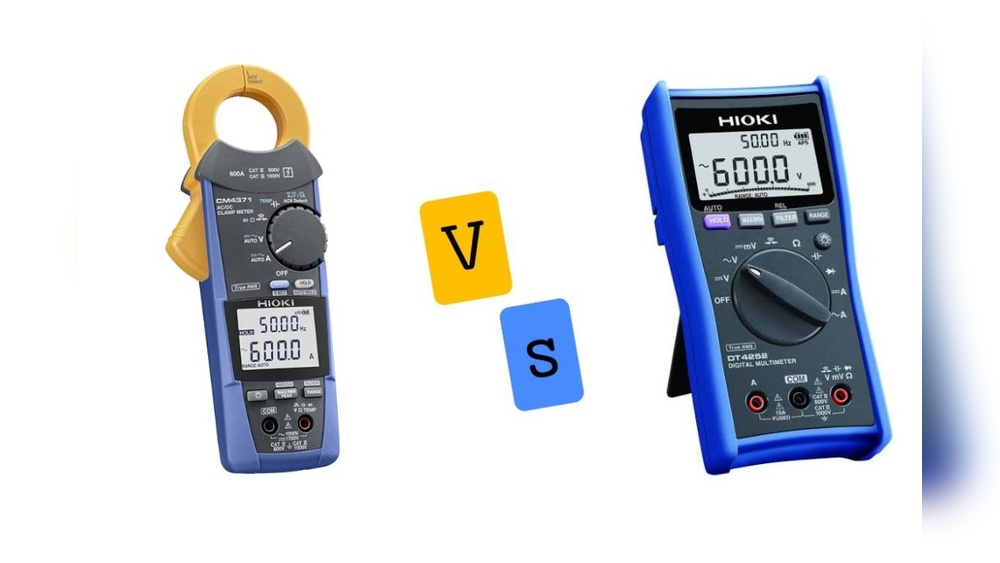
When it comes to measuring electrical parameters, whether you’re a DIY enthusiast, a student, or a professional electrician, having the right tools makes all the difference. Two of the most commonly used instruments for electrical testing are the multimeter and the clamp meter. At first glance, they might seem interchangeable, but their functions, advantages, and limitations differ in crucial ways. Understanding these differences is not just a matter of convenience, it’s essential for safety, accuracy, and efficiency.
This comprehensive guide will clarify the distinction between multimeters and clamp meters for both beginners and seasoned users. We’ll break down their features, applications, and practical considerations, then dive deeper with real-world examples, data-driven comparisons, and advanced usage tips. Whether you’re choosing your first tester or optimizing your professional toolkit, you’ll gain actionable insights to make informed decisions.
Key Takeaways
- Multimeters and clamp meters are both essential for electrical measurement, but they excel in different scenarios.
- Multimeters provide precise, versatile measurements (voltage, current, resistance, continuity), while clamp meters are optimized for safe, contactless current measurement.
- Beginners benefit from understanding the basics of each tool, while advanced users can leverage their unique strengths in complex troubleshooting.
- Choosing the right tool depends on the application, safety needs, and measurement requirements.
- Integration of both tools often yields the best results for comprehensive electrical diagnostics.
Understanding Multimeters: Functions, Types, And Use Cases
What Is A Multimeter?
A multimeter is an electronic measuring instrument that combines several measurement functions in one unit. Typically, multimeters can measure voltage (volts), current (amperes), and resistance (ohms). Many modern digital multimeters (DMMs) also test continuity, diodes, and sometimes additional parameters like capacitance and frequency.
Types Of Multimeters
1. Analog Multimeters
Use a moving needle and scale for readings. They are less common today but still valued for their ability to display trends in fluctuating signals.
2. Digital Multimeters (dmms)
Feature an electronic digital display, providing more precise and easier-to-read measurements. DMMs dominate the market due to their accuracy, durability, and broad range of functions.
- Auto-Ranging vs. Manual Ranging
- Auto-ranging DMMs automatically select the measurement range, simplifying use for beginners.
- Manual ranging models require the user to set the range, offering more control but demanding greater experience.
Key Functions Of A Multimeter
- Measuring Voltage: Both AC and DC voltage, essential for checking batteries, circuits, and outlets.
- Measuring Current: Usually up to 10A directly, requiring the circuit to be opened and the meter inserted in series.
- Measuring Resistance: Useful for checking fuses, bulbs, and wire continuity.
- Testing Continuity: Audible beep confirms a complete circuit.
- Testing Diodes/Transistors: Some multimeters provide these specialized tests.
Typical Use Cases For Multimeters
- Troubleshooting household electrical problems (e.g., faulty outlets).
- Automotive diagnostics.
- Electronics prototyping and repair.
- Educational experiments in physics and engineering.
- Industrial equipment maintenance.
Example: Beginner’s First Use
When I tested a standard DMM on a simple household circuit, measuring voltage was as easy as connecting the probes to the outlet. The auto-ranging feature made it straightforward, even with no prior experience.

Credit: www.etechnophiles.com
Clamp Meters Explained: Unique Design And Specialized Use
What Is A Clamp Meter?
A clamp meter is an electrical tester that combines a basic digital multimeter with a hinged jaw. This jaw enables users to clamp around a conductor (wire or cable) without making direct contact, allowing for non-intrusive current measurement.
Core Advantages Of Clamp Meters
- Safety: No need to break the circuit or expose wires.
- Convenience: Measure current on live wires without disconnecting anything.
- High Current Capability: Can measure hundreds or even thousands of amps, far exceeding the capacity of most multimeters.
Types Of Clamp Meters
1. Current-only Clamp Meters:
Measure only AC (and sometimes DC) current.
2. Multifunction Clamp Meters:
Combine current measurement with voltage, resistance, and continuity, essentially merging clamp and multimeter features.
3. Flexible Clamp Meters (rogowski Coils):
Use a flexible, rope-like coil for measuring large conductors or in tight spaces.
Key Functions Of A Clamp Meter
- Measuring Current: Primary function, using the clamp jaw for non-contact readings.
- Voltage and Resistance (on some models): Using traditional test leads, similar to a multimeter.
- Inrush Current Measurement: Captures the initial surge when a device starts up, valuable for motor troubleshooting.
Typical Use Cases For Clamp Meters
- Measuring current draw of large appliances or industrial equipment.
- HVAC system diagnostics.
- Electrical panel maintenance.
- Power distribution troubleshooting.
Example: Industrial Troubleshooting
During a plant maintenance check, I used a clamp meter to measure current on a 100A feed without shutting down production. This non-contact method ensured both safety and minimal downtime.

Credit: www.fdhurka.com
Side-by-side Comparison: Multimeter Vs. Clamp Meter
To help beginners and professionals quickly grasp the distinctions, here’s a data-driven comparison:
| Feature | Multimeter | Clamp Meter |
|---|---|---|
| Current Measurement Method | In series with circuit (direct contact) | Clamped around conductor (non-contact) |
| Current Measurement Range | Typically up to 10A | Ranges from 40A to over 1000A |
| Voltage/Resistance Measurement | Standard feature | Available on advanced models |
| Safety | Requires circuit interruption | No circuit interruption needed |
| Size & Portability | Compact, fits in pocket | Larger, jaw increases size |
| Price Range | $20, $300 | $40, $500+ |
| Best For | General electronics, low current | High-current, industrial, HVAC |

Credit: www.youtube.com
How Multimeters And Clamp Meters Measure Current: Technical Deep Dive
The Multimeter’s Series Method
To measure current with a multimeter, you must open the circuit and place the meter in series with the load. This means physically disconnecting a wire, connecting one probe to the source and the other to the load. The meter then becomes part of the circuit, allowing it to directly measure the flow of electrons.
Pro Tip: Always start with the highest current range to avoid blowing the meter’s fuse.
The Clamp Meter’s Magnetic Induction
Clamp meters use magnetic induction to measure current. When you clamp the jaws around a single conductor, the current flowing through the wire generates a magnetic field, which the meter senses and converts into an amperage reading.
- AC Clamp Meters: Use a split-core transformer, only measure AC.
- AC/DC Clamp Meters: Use Hall Effect sensors, can measure both AC and DC.
Safety Implications
For high-current or high-voltage applications, using a clamp meter is significantly safer because it does not require direct contact with live wires or breaking the circuit. This is especially important in industrial settings.
Example: Measuring Current In A Residential Panel
When monitoring a home’s electrical panel, a multimeter would require you to disconnect a breaker or wire, posing shock and arc flash risks. A clamp meter allows you to check current on each branch circuit by simply clamping around the wire insulation, with no exposure to live conductors.
Advanced Applications And Selection Guide
When To Use A Multimeter
- Precision Electronics Work: For measuring small currents (milliamps), voltages, or resistance, such as troubleshooting a circuit board.
- Testing Batteries and Small Devices: For accurate voltage and continuity readings.
- Educational Labs: Where detailed parameter measurement is required.
When To Use A Clamp Meter
- High-Current Circuits: Industrial motors, HVAC, main service panels.
- Routine Maintenance: Fast current checks without powering down equipment.
- Inrush Current Testing: Capturing peak currents during equipment startup.
Choosing The Right Instrument
Consider the following factors:
- Measurement Needs: If you need to measure only current, a basic clamp meter may suffice. For voltage, resistance, and continuity, a multimeter or multifunction clamp meter is preferable.
- Safety Requirements: Clamp meters provide safer current measurement in live, high-power circuits.
- Budget: Multimeters are generally less expensive; however, advanced clamp meters may justify their higher price with time-saving and safety features.
- Accuracy: Multimeters typically offer higher accuracy for low-current and voltage measurements.
Example: Field Service Technician’s Toolkit
A field technician servicing commercial HVAC systems often carries both a DMM and a clamp meter. The DMM is ideal for verifying control circuit voltages, while the clamp meter quickly checks the compressor or blower motor currents without interrupting service.
Case Studies: Real-world Scenarios
Case Study 1: Electrical Panel Inspection
An electrician is tasked with identifying overloaded circuits in a busy office. Using a clamp meter, they can check the current on each branch circuit without turning off the power. If a reading exceeds recommended limits, the electrician marks the circuit for further investigation.
For final diagnostics (e. g. , checking for voltage drops or high resistance connections), a multimeter is used.
Case Study 2: Troubleshooting A Faulty Appliance
A homeowner suspects their refrigerator is consuming too much power. With a multimeter, they first check the outlet voltage. Then, using a clamp meter, they measure the fridge’s actual current draw. The data confirms the appliance is drawing excessive amperage, pointing to a failing compressor.
Case Study 3: Preventive Maintenance In Manufacturing
A maintenance engineer in a factory uses clamp meters during monthly inspections to record current draw on multiple motors. They compare readings over time to spot early signs of bearing wear or overloads. When a motor shows higher resistance readings (measured with a DMM), it’s scheduled for proactive servicing.
Multimeter And Clamp Meter Features: A Detailed Comparison
Beyond basic measurement capabilities, modern multimeters and clamp meters offer a suite of advanced features. Here’s a comparison to help users select the right tool for their needs.
| Feature | Modern Multimeter | Modern Clamp Meter |
|---|---|---|
| True RMS Measurement | Available on mid/high-end models | Available on most models |
| Data Hold/Logging | Common feature | Available on advanced models |
| Bluetooth/Wireless Connectivity | Rare, high-end models only | Available on some models |
| Temperature Measurement | Available on select models | Available on select models |
| Inrush Current Detection | Not available | Available on many models |
| Non-Contact Voltage Detection | Available on some models | Available on many models |
| Display Type | LCD, sometimes backlit | LCD, often larger screens |
| Physical Durability | Compact, rugged options | Bulkier, designed for field use |
Practical Tips For Beginners And Advanced Users
Tips For Beginners
- Start with Auto-Ranging Models: They simplify use and prevent mistakes.
- Read the Manual: Each meter has unique functions, always review the user guide.
- Practice with Safe Circuits: Begin with low-voltage batteries or known-safe circuits.
- Use Proper Probe Placement: For multimeters, insert the red probe into the voltage/resistance port and the black probe into the common (COM) port.
- Observe Safety Precautions: Never measure current in a circuit rated above your meter’s capacity.
Advanced Suggestions
- True RMS for Accurate Readings: For non-sinusoidal AC signals, ensure your meter offers True RMS measurement.
- Use Logging Features: Track measurements over time with data logging, especially for predictive maintenance.
- Check Calibration: Periodically calibrate your instruments to maintain accuracy, especially in professional settings.
- Pair Tools for Complete Diagnostics: Use both a clamp meter for current and a multimeter for voltage/resistance in complex troubleshooting.
- Understand Measurement Limits: Clamp meters may be less accurate at low currents (<1A), choose the right tool for each task.
Pro Tip:
When measuring current on multi-core cables, always clamp around a single conductor. Clamping around both the live and neutral wires will yield a reading of zero due to opposing magnetic fields.
Limitations And Common Misconceptions
Limitations Of Multimeters
- Current Measurement Is Intrusive: Requires circuit disconnection.
- Limited Current Range: Most models only measure up to 10A.
- Risk of Blown Fuses: Exceeding current limits can damage the meter.
Limitations Of Clamp Meters
- Accuracy at Low Currents: Not ideal for small electronics.
- Limited Voltage/Resistance Features: Basic models may lack these functions.
- Jaw Size Constraints: Larger cables may not fit smaller clamp meters.
Common Misconceptions
- Clamp Meters Are Always More Accurate: Not true, multimeters generally offer better accuracy for voltage, resistance, and low current.
- All Clamp Meters Measure DC Current: Only models with Hall Effect sensors can do this; many measure AC only.
- One Tool Does Everything: While multifunction clamp meters are versatile, pairing with a DMM is often best.
How To Maintain And Use Your Testers Safely
Maintenance Tips
- Inspect Leads and Jaws Regularly: Check for wear, cracks, or exposed metal.
- Store in Dry, Clean Conditions: Moisture and dust can cause inaccurate readings or internal damage.
- Replace Batteries Promptly: Weak batteries can affect measurement accuracy.
- Clean Contacts: Dirty probes or clamp jaws reduce accuracy.
Safety Guidelines
- Always De-Energize Circuits When Possible: Even with clamp meters, this is best practice.
- Observe CAT Ratings: Ensure your meter is rated for the voltage and environment (CAT II, III, or IV).
- Wear Appropriate PPE: Gloves, goggles, and insulated tools are critical in hazardous settings.
- Never Exceed Rated Limits: Check maximum voltage and current ratings before connecting.
Example: Safe Measurement In A School Lab
In my experience as a teaching assistant, reinforcing safe habits with students, such as always checking meter settings before connecting to a circuit, greatly reduced mishaps and improved learning outcomes.
Frequently Asked Questions
What Is The Main Difference Between A Multimeter And A Clamp Meter?
The main difference lies in how they measure current. A multimeter measures current by being inserted in series with the circuit, requiring direct contact and sometimes circuit interruption. A clamp meter measures current by clamping around a conductor, allowing non-contact, safer, and faster current measurement, especially for higher currents.
Can Clamp Meters Measure Voltage And Resistance Like Multimeters?
Many modern clamp meters offer voltage and resistance measurement using traditional test leads, similar to a multimeter. However, basic clamp meters may only measure current. For comprehensive diagnostics, a multifunction clamp meter or pairing both tools is recommended.
Are Clamp Meters As Accurate As Multimeters?
For current measurement, especially at high amperages, clamp meters are highly accurate. However, multimeters typically provide greater accuracy for low current, voltage, and resistance readings. The choice depends on the measurement type and required precision.
Is It Safe To Use A Clamp Meter On Live Wires?
Yes, the clamp meter is specifically designed for safe, non-contact measurement of current on live wires. Always ensure the instrument is rated for the voltage and current involved, and follow all safety guidelines, including appropriate PPE and adherence to OSHA electrical safety standards.
What Features Should I Look For In A Clamp Meter Or Multimeter For Professional Use?
For professional applications, prioritize True RMS capability, a wide current/voltage range, robust safety ratings (CAT III/IV), data hold/logging, and good build quality. For advanced diagnostics, consider models with Bluetooth connectivity and inrush current detection. Always choose instruments from reputable manufacturers, such as those certified by Fluke.
Choosing between a multimeter and a clamp meter is not just about preference, it’s about matching the right tool to the task for safety, accuracy, and efficiency. By understanding their differences, strengths, and best-use scenarios, you’ll be better equipped to tackle electrical challenges, whether you’re just starting out or refining your professional toolkit. Remember: when in doubt, consult an experienced electrician or safety professional before working with live circuits.