
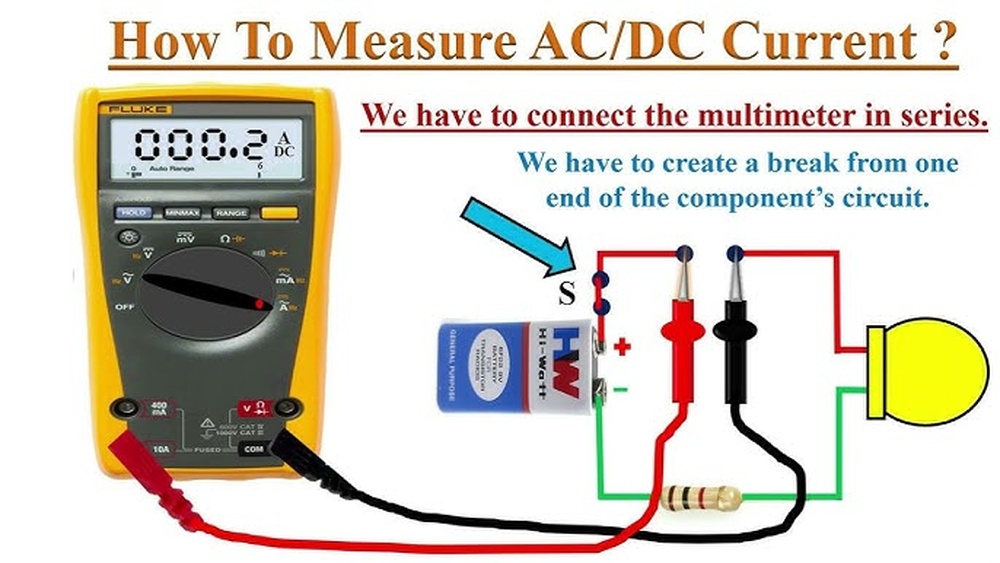
A multimeter is a foundational tool for anyone working with electronics, from beginners learning basic circuitry to seasoned professionals troubleshooting complex systems. Whether you’re testing batteries, checking household outlets, or repairing sophisticated electronics, a multimeter provides the essential ability to measure both AC (alternating current) and DC (direct current) voltage with accuracy and reliability.
Mastering this skill not only builds confidence but also ensures safety and efficiency across a variety of electrical tasks.
Understanding how a multimeter operates, and how to use it to measure different types of voltage, is a gateway into the world of electronics. For newcomers, the terms AC and DC might seem confusing, but with hands-on examples and clear explanations, the process becomes straightforward.
For advanced users, optimizing measurement accuracy, interpreting nuanced readings, and leveraging advanced multimeter features can elevate your troubleshooting and analysis to a professional level. This guide combines beginner-friendly explanations with advanced insights, making it the perfect resource whether you’re just starting or looking to refine your skills.
Key Takeaways
- Multimeters can measure both AC and DC voltage, making them versatile tools for various electrical applications.
- Understanding the difference between AC and DC voltage is crucial for accurate measurement and troubleshooting.
- Proper safety practices are essential when using a multimeter, especially at higher voltages or in live circuits.
- Digital multimeters offer features like auto-ranging, data hold, and true RMS for improved accuracy and ease of use.
- Real-world examples and case studies demonstrate effective multimeter use in home, automotive, and industrial settings.
- Advanced tips cover techniques to maximize measurement precision and troubleshoot common issues.
Understanding Voltage: Ac Vs. Dc
A fundamental concept for electrical measurement is the distinction between AC and DC voltage. Grasping this difference is vital for selecting the right settings on your multimeter and interpreting your results correctly.
What Is Dc Voltage?
Direct current (DC) voltage is the unidirectional flow of electric charge. In other words, the current flows consistently in one direction. DC is typically produced by sources like batteries, solar panels, and certain power supplies. Most electronic devices such as smartphones, laptops, and flashlights operate on DC voltage.
- Example: A standard AA battery outputs approximately 1.5V DC.
What Is Ac Voltage?
Alternating current (AC) voltage alternates its direction periodically. This is the type of electricity supplied to homes and businesses through wall outlets. The voltage varies in a sinusoidal (wave-like) pattern, typically at a frequency of 50 or 60 Hz, depending on your country.
- Example: In the US, household outlets provide 120V AC at 60 Hz; in Europe, it’s usually 230V AC at 50 Hz.
Why Does The Difference Matter?
- Measurement mode: Multimeters have separate settings for AC and DC voltage. Using the wrong mode can result in inaccurate readings or, in some cases, damage to the meter.
- Component compatibility: Many devices and components are designed to work with a specific voltage type; applying the wrong type can be destructive.
Real-world Case: Measuring A Car Battery And A Wall Outlet
- Car battery: Set your multimeter to DC voltage mode; a healthy 12V car battery should read between 12.4V and 12.7V DC.
- Wall outlet: Set your multimeter to AC voltage mode; a US household outlet should read about 120V AC.

Credit: www.fluke.com
Types Of Multimeters And Their Features
Not all multimeters are created equal. Understanding the various types and their features helps you choose the right tool for your needs, whether you’re a hobbyist or a professional.
Analog Vs. Digital Multimeters
| Feature | Analog Multimeter | Digital Multimeter (DMM) |
|---|---|---|
| Display | Moving needle | Digital numeric screen |
| Accuracy | Good for trends, less precise | Highly precise readings |
| Ease of use | Requires interpretation | Beginner-friendly |
| Advanced features | Limited | Auto-ranging, data hold, true RMS |
| Cost | Usually lower | Wide price range |
Digital multimeters (DMMs) are recommended for most users due to their accuracy, ease of reading, and advanced features. Analog meters, while still available, are largely reserved for specific tasks where trend observation is more important than absolute accuracy.
Key Features To Look For
- Voltage range: Ensure the multimeter can handle the maximum voltages you expect to measure.
- Auto-ranging: Automatically selects the appropriate measurement range, reducing user error.
- True RMS: Provides accurate AC voltage readings, especially with non-sinusoidal waveforms.
- Data hold: Allows you to freeze the displayed value for easier reading.
- Backlit display: Useful in low-light environments.
Choosing The Right Multimeter
Consider your primary applications:
- Home use: Basic DMM with voltage, current, and resistance functions.
- Automotive: DMM with DC voltage and continuity check.
- Industrial: Advanced DMM with high voltage capacity, true RMS, and safety certifications (CAT ratings).
Example: Comparing Two Popular Multimeter Models
| Model | Max Voltage (AC/DC) | Auto-Ranging | True RMS | Price Range |
|---|---|---|---|---|
| Fluke 117 | 600V | Yes | Yes | $$$ |
| INNOVA 3320 | 600V | Yes | No | $ |
Pro Tip: For beginners, a reliable digital multimeter with auto-ranging simplifies voltage measurement and reduces mistakes.
Credit: learn.sparkfun.com
How To Measure Ac And Dc Voltage With A Multimeter
Measuring voltage is one of the most common tasks for a multimeter. Here’s a step-by-step guide for both AC and DC voltage, tailored for beginners but with advanced insights for experienced users.
Safety First: Essential Precautions
- Always start with the highest voltage range to avoid overloading the meter.
- Inspect the probes for damage before use.
- Never touch the probe tips during measurement.
- Disconnect power from the circuit when possible, especially for sensitive electronics.
Measuring Dc Voltage
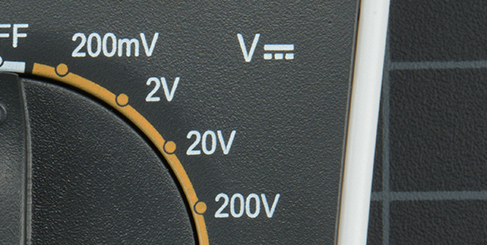
- Turn the dial to the DC voltage (V with a straight line) setting.
- Plug the black probe into the COM (common) jack.
- Plug the red probe into the VΩmA jack.
- Touch the black probe to the circuit’s ground or negative terminal.
- Touch the red probe to the positive terminal.
- Read the display. The value represents the voltage between the two points.
Tips For Accurate Dc Voltage Measurement
- If unsure of voltage, select the highest range and step down.
- For small electronics, even a minor voltage difference can matter.
- Some advanced multimeters show polarity; a negative reading means the probes are reversed.
Measuring Ac Voltage
- Set the dial to the AC voltage setting (V with a wavy line).
- Connect probes as for DC measurement.
- Insert probes into the two points of the AC circuit (e.g., both slots of a wall outlet).
- Observe the display. Note the voltage and ensure it’s within expected range.
Advanced Tips For Ac Voltage
- Use true RMS meters for accurate readings on non-sinusoidal AC sources.
- Be aware of high voltage, use one hand and keep the other away from conductive surfaces for safety.
- For outlets, ensure the meter is rated for the expected voltage and category (CAT rating).
Example: Testing A 9v Battery And A 120v Outlet
- 9V battery: Set to DC, touch probes to terminals. A healthy battery reads 8.5V, 9V.
- 120V outlet: Set to AC, carefully insert probes. Expect ~120V; significant deviation indicates a problem.
Troubleshooting Common Measurement Issues
- No reading: Check probe connections and battery.
- Fluctuating readings: Ensure stable contact; for AC, check for electrical noise.
- Out-of-range: Increase the voltage range on the multimeter.

Credit: medium.com
Real-world Applications And Case Studies
Measuring voltage is vital in a wide range of situations, from home maintenance to industrial diagnostics. These examples illustrate how mastering your multimeter adds value.
Home Electrical Repairs
Scenario: A light fixture isn’t working.
- Step 1: Set multimeter to AC voltage.
- Step 2: Test the wall switch output.
- Step 3: If voltage is present, the fixture or bulb is likely faulty.
Automotive Troubleshooting
Scenario: A car won’t start.
- Step 1: Set to DC voltage.
- Step 2: Measure across the car battery terminals.
- Step 3: If voltage is below 12V, the battery may be discharged or faulty.
Industrial Equipment Maintenance
Scenario: A motor isn’t running as expected.
- Step 1: Use a true RMS meter to measure supply voltage (AC).
- Step 2: Compare readings to equipment specifications.
- Step 3: Significant voltage drops may indicate wiring or supply issues.
Example: Diagnosing A Power Supply
A user suspects their desktop PC’s power supply is faulty. Using a multimeter set to DC voltage, they measure key output rails (+12V, +5V, +3. 3V). If any output is significantly lower than the rated value, the power supply should be replaced.
Pro Tip: Document Your Measurements
Keeping a log of voltage readings helps track performance over time and spot emerging issues before they become failures.
Best Practices For Accurate Voltage Measurement
Precision is critical, especially for advanced users troubleshooting sensitive electronics or high-power systems. The following tips help ensure accuracy and reliability.
Use The Right Range And Mode
- Auto-ranging meters select the optimal range automatically.
- For manual meters, always start high and step down.
- Double-check AC/DC mode before measuring.
Minimize Measurement Errors
- Zero the meter before use, if possible.
- Use fresh batteries in the multimeter itself.
- Calibrate your meter periodically for professional accuracy.
Probe Placement And Contact
- Ensure firm, clean contact with test points.
- Avoid measuring through painted or corroded surfaces.
- For surface-mount components, use fine-point probes.
Environmental Factors
- High humidity or temperature can affect readings.
- Minimize electromagnetic interference by keeping wires separated and using shielded probes.
Advanced Techniques
- Differential measurement: Use two meters to measure the difference between two points.
- Min/max functions: Capture voltage fluctuations over time.
- Data logging: Some DMMs can record measurements for later analysis.
Example: Advanced Measurement, Testing A Switching Power Supply
Switching power supplies can produce noisy, pulsed DC outputs. Using a true RMS DMM and enabling filtering (if available), advanced users can distinguish between normal ripple and harmful spikes.
Safety Considerations When Measuring Voltage
Electrical measurement involves inherent risks, particularly at higher voltages. Following safety protocols is non-negotiable.
General Safety Guidelines
- Always inspect the meter and leads before use.
- Use proper personal protective equipment (PPE), such as insulated gloves for high-voltage work.
- Never measure resistance or continuity on a live circuit.
- Stand on an insulated surface when probing live circuits.
Understanding Multimeter Cat Ratings
Multimeters are rated for different environments:
| CAT Rating | Application | Maximum Voltage |
|---|---|---|
| CAT I | Electronic devices | Up to 600V |
| CAT II | Appliances, portable tools | Up to 600V |
| CAT III | Distribution panels, fixed installations | Up to 1000V |
| CAT IV | Service entrance, utility connections | Up to 1000V |
Pro Tip: For household and industrial measurements, use a meter with at least a CAT III rating.
What To Do In Case Of A Fault Or Accident
- If a meter is damaged or gives off smoke, disconnect immediately and replace it.
- If you receive a shock, seek medical attention, even if you feel fine.
- Always report and document any accidents in professional settings.
Example: Avoiding A Common Mistake
A common beginner error is attempting to measure voltage with the multimeter set to current (amperage) mode, which can cause a short circuit and damage the meter. Always double-check the dial setting before probing.
Advanced Tips For Professionals And Enthusiasts
Experienced users can extract more value and insight from their multimeter by leveraging advanced techniques and features.
Using True Rms For Complex Ac Measurements
Standard multimeters assume a pure sine wave for AC voltage, but many modern devices produce non-sinusoidal signals. True RMS meters provide accurate readings regardless of waveform shape, making them essential for measuring outputs from variable frequency drives or electronic ballasts.
Measuring Small Signals And Noise
- Use the lowest voltage range for millivolt signals.
- Shield probes to reduce electrical noise.
- For audio or radio circuits, use the “relative” mode to subtract background levels.
Integrating With Data Logging And Analysis
Some advanced DMMs connect via USB or Bluetooth, allowing real-time data logging on a computer or smartphone. This is invaluable for:
- Monitoring voltage trends over time.
- Diagnosing intermittent faults.
- Generating reports for compliance or quality control.
Example: Diagnosing Solar Panel Output
A solar technician uses a multimeter to measure DC voltage output from panels under varying sunlight conditions. By logging data over a day, they identify shading issues and optimize panel placement for maximum efficiency.
Calibrating And Maintaining Your Multimeter
- Have your meter professionally calibrated annually for laboratory or regulatory work.
- Replace probes and fuses at the first sign of wear.
- Store your multimeter in a dry, dust-free environment to preserve accuracy.
Pro Tip: Master The Multimeter’s Full Range
Explore your multimeter’s additional functions, such as temperature, frequency, and capacitance measurement, to maximize your investment and capability.
Frequently Asked Questions
How Do I Know If My Multimeter Is Set To Ac Or Dc Voltage?
Most digital multimeters have distinct symbols: a straight line (, ) or “DCV” for DC voltage, and a wavy line (~) or “ACV” for AC voltage. Always check the dial and display before measuring. Some advanced meters offer automatic detection, but manual confirmation is safest.
Can I Use My Multimeter To Test Rechargeable Batteries?
Yes, use the DC voltage setting to test rechargeable batteries, such as NiMH, Li-ion, or lead-acid. Compare the measured voltage with the battery’s rated value. A fully charged battery should be close to its nominal voltage; significantly lower readings indicate a need for recharging or replacement.
Why Do I Get A Negative Reading On Dc Voltage?
A negative value means the probes are reversed: the red probe is on the negative terminal and the black on the positive. The measurement is still valid; switch the probes if you want a positive value, or interpret the negative as a reversed polarity.
What Does “true Rms” Mean And When Is It Necessary?
True RMS (Root Mean Square) meters provide accurate readings of AC voltage for both sinusoidal (pure waves) and non-sinusoidal (distorted) waveforms. This is crucial when measuring the output of modern devices like variable speed drives, inverters, or electronic ballasts, which often produce complex waveforms. For simple household AC, a standard meter suffices, but for industrial or electronic work, true RMS is essential.
Are There Multimeters That Can Measure Both Ac And Dc Voltage Automatically?
Yes, many modern digital multimeters feature auto-ranging and sometimes even auto-sensing capabilities, which can identify whether the input is AC or DC and select the correct range. However, for safety and accuracy, it’s still best practice to manually verify the mode before measuring. For more on multimeter features, see the official Wikipedia page on multimeters.
A high-quality multimeter is an indispensable tool for anyone dealing with electronics, from simple home repairs to advanced diagnostics. By learning how to measure both AC and DC voltage safely and accurately, you unlock a world of understanding and troubleshooting capability. Whether you’re just starting out, like I was when I first picked up a meter, or you’re refining advanced skills, consistent practice, good safety habits, and an understanding of your meter’s features are key. For further technical information and best practices, consult resources like the Fluke Multimeter Guide. With the right knowledge and tools, you’ll approach any voltage measurement task with confidence and precision.