
Choosing the Right Count Multimeter: How Many Do You Really Need?
Whether you’re a hobbyist, a student just starting out, or a seasoned electrical engineer, selecting the right count multimeter can be surprisingly complex. The word “count” might seem like technical jargon, but it’s crucial for both accuracy and safety in electrical measurements. With so many models, specifications, and price points, how do you know what’s right for you? The answer isn’t one-size-fits-all. In my experience working with both entry-level and advanced multimeters, the number of counts you need directly impacts the quality of your measurements, but choosing the wrong one can mean wasted money or even dangerous errors.
In this comprehensive guide, we’ll break down exactly what “counts” mean in a multimeter, why this specification matters, and how to match your purchase to your unique needs. We’ll explore everything from basic 2000-count models for home use to 60000-count lab-grade instruments.
You’ll find comparison tables, expert tips, and real-world scenarios so you can make an informed, budget-friendly choice, whether you’re troubleshooting a home appliance, installing solar panels, or calibrating industrial equipment.
Key Takeaways
- Count in a multimeter defines its resolution, the higher the count, the more precise the readings.
- Beginners can start with 2000 to 4000 count multimeters for most household and hobby needs.
- Professionals often require 6000 count or higher for advanced troubleshooting and laboratory accuracy.
- Choosing too few counts can limit your measurement accuracy, while overbuying is unnecessary and costly.
- Consider additional factors: Auto-ranging, True RMS, safety ratings, and brand reliability.
- Real-world examples, comparison tables, and expert suggestions in this guide will help you select the perfect multimeter.
Understanding Multimeter Counts: The Foundation
What Does “count” Mean In A Multimeter?
The term count refers to the maximum number a multimeter display can show before it rolls over to the next range. For example, a 2000-count multimeter can display values from 0 to 1999. This specification directly affects the resolution, the smallest change the device can detect. For instance, with a 2000-count multimeter, on a 2V range, you can see readings as fine as 0.001V increments.
Why Are Counts Important?
Higher counts allow for more precise measurements, especially with small voltage or current changes. This is essential when working with sensitive electronics, calibrating instruments, or diagnosing subtle issues. Beginners may not need extreme precision, but for professionals, counts can mean the difference between accurate diagnostics and costly mistakes.
Common Count Levels And Their Uses
Most multimeters on the market offer one of the following:
- 2000 count: Basic, suitable for general household tasks.
- 4000 count: More precise, great for automotive work and detailed home diagnostics.
- 6000 count: Professional use, advanced troubleshooting.
- 20000+ count: Lab-grade, necessary for highly sensitive measurements.
Let’s compare typical count levels in practical terms:
| Count | Resolution (on 2V Range) | Typical Users | Common Price Range |
|---|---|---|---|
| 2000 | 0.001V | Beginners, DIYers | $15, $40 |
| 4000 | 0.0005V | Enthusiasts, Automotive | $30, $60 |
| 6000 | 0.0003V | Professionals | $50, $150 |
| 20000+ | 0.0001V or finer | Lab Technicians, Engineers | $100, $500+ |
Example: Measuring A 1.234v Battery
Suppose you’re measuring a battery that reads 1.234V. A 2000-count meter on the 2V range will show 1.23V, potentially missing the last digit. A 6000-count meter, however, will display all three decimals, giving you more confidence in your reading.
Beginner’s Guide: How Many Count Multimeter Is Enough?
For Home And Hobby Use
If you’re just starting out, most basic electrical tasks, testing batteries, checking outlets, troubleshooting appliances, can be accomplished with a 2000 or 4000 count multimeter. These models are affordable, easy to use, and widely available. They offer sufficient resolution for detecting common household issues.
Pro Tip: For tasks like installing car stereos or working with low-voltage circuits, a 4000-count multimeter adds extra clarity without complicating operation.
What Features Matter Besides Counts?
Beginner-friendly multimeters should also be:
- Auto-ranging: Automatically selects the measurement range, preventing errors.
- Backlit display: Easier to read in dim environments.
- Sturdy build: Can handle drops and rough handling.
Example: Student Electronics Project
A high school student building a simple electronic kit doesn’t need ultra-high resolution. A 2000-count model will suffice for verifying voltages and continuity.
Recommended Models For Beginners
Some popular options include:
- AstroAI 2000 Count Digital Multimeter
- Klein Tools MM300 (2000 count)
- INNOVA 3320 (2000 count)
These are affordable and reliable for entry-level users.
Advanced Applications: When Higher Count Multimeters Become Essential
Professional Troubleshooting And Calibration
If you’re an electrician, electronics technician, or engineer, your work may require greater resolution to detect small differences or calibrate sensitive devices. For example, subtle voltage drops in a control panel or drift in a precision circuit can only be observed with a 6000 or 20000-count instrument.
Case Study: Solar Panel Installation
When installing solar panels, professionals must measure voltages as fine as 0. 001V to ensure proper panel alignment and performance. A low-count meter may miss these nuances, leading to inefficient energy harvest.
Benefits Of Higher Count
- Greater accuracy: Crucial when working with sensors, transducers, or industrial automation.
- Improved diagnostics: Detects minor fluctuations that can indicate looming faults.
- Regulatory compliance: Some industries require minimum resolution for test equipment.
Example: Lab-grade Testing
In a research lab, a 60000-count multimeter might be necessary to calibrate reference voltages to within 0. 00001V. This level of detail is only possible with high-end models.
Top Features For Professionals
- True RMS: Accurate measurement of non-sinusoidal AC signals.
- Data logging: Saves readings for analysis.
- Category safety ratings: Ensures safe use in high-energy environments.
How To Choose: Matching Your Multimeter Count To Your Needs
Step 1: Assess Your Common Tasks
Ask yourself:
- Will I be working with household wiring only?
- Do I need to diagnose automotive circuits?
- Am I involved in precision electronics or industrial automation?
Step 2: Consider Future Needs
It’s wise to buy a multimeter with a bit more capability than you currently need, without overpaying for features you’ll never use.
Step 3: Balance Resolution With Budget
Higher count = higher price. Choose the minimum count that covers your anticipated projects.
Comparison Table: Count Selection By Application
| Application | Recommended Count | Why |
|---|---|---|
| Basic Home Repairs | 2000 | Sufficient for outlets, batteries, and appliances. |
| Automotive Work | 4000 | Better resolution for 12V systems, alternator diagnostics. |
| DIY Electronics | 4000 – 6000 | More precise readings for microcontrollers, sensors. |
| Industrial/Professional | 6000+ | Needed for high-accuracy, regulatory compliance. |
| Laboratory/Calibration | 20000+ | Ultimate resolution for critical measurements. |
Step 4: Factor In Brand And Reliability
Choose reputable brands with good warranties. Popular choices include Fluke, Klein Tools, and Brymen.
Warning: Cheap, off-brand meters may overstate their counts or have safety risks. Always check for independent safety certifications.
Beyond Counts: Other Critical Multimeter Features
True Rms Vs. Average Responding
Many advanced applications involve measuring non-sinusoidal signals. Only a True RMS meter can accurately measure these. For most home and automotive tasks, average-responding meters suffice.
Auto-ranging Vs. Manual Ranging
- Auto-ranging: Simpler for beginners, reduces errors.
- Manual-ranging: Preferred by pros who need faster, repeated measurements.
Safety Ratings (cat Levels)
A multimeter’s category rating (CAT I-IV) indicates where it can be safely used. For household work, CAT II or III is common. For industrial panels, CAT IV is required.
Additional Functions
Some multimeters include:
- Temperature measurement
- Capacitance testing
- Frequency measurement
- PC connectivity
These can be valuable, but also increase cost.
Example: Choosing For A Home Workshop
A hobbyist working with both household wiring and Arduino projects might opt for a 6000-count, auto-ranging meter with True RMS and temperature measurement, ensuring flexibility and safety.
Real-world Examples And Case Studies
Case Study 1: Field Electrician
An electrician working on commercial buildings often encounters panels with high voltage and complex circuits. Using a Fluke 87V (6000 count, True RMS, CAT IV), the electrician can accurately troubleshoot and ensure safety compliance. Lower count meters would miss subtle voltage drops crucial for diagnosing issues.
Case Study 2: Repairing Home Appliances
A homeowner notices the washing machine isn’t working correctly. Using a Klein Tools MM400 (4000 count), the user quickly checks for continuity, voltage, and finds a faulty connection. The 4000-count resolution is more than enough for this application.
Case Study 3: Automotive Diagnostics
A mechanic diagnosing a modern car’s computer system needs to spot small voltage changes. A Brymen BM235 (6000 count) provides the extra resolution to catch failing sensors, which a 2000-count meter might miss.
Step-by-step Guide To Selecting Your Multimeter
1. Define Your Measurement Needs
- List typical tasks you plan to perform.
- Assess if you need precise measurements or just basic checks.
2. Set Your Budget
- Entry-level: $15, $50 (up to 4000 count)
- Mid-range: $50, $120 (up to 6000 count)
- High-end: $120+ (20000+ count, advanced features)
3. Shortlist Essential Features
- Auto-ranging for ease of use
- True RMS if working with AC electronics
- Backlit display for poor lighting
- Safety certification (e.g., UL, IEC)
4. Compare Top Models
| Model | Count | Features | Price Range | Best For |
|---|---|---|---|---|
| Fluke 115 | 6000 | True RMS, Auto-ranging | $110, $130 | Professionals |
| Klein Tools MM400 | 4000 | Auto-ranging, CAT III | $40, $60 | DIY/Homeowners |
| AstroAI AM33D | 2000 | Basic, Manual range | $15, $20 | Beginners |
| Brymen BM869s | 50000 | True RMS, Data Logging | $250, $300 | Labs, Engineers |
5. Make Your Purchase From A Trusted Retailer
Buy from authorized dealers or reputable online stores to ensure authenticity and warranty support.
Pro Tip: Check for user reviews on technical forums or EEVblog Forums for real-world feedback.
Advanced Tips For Power Users And Professionals
Calibrating And Verifying Your Multimeter
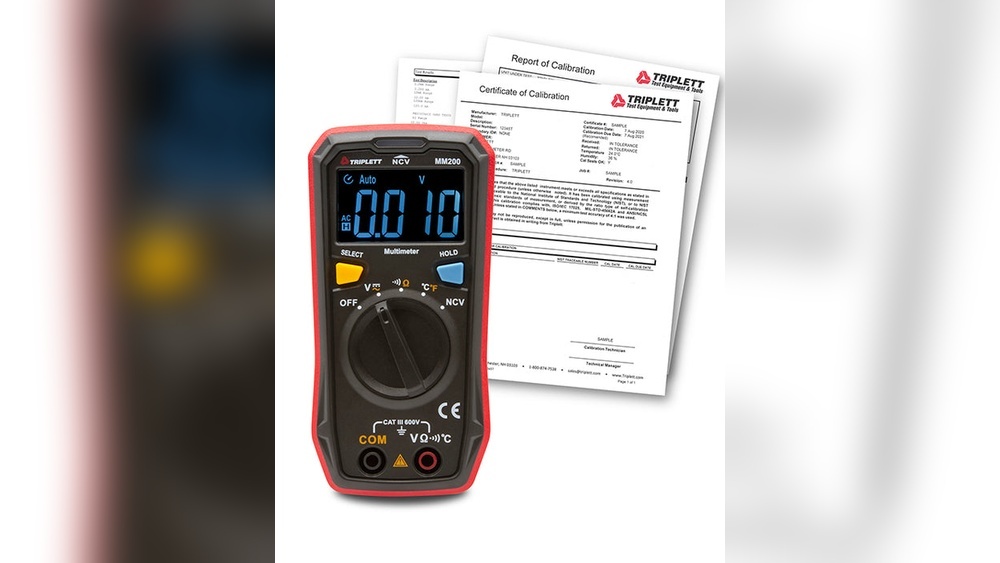
For high-accuracy work, periodic calibration is essential. Many labs and industries require annual calibration, documented with a certificate.
Using Multiple Multimeters
Professionals may use multiple multimeters simultaneously, one for voltage, one for current, and another for temperature. This saves time and increases safety by reducing the need to rewire test setups.
Data Logging And Connectivity
Some advanced models allow you to log measurements over time, connect to a PC via USB or Bluetooth, and analyze trends. This is invaluable for troubleshooting intermittent faults.
Integration With Test Benches
Engineers often integrate high-count multimeters into automated test benches for quality control and product development.
Understanding Measurement Uncertainty
Count is only part of the story. For ultra-precise work, consider:
- Accuracy specification (e.g., ±0.05% of reading)
- Temperature coefficient (how readings drift with ambient temperature)
- Input impedance (impacts sensitive circuits)
Example: A 60000-count meter with poor accuracy is less useful than a 6000-count meter with tight tolerances for most practical tasks.
Common Mistakes To Avoid When Choosing A Multimeter
Overestimating Your Needs
Paying extra for a 60000-count meter for occasional home use is unnecessary. Focus on counts that match your regular tasks.
Ignoring Safety Ratings
Never use a low-rated multimeter on high-energy circuits. Always check for appropriate CAT ratings.
Skipping Calibration
If you require precision, remember that even high-count meters can drift out of spec. Schedule regular calibrations.
Choosing Based On Brand Alone
While brands like Fluke are top-tier, other manufacturers offer excellent value. Compare specifications, not just logos.
Not Considering Support And Warranty
A longer warranty and responsive customer support can save you frustration and money in the long run.
Frequently Asked Questions
What Is The Difference Between Count And Accuracy In A Multimeter?
Count determines the display resolution, the highest value the meter can show before shifting to the next range. Accuracy reflects how close the reading is to the true value. A high-count meter isn’t necessarily more accurate; always check both specifications.
Can I Use A 2000-count Multimeter For Electronics Repair?
Yes, for most basic repairs like checking batteries, continuity, or household circuits, a 2000-count multimeter is sufficient. For sensitive or advanced electronics, a higher count provides better detail, but for beginners and casual users, 2000-count models are a good start.
How Often Should I Calibrate My Multimeter?
For professional or laboratory use, calibration is typically recommended annually or as specified by the manufacturer. For home and hobby use, calibration every few years or if you notice unusual readings is adequate.
Is True Rms Necessary For All Users?
True RMS is crucial if you’re measuring non-sinusoidal AC signals, such as those from variable frequency drives or certain power supplies. For most home and DC measurements, it’s not necessary, but it does future-proof your meter.
Where Can I Learn More About Multimeter Safety And Standards?
Refer to the International Electrotechnical Commission (IEC) standards for multimeters, specifically IEC 61010. For more information on safety and best practices, see the official Wikipedia Multimeter page.
Selecting the right multimeter count is all about matching the tool to your real-world needs and not getting lost in specs. By understanding counts, accuracy, safety, and features, you’ll make a smart, lasting investment, whether you’re a curious beginner or a demanding professional.
With the right multimeter, you’ll measure with confidence and safety, every time.