
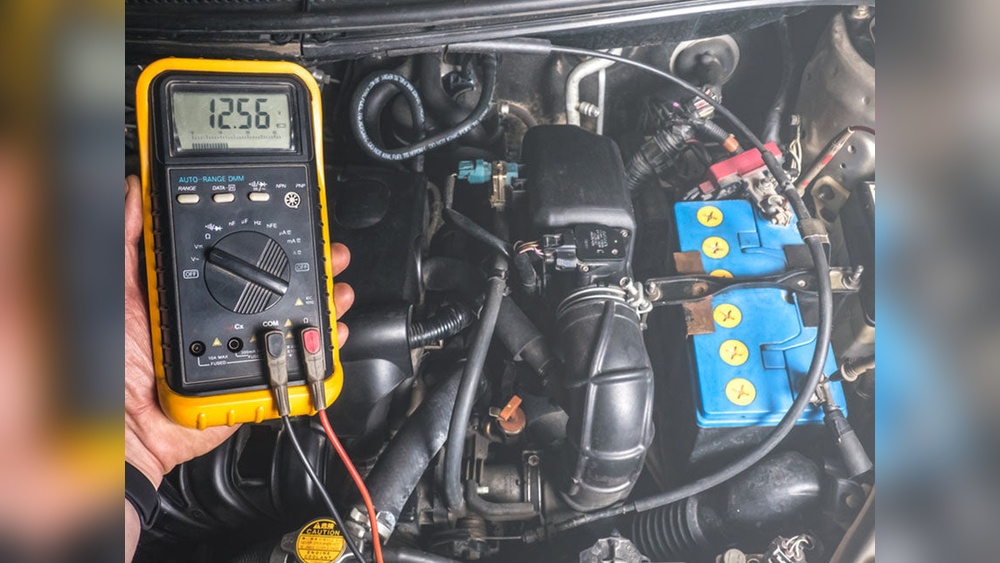
Testing a car battery is a routine task for anyone maintaining their own vehicle, yet many drivers hesitate when they see a multimeter’s probes and digital display. The question, “Is it safe to use a multimeter on a car battery?
” is both common and crucial, especially as modern vehicles rely increasingly on electronics. Whether you’re a beginner or an experienced DIY mechanic, understanding the safest practices and potential risks is essential for both your safety and your car’s longevity.
This article unpacks the safety, techniques, and advanced tips for using a multimeter on a car battery. By exploring real-world examples, clear step-by-step guides, and expert recommendations, you’ll gain confidence and competence in battery diagnostics. From understanding the basics to mastering advanced troubleshooting, this comprehensive resource ensures you’re equipped with the right knowledge, and cautions, to measure, test, and interpret your car battery’s health.
Key Takeaways
- Using a multimeter on a car battery is safe when proper precautions are followed.
- Beginners can confidently test battery voltage with step-by-step instructions and minimal risk.
- Advanced users can leverage multimeters for troubleshooting alternator and electrical issues.
- Safety protocols minimize risk of short circuits or battery damage.
- Regular battery testing helps prevent breakdowns and extends battery life.
- Consult reputable automotive sources and professionals for complex diagnostics.

Credit: www.youtube.com
Understanding Multimeters And Car Batteries
Before testing, it’s vital to understand what a multimeter is and how it interacts with a car battery. This section serves as a primer for beginners, while offering advanced context for seasoned users.
What Is A Multimeter?
A multimeter is an electronic instrument that measures voltage, current, and resistance. The two main types are:
- Digital Multimeter (DMM): Displays readings as numbers; widely used for automotive applications.
- Analog Multimeter: Uses a needle display; less common but still found in some garages.
Multimeters feature two probes, red (positive) and black (negative), that connect to the battery terminals.
Car Battery Basics
A car battery is a 12-volt, lead-acid rechargeable unit. It supplies power to the starter motor, lights, and electronics. Typical voltage ranges are:
- Fully Charged: 12.6, 12.8 volts
- Discharged: Below 12.2 volts
- Engine Running (Charging): 13.7, 14.7 volts
Understanding these values helps interpret multimeter readings accurately.
Multimeter-battery Interaction
Testing a battery with a multimeter involves measuring the voltage across its terminals. When the probes touch the terminals, the multimeter reads the potential difference. This measurement poses minimal risk when done correctly, as the device is designed for low-voltage applications.
Example: First-time User Experience
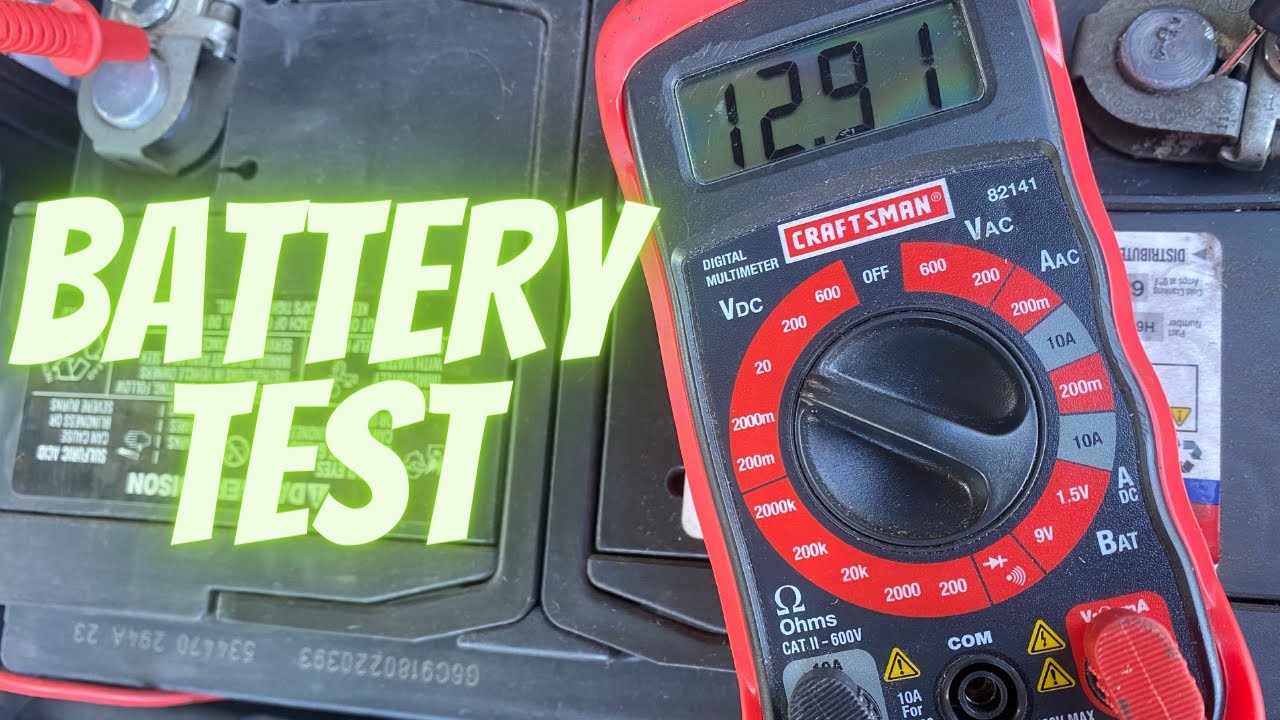
When I tested my car battery for the first time, I followed these steps:
- Set my digital multimeter to DC voltage.
- Connected the red probe to the positive terminal and black to the negative.
- The multimeter displayed 12.7 volts, a healthy reading.
By following the correct sequence and handling the probes carefully, I avoided any mishaps and gained confidence in battery maintenance.
Credit: www.youtube.com
Safety Considerations When Using A Multimeter
Safety is paramount. While multimeters are designed for low-voltage environments, improper handling can pose risks to both the user and the vehicle.
Common Risks And How To Avoid Them
- Short Circuits: Touching the probes together while connected to the battery can cause a spark.
- Incorrect Multimeter Settings: Setting the meter to measure current (amps) instead of voltage can damage the meter or battery.
- Damaged Probes or Leads: Frayed wires may cause inaccurate readings or electric shock.
Pro Tip: Always inspect your multimeter and leads before use, and double-check the setting.
Step-by-step Safety Protocol
- Wear insulated gloves if possible.
- Ensure the car is off before testing.
- Set the multimeter to DC voltage (not AC, not amperage).
- Hold probes by the insulated handles.
- Never force probes onto the battery terminals.
Advanced Cautions
Experienced users sometimes test batteries under load or measure current. In these cases:
- Only measure current if you know the circuit and the expected values.
- Use a fuse-protected multimeter for added safety.
- Avoid testing near flammable materials.
Real-world Case Study
A mechanic at a reputable garage inadvertently set his multimeter to amperage and connected it across the battery terminals. The meter’s internal fuse blew instantly, and the battery experienced a brief short. This underscores the importance of correct settings and awareness of multimeter capabilities.
Table: Multimeter Safety Comparison
| Action | Beginner Risk Level | Advanced Risk Level | Recommended Precaution |
|---|---|---|---|
| Measuring Voltage | Low | Low | Check meter setting; wear gloves |
| Measuring Current | High | Medium | Use fuse-protected meter; understand circuit |
| Testing Under Load | Medium | Medium | Follow manufacturer instructions |
| Probes Touching Together | Medium | Low | Hold probes by insulated handles |
Step-by-step Guide: Testing A Car Battery With A Multimeter
This practical guide ensures both beginners and advanced users can safely and efficiently test their car battery.
Preparing For The Test
- Gather a digital multimeter, gloves, and safety goggles.
- Park the car in a well-lit, ventilated area.
- Turn off all electrical accessories (lights, radio, AC).
Setting Up The Multimeter
- Turn the multimeter dial to DC voltage (look for “V” with straight lines).
- Confirm probes are inserted correctly: Red in the “VΩ” port, black in “COM.”
Connecting Probes To The Battery
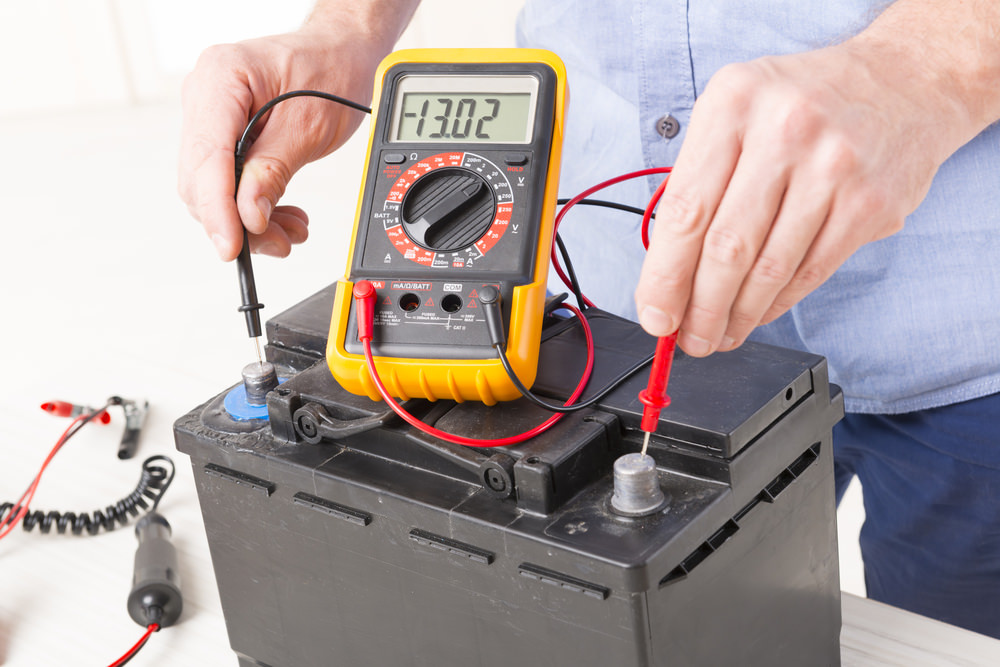
- Place the red probe on the positive (+) terminal.
- Place the black probe on the negative (-) terminal.
- Hold probes steady for a clear reading.
Reading Battery Voltage
- Fully Charged: 12.6, 12.8 volts
- Needs Charging: 12.2, 12.5 volts
- Bad Battery: Below 12.2 volts
If voltage is below 12. 2 volts, consider charging or replacing the battery.
Advanced Testing: Engine Running
- Start the car and repeat the test.
- Voltage should rise to 13.7, 14.7 volts, indicating the alternator is charging.
- If voltage remains below 13.7 volts, alternator may be faulty.
Example: Testing Under Real Conditions
When I tested my own battery after sitting overnight, the voltage was 12. 4 volts, indicating it needed charging. After running the engine for 20 minutes, the reading rose to 14. 2 volts, confirming the alternator was functioning properly.
Table: Battery Voltage Interpretation
| Voltage Reading | Battery Condition | Recommended Action |
|---|---|---|
| 12.6, 12.8 V | Fully charged | No action needed |
| 12.2, 12.5 V | Partially charged | Charge soon |
| Below 12.2 V | Discharged | Charge or replace |
| 13.7, 14.7 V (engine running) | Charging/healthy alternator | No action needed |
| Below 13.7 V (engine running) | Poor charging | Check alternator |
Credit: executivetowingservices.com.au
Advanced Troubleshooting With A Multimeter
While voltage testing is straightforward, advanced users can leverage multimeters for deeper diagnostics.
Measuring Current And Resistance
- Current Measurement: Only attempt if you understand the circuit. Place the meter in series, never across battery terminals.
- Resistance Measurement: Useful for checking battery cables or connections. Set meter to “Ω” and probe across cable ends.
Warning: Never measure resistance or current across the battery terminals directly; this can damage the meter or cause a short.
Diagnosing Alternator Issues
- With engine running, measure voltage at battery terminals.
- Compare readings to manufacturer specifications.
- If voltage fluctuates or stays low, alternator or voltage regulator may be faulty.
Checking For Parasitic Draw
- Remove negative battery cable.
- Set multimeter to amperage and connect in series between cable and battery terminal.
- Read current draw; anything above 50 milliamps may indicate a parasitic drain.
Example: Parasitic Draw Detection
A vehicle owner noticed their battery drained overnight. Using a multimeter in series with the negative cable, they measured a 200 milliamp draw. By removing fuses one by one, the culprit, a malfunctioning interior light, was quickly identified and fixed.
Table: Advanced Diagnostic Uses
| Test Type | Purpose | Typical Values | What It Reveals |
|---|---|---|---|
| Voltage (DC) | Check battery health | 12.6, 14.7 V | Charge state, alternator output |
| Current (Amps) | Detect parasitic draw | 0, 50 mA (off) | Excess drain, faulty circuits |
| Resistance (Ohms) | Test cable integrity | Low (near 0 Ω) | Corroded or broken cables |
Multimeter Types: Choosing The Best Tool For Automotive Use
Selecting the right multimeter is crucial. Not all models are suited for automotive work, especially for beginners.
Features To Look For
- Auto-ranging: Simplifies measurement, ideal for beginners.
- Fuse protection: Prevents damage during current tests.
- Rubber casing: Provides shock resistance.
- Clear display: Essential for low-light conditions.
Recommended Brands
- Fluke: Industry standard for durability and accuracy.
- Klein Tools: Reliable and affordable for home use.
- Extech: Good balance of features and price.
Example: User Experience With Different Multimeters
When I switched from a budget multimeter to a Fluke model, readings became more stable and accurate. The auto-ranging feature reduced errors, and fuse protection gave me peace of mind during advanced diagnostics.
Table: Comparison Of Popular Multimeter Models
| Brand | Auto-ranging | Fuse Protection | Price Range | Recommended For |
|---|---|---|---|---|
| Fluke 117 | Yes | Yes | $150, $200 | Advanced/Professional |
| Klein Tools MM400 | Yes | Yes | $40, $70 | Beginner/Home |
| Extech EX330 | Yes | Yes | $60, $90 | Intermediate |
| Generic Budget Model | No | No | $15, $30 | Occasional Use |
Common Mistakes And How To Avoid Them
Both beginners and advanced users can fall prey to simple errors. Awareness is the first line of defense.
Mistake 1: Incorrect Multimeter Setting
Setting the meter to AC voltage or current instead of DC voltage is a frequent error. Always double-check before connecting to the battery.
Mistake 2: Touching Probes Together
Allowing probes to touch while on the battery can cause a spark or a short circuit. Hold probes by the insulated handles and keep them apart.
Mistake 3: Measuring Current Across Terminals
Attempting to measure current by connecting probes across battery terminals can blow the meter’s fuse or damage the battery. Current should only be measured in series with a circuit.
Mistake 4: Ignoring Battery State
Testing a battery that is leaking or physically damaged can expose you to acid or lead. Always inspect the battery before testing.
Mistake 5: Using A Damaged Multimeter
Frayed wires, broken casing, or faulty displays can give inaccurate readings or cause shock. Inspect your equipment regularly.
Example: Avoiding Mistakes As A Beginner
When I first started, I almost set the multimeter to AC voltage. Catching this mistake early prevented a misreading and ensured my battery test was accurate.
Maintenance Tips For Batteries And Multimeters
Proper maintenance extends the life of your battery and ensures your multimeter remains reliable.
Battery Care
- Keep terminals clean and free of corrosion.
- Check fluid levels (for non-sealed batteries).
- Charge regularly, especially in cold climates.
- Secure battery in place to prevent vibration damage.
Multimeter Care
- Store in a dry, cool environment.
- Inspect leads and probes for wear.
- Replace batteries promptly.
- Calibrate periodically for accuracy.
Advanced Suggestions
- Use a battery maintainer for vehicles stored long-term.
- Invest in a calibration service for your multimeter if you use it professionally.
Example: Long-term Battery Health
A classic car owner used a battery maintainer during winter storage. The battery lasted five years, longer than average, thanks to consistent voltage maintenance.
When To Seek Professional Help
While multimeters empower users to diagnose basic issues, some situations require expert intervention.
Complex Electrical Issues
If you encounter fluctuating voltage, persistent parasitic drains, or warning lights, consult a certified mechanic. Electrical systems can be intricate, and improper diagnosis may worsen the problem.
Battery Replacement
Modern vehicles with start-stop or hybrid systems often require specialized batteries. Replacement procedures can involve resetting electronic controls.
Multimeter Calibration
If your multimeter gives inconsistent readings, professional calibration ensures accuracy. This is particularly important for advanced diagnostics.
External Resources
For more detailed guidance, refer to the Wikipedia Multimeter page or consult automotive electrical experts at Auto Electric.
Frequently Asked Questions
How Do I Know If My Multimeter Is Safe To Use On A Car Battery?
Check that your multimeter is rated for at least 12 volts DC and inspect the probes for damage. Models with fuse protection and insulated probes provide extra safety. If unsure, refer to the manufacturer’s manual or seek guidance from a professional.
What Happens If I Accidentally Set My Multimeter To The Wrong Function?
If you set the multimeter to measure current or AC voltage instead of DC voltage, you may get inaccurate readings or damage the meter. Modern multimeters often have fuses to prevent permanent damage, but you should always check the setting before connecting to the battery.
Can I Use A Multimeter To Check Battery Health Beyond Voltage?
Yes, advanced users can measure current and resistance to detect parasitic drain or cable issues. However, voltage testing is the most straightforward way to assess battery health for beginners. For deeper diagnostics, consult a professional or use additional tools like a battery load tester.
Is It Possible To Test Car Batteries With A Multimeter While The Vehicle Is Running?
Absolutely. Measuring voltage with the engine running helps determine if the alternator is functioning properly. The voltage should rise to 13. 7, 14. 7 volts. If it stays low, it may indicate alternator or charging system issues.
Do I Need A Special Multimeter For Modern Vehicles With Advanced Electronics?
For vehicles with start-stop or hybrid technology, choose a multimeter with auto-ranging and high accuracy. Professional-grade models from brands like Fluke or Klein Tools are recommended. Also, ensure the multimeter is calibrated and rated for automotive use.
Testing a car battery with a multimeter is a safe, accessible skill for both beginners and advanced users when proper precautions are followed. With a clear understanding of multimeter functions, step-by-step guides, and advanced troubleshooting techniques, you can confidently maintain your vehicle’s electrical system and prevent unexpected breakdowns.
Remember, for complex electrical issues or inconsistent readings, consulting a professional remains the best course of action. Regular battery checks not only extend battery life but also enhance your vehicle’s reliability, a simple habit that pays dividends on the road.