
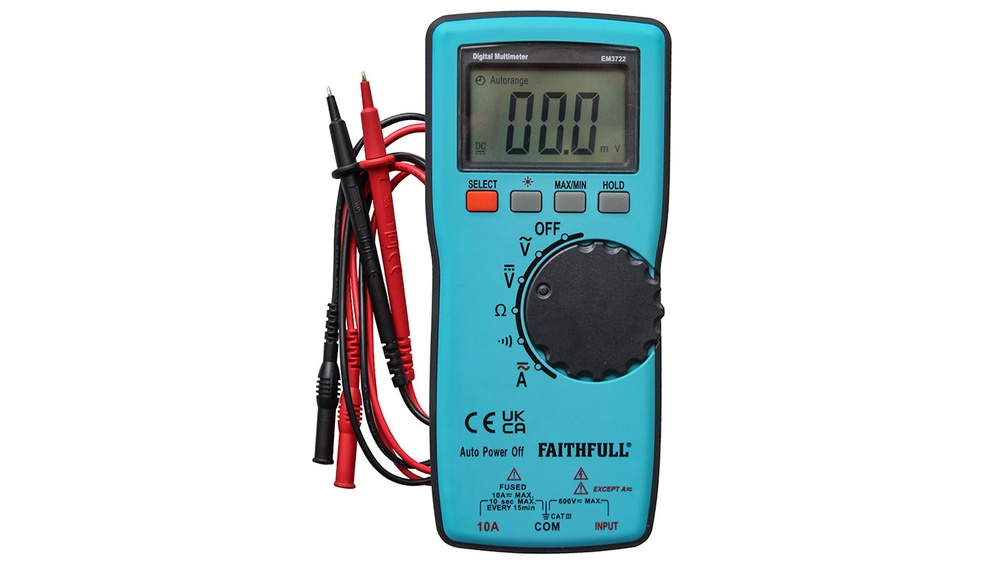
If you’ve ever worked with electronics, fixed household wiring, or even just replaced a car battery, you’ve likely come across a multimeter. These versatile tools measure voltage, current, and resistance, making them indispensable for everyone from hobbyists to professional electricians. But not all multimeters are created equal. A pivotal feature, auto ranging, has become a major selling point in recent years. But is an auto ranging multimeter truly worth the investment, or is it just an added convenience you can live without?
This question is more than just a matter of preference. The choice between auto ranging and manual ranging multimeters affects accuracy, speed, user safety, learning curve, and even the breadth of projects you can confidently tackle. Whether you’re a beginner wondering if auto ranging will make your first steps easier, or an advanced user debating the merits for professional work, understanding both the basics and the nuances of auto ranging is essential.
This guide breaks down everything you need to know so you can make an informed decision tailored to your needs and skill level.
Key Takeaways
- Auto ranging multimeters automatically select the correct measurement range, making them easier and faster to use, especially for beginners.
- Manual ranging meters offer more control and are often preferred by professionals for specific, advanced tasks.
- The cost difference between auto and manual ranging multimeters is narrowing, but feature sets still vary widely by price and brand.
- For most users, especially those prioritizing convenience and safety, an auto ranging multimeter is well worth it.
- Understanding your needs and skill level will help you choose the right multimeter and avoid unnecessary expenses.
- This article includes practical examples, comparison tables, and both beginner and advanced tips for choosing and using multimeters.
Understanding Multimeters: Manual Vs. Auto Ranging
A solid grasp of how multimeters work, and the difference between manual and auto ranging, is the foundation for any buying decision. Whether you’re just starting or you’re looking to upgrade, this section provides the clarity needed to make informed choices.
What Is A Multimeter?
A multimeter is an electronic measuring instrument that combines several measurement functions in one unit. The most common measurements are:
- Voltage (Volts, V)
- Current (Amperes, A)
- Resistance (Ohms, Ω)
Modern digital multimeters (DMMs) often include features such as continuity testing, diode checking, frequency measurement, and more.
Manual Ranging Explained
Manual ranging multimeters require the user to select the measurement range before taking a reading. For example, if you want to measure voltage, you must estimate whether the value will be closer to 2V, 20V, 200V, etc. , and turn the dial to the correct setting.
If you choose the wrong range, you might get a “1” (overload) on the display, prompting you to try again with a higher range.
Advantages of manual ranging:
- More control over readings
- Often faster in skilled hands
- Lower cost
Drawbacks:
- Steeper learning curve for beginners
- Increased risk of incorrect readings or even equipment damage if set improperly
Auto Ranging Explained
Auto ranging multimeters automatically detect the magnitude of the value being measured and select the appropriate range. When you switch to voltage mode and touch the probes to a circuit, the multimeter instantly displays the value in the correct range, no manual adjustment needed.
Advantages of auto ranging:
- Simplicity and speed
- Reduced risk of user error
- Safer for beginners
Drawbacks:
- Slight delay as the meter determines range
- Can be more expensive
- May be less precise in certain advanced scenarios
Visual Comparison
Here’s a quick comparison of the main differences:
| Feature | Manual Ranging | Auto Ranging |
|---|---|---|
| User Control | High | Low to Moderate |
| Learning Curve | Steep | Gentle |
| Speed (for Novices) | Slower | Faster |
| Risk of Error | Higher | Lower |
| Price | Lower | Higher |
| Precision (Advanced) | More precise in expert hands | Variable |
The Case For Auto Ranging: Benefits And Drawbacks
Auto ranging multimeters are marketed as the user-friendly choice, and for good reason. But are the benefits substantial enough to justify the sometimes higher price tag?
Beginner-friendly Operation
For new users, the biggest hurdle with manual ranging is knowing which range to select. Guessing incorrectly can lead to frustration, wasted time, and even damage to the meter if set improperly. Auto ranging eliminates this problem completely. Just set the function (voltage, current, resistance), touch the probes, and read the result.
Example: When I first learned electronics, I accidentally left a manual ranging meter on the 2V setting while checking a 12V source, resulting in an overload display. With auto ranging, that never happens.
Speed And Efficiency
Even seasoned professionals benefit from the speed of auto ranging, especially when troubleshooting complex circuits or when measurements vary widely. Instead of resetting the dial for each new component, the meter adapts instantly.
- Pro Tip: When working with unfamiliar equipment, auto ranging cuts down diagnostic time and reduces the risk of missing a problem due to incorrect range settings.
Safety Improvements
Incorrect range selection with a manual multimeter can potentially damage the meter or the circuit. Auto ranging reduces this risk, making it a safer option for both beginners and pros.
Drawbacks: Lag And Cost
- Slight Delay: Auto ranging meters take a fraction of a second to settle on the correct range. For most users, this is negligible, but for rapid-fire testing, it can slow things down.
- Cost: While prices have come down, auto ranging meters still tend to be more expensive than their manual counterparts, particularly at the entry level.
Advanced User Considerations
For those who prefer maximum control, manual ranging offers the ability to lock in a specific range, which can be useful for tracking small changes or working in environments with a lot of electrical noise. Some advanced auto ranging meters include a “range hold” feature to address this.
Feature Comparison: Auto Ranging Vs. Manual Ranging Multimeters
When deciding if an auto ranging multimeter is worth it, it helps to compare features side-by-side. Below is a detailed breakdown of key capabilities.
Measurement Accuracy And Precision
Accuracy is critical in electronics, especially for sensitive components. Most reputable auto ranging meters now offer accuracy on par with manual models, but there are exceptions.
| Feature | Manual Ranging | Auto Ranging |
|---|---|---|
| Typical Accuracy | ±0.5% to ±1.0% | ±0.5% to ±1.0% |
| Resolution (Digits) | 3.5 to 4.5 | 3.5 to 4.5 |
| Range Flexibility | Full user control | Automatic, with manual override on some models |
Note: Always check the specifications of individual models, as accuracy can vary by manufacturer.
Additional Features Found In Auto Ranging Multimeters
Many auto ranging meters now include advanced features, including:
- True RMS measurement (important for AC signals)
- Data hold functions
- Backlit displays
- Non-contact voltage detection
- Temperature measurement
- Bluetooth connectivity (for logging and remote monitoring)
These features are increasingly available at modest price points, making auto ranging meters more versatile.
Durability And Build Quality
Both manual and auto ranging meters come in ruggedized versions. However, auto ranging models often have slightly more complex circuitry, making them marginally more susceptible to harsh environments. That said, top-tier brands offer robust, drop-tested designs suitable for fieldwork.
Cost Comparison
Let’s compare sample entry-level and mid-range models:
| Model | Type | Price Range (USD) | Key Features |
|---|---|---|---|
| AstroAI AM33D | Manual | $12-18 | Basic, compact, no auto ranging |
| INNOVA 3320 | Auto | $20-25 | Auto ranging, rubber guard, large display |
| Fluke 115 | Auto | $160-180 | True RMS, rugged design, backlit |
| Extech MN35 | Manual | $40-50 | Temperature, backlit, compact |
Pro Tip: Auto ranging is now available in many budget models. For most users, the extra $10, 20 is well worth the convenience.
Real-world Examples: Who Should Choose Auto Ranging?
Looking at real-life scenarios helps clarify who benefits most from auto ranging multimeters, and when manual ranging remains the better choice.
Homeowners And Diyers
For the average homeowner, tasks like checking outlet voltage, diagnosing a dead appliance, or replacing a car battery are straightforward, but mistakes can be costly. Auto ranging multimeters take the guesswork out of these jobs.
Example: A homeowner troubleshooting a non-working wall socket doesn’t need to know whether the circuit is 110V or 220V, auto ranging displays the answer instantly.
Electronics Hobbyists
Beginners learning electronics often struggle with manual range settings. Auto ranging allows them to focus on circuit concepts rather than meter operation, leading to faster learning and fewer errors.
- Pro Tip: For breadboarding and Arduino projects, an auto ranging meter lets you switch between measuring 3.3V, 5V, and higher voltages without stopping to reconfigure your tool.
Automotive Technicians
Modern vehicles include sensitive electronics and a wide range of voltages and currents. Auto ranging speeds up diagnostics and prevents accidental damage from incorrect settings.
Example: When diagnosing a car’s alternator, the meter must measure battery voltage (around 12V), alternator output (up to 14.5V), and possibly lower sensor voltages. Auto ranging adapts to each without manual intervention.
Professional Electricians And Engineers
Professionals sometimes prefer manual ranging for the extra control, but many field techs now rely on high-end auto ranging meters for:
- Faster troubleshooting
- Reduced risk of user error in high-stress environments
- Additional functions (like true RMS, min/max recording, and data logging)
Case Study: In my experience servicing industrial control panels, the ability to switch between high and low voltages safely and quickly with an auto ranging meter saved both time and potential equipment damage.
When Manual Ranging Might Still Be Preferable
Despite the advantages of auto ranging, there remain situations where manual ranging is superior, particularly for advanced users or specific technical requirements.
Precision Measurements
Some advanced users need to lock the multimeter to a fixed range to monitor small, incremental changes. This can be important in lab environments or when measuring signals buried in noise.
- Pro Tip: Manual ranging can help filter out electrical noise by locking the display to a stable range, making it easier to spot trends.
Speed In High-volume Testing
In production environments, the slight delay of auto ranging can become a bottleneck when performing hundreds of repetitive measurements. Experienced technicians may find manual meters more efficient in these scenarios.
Budget Constraints
If cost is the primary concern, basic manual ranging meters remain the most affordable option. For students, beginners on a tight budget, or single-use scenarios, manual ranging may suffice.
Specialized Applications
Certain tasks, such as component-level diagnostics, may benefit from the granular control offered by manual ranging. Some auto ranging meters allow for manual override, offering the best of both worlds.
How To Choose The Right Multimeter For Your Needs
Whether you’re a beginner or an advanced user, making the right choice involves balancing convenience, features, accuracy, and budget. Here’s a step-by-step guide to help you decide.
Step 1: Define Your Primary Use Cases
- Home repair and DIY: Auto ranging is almost always preferable.
- Automotive work: Choose auto ranging for fast, error-free diagnostics.
- Electronics prototyping: Auto ranging aids learning; manual is fine for advanced tinkerers.
- Professional/industrial: Consider hybrid models with both auto and manual ranging.
Step 2: Set Your Budget
Modern auto ranging meters start as low as $20, 30. For advanced features (like true RMS, data logging, or Bluetooth), expect to pay $60, 200.
Example: The Fluke 117 offers robust auto ranging, true RMS, and non-contact voltage detection for around $200.
Step 3: Check For Essential Features
For most users, look for:
- Auto ranging
- True RMS (for accurate AC measurements)
- Backlit display
- Durable build
- Safety ratings (CAT II, CAT III, etc.)
Advanced users may want:
- Manual range override
- Min/Max recording
- Temperature probe
- Bluetooth or logging capabilities
Step 4: Read Reviews And Compare Specifications
Look for reliability, ease of use, and after-sales support. Reputable brands like Fluke, Klein Tools, and Extech consistently score well in these areas.
- Pro Tip: Avoid no-name brands with poor documentation or limited support.
Step 5: Prioritize Safety
A multimeter’s safety rating (CAT II, III, or IV) determines where it can be safely used. For home and automotive use, CAT II or III is typically sufficient, but industrial settings require higher ratings.
Warning: Using a low-rated meter on high-energy circuits can be dangerous.
Advanced Tips And Best Practices For Multimeter Users
Maximizing the value of your auto ranging multimeter requires more than just knowing how to turn it on. Here are advanced tips for getting the most accurate, safe, and efficient results.
Mastering Range Hold And Manual Override
Many advanced auto ranging meters offer a range hold feature. This lets you lock the meter to a specific range after the initial auto detection.
- Why use it? If you’re measuring several similar components, range hold prevents the meter from “hunting” for the correct range on each test, speeding up the process.
- How to activate: Consult your meter’s manual, usually, it’s a dedicated button.
Using True Rms For Accurate Ac Readings
True RMS (Root Mean Square) meters provide accurate readings for both pure and distorted AC waveforms. If you work with variable frequency drives, inverters, or non-sinusoidal signals, a true RMS auto ranging meter is essential.
Logging And Remote Monitoring
Some auto ranging meters feature Bluetooth connectivity or USB data logging. This is invaluable for:
- Long-term diagnostics
- Safety (by allowing remote readings in hazardous environments)
- Documentation of test results for compliance
Example: An engineer monitoring voltage fluctuations in a server room can use a Bluetooth-enabled meter to track readings over several days without manual intervention.
Regular Calibration And Maintenance
Even the best multimeter loses accuracy over time. Schedule regular calibration (annually for pros, every 2, 3 years for hobbyists) to maintain reliability.
- Clean the probes and contacts regularly.
- Replace batteries at the first sign of a dim display.
- Store the meter in a dry, padded case.
Avoiding Common Pitfalls
- Never use a multimeter on a circuit above its rated voltage/current.
- Always start on the highest range for manual meters if unsure.
- Use proper safety gear, especially when working with mains electricity.
Cost-benefit Analysis: Is Auto Ranging Worth The Extra Money?
A fair question: are you paying for genuine value, or just a little extra convenience? Let’s break down the costs and benefits in real terms.
Upfront Cost Vs. Long-term Value
The price gap between auto and manual ranging meters is shrinking. For most users, paying an extra $10, 30 for auto ranging delivers a significant increase in convenience, speed, and safety. For professionals, the productivity boost and reduced error risk more than justify the investment.
Maintenance And Longevity
Auto ranging circuits are slightly more complex but, in quality models, are no more likely to fail than manual meters. Stick to trusted brands, and your meter should last for years.
Resale And Future-proofing
Auto ranging is rapidly becoming the industry standard. If you plan to sell or upgrade your meter in the future, having auto ranging broadens your market and ensures compatibility with new technologies.
Opportunity Cost
For beginners, choosing manual ranging to save a few dollars can slow learning and increase frustration, costs that are often higher than the initial savings.
Frequently Asked Questions
What Is The Difference Between Auto Ranging And Manual Ranging In Multimeters?
Auto ranging multimeters automatically select the most appropriate measurement range, displaying the value with correct units and decimal places. Manual ranging requires users to set the range themselves, which can lead to overload errors or imprecise readings if not set correctly.
Auto ranging simplifies operation, especially for beginners, while manual ranging offers more control for advanced users.
Are Auto Ranging Multimeters Less Accurate Than Manual Ones?
No, modern auto ranging multimeters from reputable brands are just as accurate as manual models for most general-purpose measurements. The key is to choose a meter with appropriate specifications and regular calibration. Advanced laboratory instruments may still favor manual ranging for specialized precision measurements, but this is rarely a concern for everyday users.
Can I Use An Auto Ranging Multimeter For Automotive Diagnostics?
Yes, auto ranging multimeters are well-suited to automotive diagnostics. They can quickly adapt to measure battery voltage, alternator output, sensor signals, and continuity without manual range adjustments. Features like true RMS and min/max recording further enhance their utility in automotive settings.
What Safety Features Should I Look For In An Auto Ranging Multimeter?
Look for a CAT safety rating appropriate for your intended environment (CAT II for general electronics, CAT III or IV for industrial and mains power work). Additional safety features include fused current inputs, overload protection, insulated probes, and audible continuity alarms. Always consult the meter’s manual and observe standard electrical safety precautions.
How Do I Calibrate And Maintain My Auto Ranging Multimeter?
Professional calibration is recommended annually for advanced users or every 2, 3 years for hobbyists. Keep the meter clean, store it in a protective case, and replace batteries promptly. If your readings seem inconsistent, have the meter checked by a qualified service provider.
Refer to your manufacturer’s instructions for specific calibration procedures.
Whether you’re a hobbyist, a DIY homeowner, or a seasoned professional, the evidence overwhelmingly supports the value of auto ranging multimeters for most users. The time savings, reduction in user error, and added safety far outweigh the modest additional cost. For those who crave manual control, hybrid meters that offer both auto and manual ranging deliver the best of both worlds. Ultimately, understanding your needs and matching them to the right tool ensures you’ll get the most out of your investment. If you’re looking for more technical details or hands-on reviews, sites like EEVblog Forum are excellent resources for both beginners and experts.