
Electrical safety is a critical concern in both industrial and residential environments, especially when working with high voltage systems. Among the numerous hazards faced by electricians and technicians, arc flash incidents stand out as particularly dangerous, capable of causing severe injury or even death within a fraction of a second. Many professionals and hobbyists use multimeters to diagnose and troubleshoot electrical circuits, but questions often arise about whether these ubiquitous tools could be a trigger for an arc flash event. Understanding the interaction between multimeters and high-energy electrical systems is vital for anyone seeking to safely handle electrical equipment, from beginners to seasoned engineers.
This article explores the mechanics of arc flash, the role of multimeters in electrical testing, and the real risks associated with their misuse or malfunction. By combining straightforward explanations with advanced safety recommendations, we aim to guide both novices and experts toward safer practices.
Whether you’re curious about the science behind arc flashes or seeking actionable steps to prevent accidents, you’ll find comprehensive answers rooted in authoritative research and practical experience.
Key Takeaways
- Arc flash is a rapid release of electrical energy resulting in high temperatures and pressure; it can cause serious injuries.
- Multimeters can contribute to arc flash incidents if used improperly or if their safety rating is insufficient for the task.
- Proper personal protective equipment (PPE) and adherence to safety protocols are essential when testing live circuits.
- Understanding CAT ratings and selecting the correct multimeter for the environment can significantly reduce risk.
- Real-world case studies show how multimeter misuse has led to arc flash accidents.
- Beginners should always follow manufacturer guidelines, while advanced users should routinely inspect their tools and workspaces.

Credit: www.fluke.com
Understanding Arc Flash: The Fundamentals
Arc flash is a violent electrical explosion that occurs when a short circuit passes through air, generating a plasma arc. This phenomenon can release energy equivalent to several sticks of dynamite, reaching temperatures of up to 35,000°F (19,400°C), four times hotter than the surface of the sun.
What Causes Arc Flash?
The primary causes of arc flash include:
- Equipment failure: Damaged insulation, loose connections, or faulty circuit breakers.
- Human error: Accidental contact with energized components, incorrect tool usage, or improper testing procedures.
- Environmental factors: Dust, moisture, and corrosion increasing the likelihood of short circuits.
Arc flash incidents are most common in industrial settings with high voltage equipment, but they can also occur in residential environments.
The Impact Of Arc Flash
The consequences of an arc flash are severe:
- Thermal burns: Skin and tissue damage from extreme heat.
- Blast injuries: High-pressure waves can cause hearing loss, broken bones, and internal injuries.
- Fire hazards: Ignition of nearby materials leading to secondary fires.
- Fatalities: In extreme cases, immediate death.
According to the Occupational Safety and Health Administration (OSHA), arc flash incidents account for thousands of injuries annually in the United States, underscoring the need for strict safety protocols.
Multimeters: Types, Functions, And Safety Ratings
Multimeters are versatile tools used to measure voltage, current, and resistance. However, not all multimeters are created equal, and their safety features directly impact their suitability for high-energy environments.
Types Of Multimeters
- Analog Multimeters: Use a needle and scale for measurement; less common today.
- Digital Multimeters (DMMs): Provide more accurate readings and advanced features, such as auto-ranging and data logging.
Digital multimeters are preferred for their reliability and precision, but their safety depends on proper use and adequate ratings.
Key Functions Of Multimeters
- Voltage measurement (AC/DC)
- Current measurement
- Resistance measurement
- Continuity testing
- Frequency and capacitance measurement (in advanced models)
The complexity and capability of a multimeter must match the requirements of the electrical system being tested.
Cat Safety Ratings Explained
One of the most critical aspects of multimeter safety is the Category (CAT) rating. This rating indicates the level of transient protection the multimeter offers and the types of circuits it can safely test.
| CAT Rating | Application | Max Voltage | Typical Environment |
|---|---|---|---|
| CAT I | Electronic devices | Up to 600V | Protected, low-energy circuits |
| CAT II | Appliances, portable tools | Up to 1000V | Branch circuits |
| CAT III | Distribution panels | Up to 1000V | Fixed wiring, industrial |
| CAT IV | Utility connections | Up to 1000V | Outdoor, high-energy circuits |
Pro Tip: Always verify the CAT rating of your multimeter before testing any circuit, especially those in industrial or high-voltage environments.
Importance Of Proper Multimeter Selection
Choosing the right multimeter is a balance between functionality and safety. Beginners should always opt for models with higher CAT ratings and robust safety features, while advanced users may require specialized tools for complex systems.

Credit: www.70econsultants.com
How Multimeters Can Cause Arc Flash
While multimeters are generally safe when used correctly, there are scenarios where their use can directly or indirectly trigger an arc flash.
Direct Causes Related To Multimeter Use
- Incorrect Measurement Setting
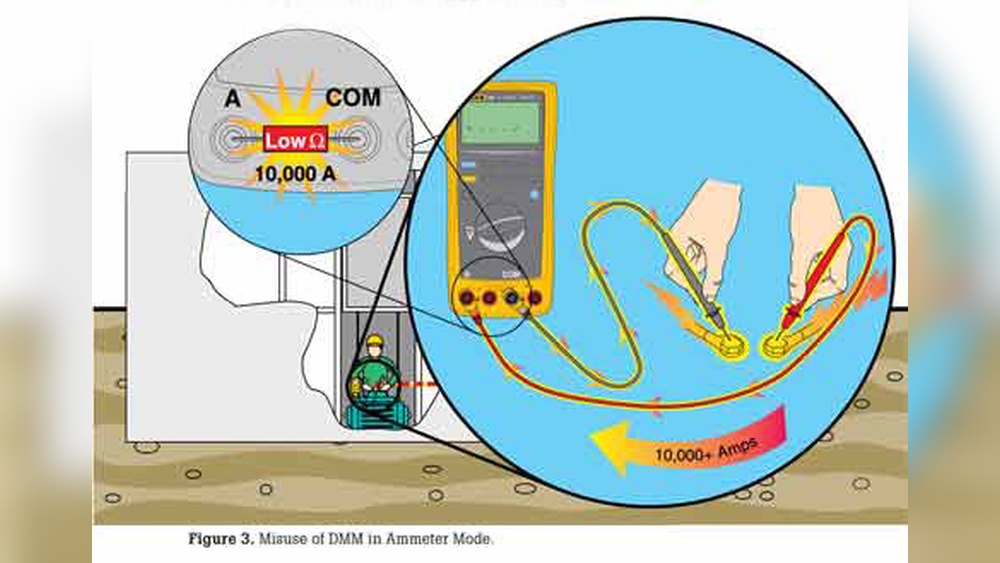
- Attempting to measure voltage with the multimeter set to current can create a direct short, resulting in an arc flash.
- Damaged Leads or Probes
- Exposed wires or cracked insulation can bypass safety mechanisms and cause a short circuit.
- Insufficient CAT Rating
- Using a CAT I or CAT II multimeter in a CAT III or CAT IV environment exposes users to dangerously high transients.
Indirect Causes
- User error: Accidentally bridging two points in a high-energy circuit.
- Tool malfunction: Internal failure leading to a short circuit.
- Environmental factors: Moisture or conductive dust inside the multimeter.
Real-world Examples
Example: In 2018, an industrial technician in Texas suffered severe burns when his multimeter, rated CAT II, was used to test a 480V panel (CAT III). The internal fuse failed to interrupt the arc, and the device became a pathway for the flash.
Example: A maintenance worker in a manufacturing plant mistakenly set his multimeter to current mode and attempted to measure voltage. The result was a catastrophic arc flash, destroying the multimeter and causing minor injuries.
These incidents demonstrate the importance of correct tool selection and user vigilance.
Multimeter Internal Safety Features
High-quality multimeters incorporate features to minimize arc flash risk:
- Ceramic fuses: Designed to interrupt high fault currents.
- Robust isolation: Prevents internal shorts.
- Warning signals: Alerts users to incorrect settings.
However, no tool is foolproof. Routine inspection and adherence to procedures are essential.
Best Practices For Preventing Arc Flash When Using Multimeters
Both beginners and advanced users can significantly reduce the risk of arc flash by following industry-approved safety practices.
Preparation And Inspection
- Inspect leads and probes for wear, cracks, or contamination.
- Check multimeter CAT rating against the circuit’s category.
- Verify fuse integrity in the multimeter before use.
Proper Use And Handling
- Always set the correct measurement mode before connecting to a circuit.
- Avoid measuring voltage with probes in the current input; this is a common mistake that can trigger arc flash.
- Use one hand when probing live circuits to reduce current path through the body.
Personal Protective Equipment (ppe)
OSHA and NFPA 70E recommend the following PPE for arc flash environments:
- Arc-rated clothing
- Insulated gloves
- Face shields
- Hearing protection
Wearing appropriate PPE can mitigate injuries in the event of an arc flash.
Safe Testing Procedures
- De-energize circuits when possible before testing.
- Use lockout/tagout (LOTO) protocols to prevent accidental energization.
- Follow manufacturer instructions for both the multimeter and the electrical system.
Warning: Never rely solely on the multimeter’s safety features. Human error remains a leading cause of arc flash incidents.
Advanced Recommendations
- Utilize remote testing tools when available to minimize proximity to live circuits.
- Perform risk assessments before every task.
- Regularly calibrate and test multimeter functionality.
Case Studies: Multimeter-related Arc Flash Incidents
Analyzing real-life events provides valuable insight into the risks associated with multimeter use in high-energy environments.
Case Study 1: Commercial Facility Incident
A commercial electrician was tasked with troubleshooting a 600V switchgear. The multimeter used was rated CAT II, insufficient for the application. Upon probing, the device failed, and an arc flash erupted, resulting in third-degree burns. Investigation revealed the multimeter’s fuse was not designed for high fault currents, and the leads were visibly worn.
Case Study 2: Manufacturing Plant Error
At a manufacturing plant, a technician attempted to measure voltage but left the multimeter in current mode. This mistake created a direct short across the panel, triggering an arc flash. The technician suffered minor burns, and the multimeter was destroyed.
The company subsequently mandated additional training for all staff.
Case Study 3: Residential Electrician Mishap
A residential electrician used an old analog multimeter with cracked probes to test a breaker panel. The exposed metal on the probes contacted both terminals, resulting in a small arc flash. While injuries were minimal, the incident highlighted the dangers of using poorly maintained equipment.
| Incident | Multimeter Type | CAT Rating | Outcome | Lessons Learned |
|---|---|---|---|---|
| Commercial Facility | Digital | CAT II | Severe burns | Use correct CAT rating, inspect leads |
| Manufacturing Plant | Digital | CAT III | Minor burns, equipment loss | Check settings before testing |
| Residential Electrician | Analog | CAT I | Minimal injuries | Maintain equipment, avoid exposed probes |
Pro Tip: Real-world incidents often stem from simple oversights. A moment’s attention can prevent a lifetime of consequences.
Multimeter Safety Features And Technology Advancements
Modern multimeters offer several innovations designed to enhance safety and reduce the risk of arc flash.
Enhanced Fuse Technology
- High rupture capacity (HRC) fuses: Interrupt large fault currents quickly.
- Ceramic body: Prevents shattering and provides better containment.
Improved Isolation And Shielding
- Double insulation: Reduces chance of internal shorts.
- Shielded input jacks: Protect against accidental bridging.
Smart Multimeter Features
- Automatic detection: Alerts users if probes are inserted incorrectly.
- Overvoltage protection: Disables the meter if voltage exceeds safe limits.
- Wireless connectivity: Enables remote readings, minimizing exposure.
Certifications And Standards
Reputable manufacturers design multimeters to meet international safety standards:
- IEC 61010: Defines safety requirements for electrical equipment.
- UL certification: Ensures compliance with North American safety standards.
Example: Fluke Corporation, a leading multimeter manufacturer, rigorously tests its products to meet IEC and UL standards. Their CAT IV-rated models are specifically designed for high-energy environments, incorporating advanced fuse and isolation technologies.
Choosing The Right Multimeter
When selecting a multimeter, consider:
- Intended application: Match CAT rating to the environment.
- Build quality: Prefer models with robust insulation and shielding.
- User interface: Look for clear markings and warning indicators.
Pro Tip: Investing in a high-quality, properly rated multimeter is an upfront cost that pays dividends in safety.
Beginner’s Guide To Safe Multimeter Usage
For those new to electrical testing, following these steps will minimize risks and set a foundation for safe practices.
Step-by-step Safe Testing Procedure
- Read the manual: Understand all functions and warnings.
- Inspect the meter and leads: Look for damage, wear, or contamination.
- Set the correct measurement mode: Double-check before connecting.
- Verify CAT rating and fuse status: Ensure compatibility with the circuit.
- Wear PPE: Always use gloves and eye protection.
- Test a known voltage source first: Confirm meter operation.
- Probe carefully: Use only one hand and keep other hand away from the circuit.
- Record results and power down: Remove probes and turn off the meter.
Common Mistakes To Avoid
- Measuring voltage with the meter set to current.
- Using damaged probes or leads.
- Ignoring CAT ratings.
- Not wearing PPE.
Resources For Beginners
- Manufacturer training videos
- Online electrical safety courses
- Local electrical safety seminars
For more in-depth information, refer to Wikipedia’s Arc Flash article and official OSHA guidelines.
Advanced Strategies For Experienced Technicians
Seasoned professionals face unique challenges and should employ advanced tactics to further reduce risk.
Routine Tool Inspection And Maintenance
- Schedule monthly inspections of all meters and leads.
- Replace fuses with manufacturer-approved parts.
- Clean probes and meters to remove dust and moisture.
Risk Assessment And Planning
- Conduct a risk assessment before every task.
- Use job hazard analysis (JHA) forms.
- Plan for emergency response in case of arc flash.
Utilizing Remote And Smart Tools
- Use wireless multimeters for high-risk environments.
- Implement remote probe kits to limit exposure.
- Integrate automated data logging for complex systems.
Continuous Education
- Attend advanced arc flash safety training.
- Stay updated on NFPA 70E changes.
- Participate in peer reviews and safety audits.
Example: In my experience, routine tool checks and peer reviews have prevented potential accidents in high-voltage laboratories. Sharing knowledge and maintaining vigilance is the mark of a true professional.
Comparing Multimeter Brands And Models For Arc Flash Safety
Choosing the right multimeter involves evaluating both safety features and usability. Below is a comparison of popular brands and models, focusing on arc flash safety.
| Brand/Model | CAT Rating | Fuse Type | Key Safety Features | Suitable Environments |
|---|---|---|---|---|
| Fluke 87V | CAT IV | Ceramic HRC | Double insulation, overvoltage protection | Industrial, utility |
| Klein Tools MM6000 | CAT III | Ceramic | Shielded jacks, auto-ranging | Commercial, industrial |
| Extech EX570 | CAT IV | Ceramic | Weather-resistant, overvoltage alert | Outdoor, high-energy |
| Uni-T UT139C | CAT III | Glass | Auto detection, double insulation | Residential, commercial |
Pro Tip: Always consult manufacturer documentation and independent safety reviews before purchasing or deploying a multimeter in high-energy environments.
For more detailed product comparisons, visit Consumer Reports.
Frequently Asked Questions
What Is The Most Common Mistake That Leads To Multimeter-related Arc Flash?
The most frequent error is measuring voltage while the multimeter is set to current mode. This creates a direct short across the circuit, dramatically increasing the risk of arc flash. Always double-check the meter’s mode before connecting probes.
Can Any Multimeter Be Used For High Voltage Testing?
No. Only multimeters with CAT III or CAT IV ratings should be used for high voltage or high-energy environments. Using a lower-rated meter exposes the user to unsafe transient voltages and potential arc flash. Always check the rating before use.
How Often Should Multimeter Leads And Fuses Be Replaced?
Leads should be inspected before every use and replaced at the first sign of damage or wear. Fuses should be replaced only with manufacturer-approved parts and checked at regular intervals, especially if the multimeter is used in harsh environments.
Is Ppe Necessary When Using A Multimeter?
Yes. Even with advanced safety features, arc-rated clothing, gloves, and eye protection are essential when testing live circuits. PPE mitigates injury if an arc flash occurs and should never be neglected.
Are Wireless Multimeters Safer For Arc Flash Prevention?
Wireless multimeters reduce the operator’s proximity to live circuits, significantly lowering the risk of injury from arc flash. However, users must still follow proper safety protocols and ensure the tool’s CAT rating is appropriate for the task.
Electrical safety is a shared responsibility that demands attention, knowledge, and the right equipment. While multimeters are indispensable tools for troubleshooting and diagnostics, their misuse can trigger devastating arc flash events. By understanding the risks, selecting appropriately rated instruments, adhering to best practices, and remaining vigilant, professionals and beginners alike can protect themselves from harm.
Investing in quality tools, routine inspection, and continuous education is not just good practice, it’s essential for a safe and productive work environment.