
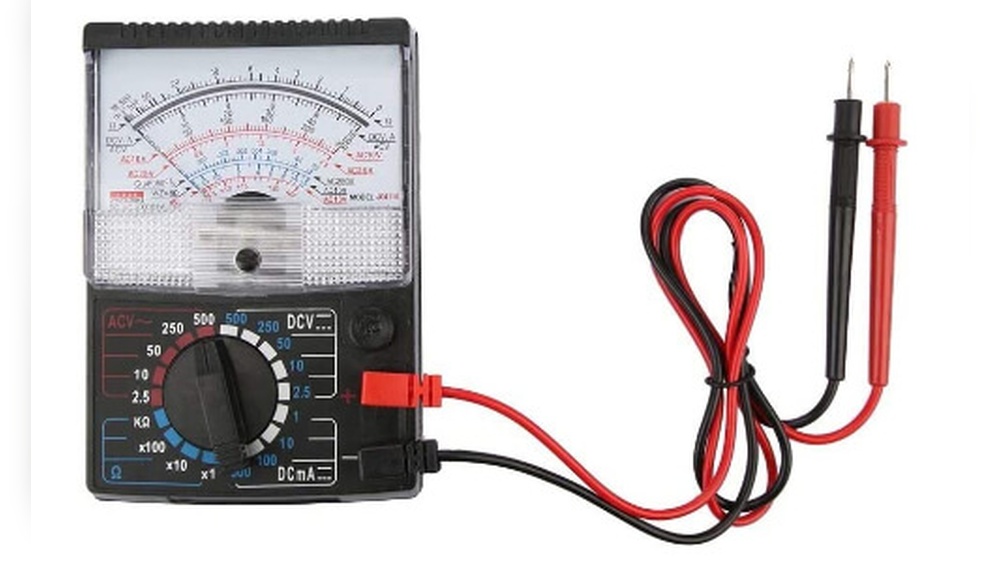
Multimeters are among the most essential tools for anyone working with electronics or electricity, from hobbyists and students to professional engineers and technicians. As the range of electronics and electrical systems expands, so does the variety of multimeters available. Understanding how many types of multimeters exist, what makes each unique, and which is best for specific applications is critical for both beginners and advanced users.
This comprehensive guide not only explains the different types of multimeters but also provides advanced tips, real-world examples, and practical advice to help you select, use, and maintain your device for maximum effectiveness.
Selecting the right multimeter can mean the difference between a successful project and a troubleshooting nightmare. Whether you’re measuring simple battery voltage, diagnosing a faulty circuit, or calibrating sensitive electronic equipment, the type of multimeter you choose will affect your accuracy, safety, and efficiency.
This article breaks down the categories, features, and use cases for every major type of multimeter, guiding you from foundational knowledge to expert-level insights.
Key Takeaways
- There are three primary types of multimeters: Analog, digital, and specialized variants like auto-ranging and clamp meters.
- The right multimeter depends on your skill level, application, and budget.
- Advanced features such as True RMS, data logging, and wireless connectivity are increasingly common in modern multimeters.
- Safety ratings (CAT I, IV) are critical for professionals working with high-energy systems.
- Beginners should start with basic digital models, while advanced users may prefer high-precision or multifunction meters.
- Regular calibration and proper handling extend the lifespan and reliability of your multimeter.
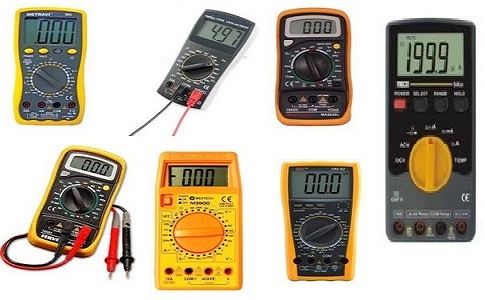
Credit: www.elprocus.com
The Main Types Of Multimeters
Understanding the categories of multimeters is the foundation for choosing the right tool. Multimeters are generally divided into three main types: analog, digital, and advanced/specialized variants. Each type offers distinct advantages, limitations, and ideal use cases.
Analog Multimeters
Analog multimeters, also known as VOMs (Volt-Ohm-Milliammeter), use a mechanical needle to display readings. They are the earliest form of multimeter and are still used in certain applications where observing a changing signal is more important than precise digital accuracy.
Key Features:
- Needle-based display for voltage, current, and resistance.
- No batteries required for voltage and current measurements.
- Sensitive to physical shock and polarity errors.
Advantages:
- Useful for monitoring trends in fluctuating signals.
- Immediate feedback for analog values.
- Often cheaper than advanced digital models.
Limitations:
- Difficult to read for beginners.
- Lower accuracy compared to digital types.
- Susceptible to parallax errors (misreading due to viewing angle).
Ideal For:
- Educational settings to demonstrate analog signal behavior.
- Vintage electronics restoration.
- Fieldwork where electronic displays may fail.
Digital Multimeters (dmms)
Digital multimeters are by far the most popular type today. They use an LCD or LED display to show numeric readings, eliminating many of the reading errors associated with analog meters.
Key Features:
- Digital display for clear, precise readings.
- Multiple measurement functions (voltage, current, resistance, continuity).
- Often include advanced features like auto-ranging, data hold, and backlight.
Advantages:
- High accuracy and repeatability.
- Easy to use for beginners.
- Robust against shock and vibration.
Limitations:
- Require batteries for operation.
- Can be overloaded if the range is not set correctly on manual models.
Ideal For:
- Everyday troubleshooting in electronics, automotive, and household wiring.
- Educational labs and training.
- Professional repair and maintenance.
Advanced And Specialized Multimeters
Beyond the basic analog and digital types, there are several specialized multimeters designed for advanced tasks or specific industries. These often incorporate additional features or combine measurement tools.
Common Types:
- Auto-Ranging Multimeters: Automatically select the appropriate measurement range, ideal for beginners and speeding up workflow.
- Clamp Meters: Measure current without breaking the circuit, popular in electrical and HVAC work.
- True RMS Multimeters: Accurately measure complex AC waveforms, essential for variable frequency drives and non-sinusoidal signals.
- Bench Multimeters: High-precision, lab-grade instruments with advanced features like data logging and computer connectivity.
- Wireless/Bluetooth Multimeters: Allow remote monitoring, logging, and integration with mobile devices.
- Pen-Type Multimeters: Compact, portable, and convenient for quick diagnostics.
- Automotive Multimeters: Include dedicated functions for RPM, dwell angle, and automotive sensors.
Example:
When I tested an auto-ranging DMM versus a manual-ranging DMM, the auto-ranging model saved significant setup time and avoided the risk of overloading the meter, a key advantage for field technicians.
Pro Tip:
If you’re just starting, choose a basic auto-ranging digital multimeter with CAT II or CAT III safety ratings. For advanced users, consider True RMS capability and data logging for more complex diagnostics.
Core Functions And Measurements Of Multimeters
Understanding what a multimeter can measure, and how, is fundamental to using it effectively. While voltage, current, and resistance are the core measurements, many modern multimeters offer much more.
Basic Measurements
- Voltage (V): Measures electrical potential difference. Both AC and DC are supported.
- Current (A): Measures the flow of electric charge. Some meters support both high and low current ranges.
- Resistance (Ω): Measures how much a component opposes current flow.
Additional Features
- Continuity Testing: Emits a sound if a circuit is complete, a favorite for beginners.
- Diode Testing: Checks the health of diodes and LEDs.
- Capacitance Measurement: Useful for troubleshooting capacitors in appliances or electronics.
- Frequency Measurement: Increasingly common, especially for professionals working with signal electronics.
Advanced Capabilities
Some high-end or specialized multimeters can measure:
- Temperature: Using thermocouple probes.
- Duty Cycle: Important for pulse-width modulated signals.
- Transistor Testing: For quick go/no-go checks on BJTs and FETs.
- Data Logging and Storage: For monitoring trends over time.
Example:
A bench multimeter with data logging was used in a solar panel test lab to track voltage and current changes over a 24-hour cycle, enabling engineers to diagnose intermittent failures.

Credit: multimeterexpert.com
Comparison Of Analog Vs. Digital Vs. Advanced Multimeters
Choosing between analog, digital, and advanced multimeters depends on your needs, experience level, and budget. The following table summarizes the key differences:
| Feature | Analog Multimeter | Digital Multimeter (DMM) | Advanced/Specialized Multimeter |
|---|---|---|---|
| Display Type | Needle Gauge | LCD/LED Numeric | LCD/LED, Graphical, Digital |
| Accuracy | Low to Moderate | High | Very High |
| Ease of Use | Difficult for Beginners | Beginner-Friendly | Intermediate to Advanced |
| Special Functions | Limited | Some (Auto-Range, Hold) | Many (True RMS, Logging) |
| Best For | Vintage Gear, Education | General Use | Industrial, Laboratory, Field |
| Cost | Low | Low to Moderate | Moderate to High |
Pro Tip:
For electronics projects involving microcontrollers or audio equipment, a True RMS DMM is highly recommended to accurately measure non-sinusoidal waveforms.

Credit: guide.directindustry.com
Safety Ratings And Standards
Safety is paramount when working with electricity. Multimeters are classified according to international safety standards, which define the maximum voltage, transient protection, and intended application area.
Understanding Cat Ratings
- CAT I: For electronic devices with minimal exposure to transient voltages.
- CAT II: For appliances, portable tools, and other household loads.
- CAT III: For distribution panels, circuit breakers, and industrial equipment.
- CAT IV: For utility connections and outdoor conductors.
Example:
A professional electrician using a CAT II meter on a CAT IV system risks personal safety and equipment damage. Always match the CAT rating to your application.
Additional Safety Features
- Fused Inputs: Protect the user and device from overloads.
- Double Insulation: Reduces risk of shock.
- Over-voltage Indication: Warns of dangerous voltages outside safe measurement range.
Pro Tip:
Always inspect your test leads for cracks or exposed wires before use. Faulty leads are a leading cause of multimeter accidents.
Regulatory Compliance
When buying a multimeter, look for certifications from organizations like UL (Underwriters Laboratories), CE, or IEC. These indicate that the device has passed rigorous safety tests.
For further reading on safety standards, consult the Electrical Safety Standards entry on Wikipedia.
Specialized Multimeter Types And Their Applications
As technology has advanced, so have the capabilities and specializations of multimeters. Below are some of the most commonly used specialized multimeter types.
Auto-ranging Multimeters
Auto-ranging meters automatically select the correct range for a measurement, reducing the chance of user error and saving time.
Ideal For:
- Beginners who may not know the expected measurement range.
- Field technicians working with unknown circuits.
Clamp Meters
Clamp meters are designed to measure current without direct contact with live wires. A hinged jaw encloses the conductor, using electromagnetic induction to sense current flow.
Use Cases:
- Industrial electrical work (measuring large currents).
- HVAC troubleshooting.
- Solar panel array diagnostics.
Example:
A technician used a clamp meter to quickly identify a faulty phase in a three-phase industrial motor, avoiding the need to disconnect wires.
True Rms Multimeters
True RMS multimeters are essential for accurately measuring AC voltages and currents with non-sinusoidal waveforms, which are common in modern electronic devices and motor drives.
Use Cases:
- Diagnosing variable frequency drives.
- Audio engineering and signal processing.
- Any situation with distorted AC waveforms.
Bench And Laboratory Multimeters
Bench multimeters are stationary devices offering extremely high precision, stability, and advanced features like computer connectivity and long-term data logging.
Ideal For:
- Research and development labs.
- Calibration and quality assurance.
- Circuit design and validation.
Wireless/bluetooth Multimeters
Wireless connectivity allows for remote monitoring, trend analysis, and integration with smartphones or computers.
Features:
- Real-time data streaming.
- Remote diagnostics.
- Enhanced safety (measure from a distance).
Example:
In my experience, using a Bluetooth-enabled multimeter allowed me to monitor hazardous circuits from a safe distance, significantly reducing risk.
How To Choose The Right Multimeter For Your Needs
Selecting the optimal multimeter involves evaluating your technical requirements, budget, and the environments where you’ll be working.
For Beginners
- Start with a simple digital multimeter with basic voltage, current, and resistance functions.
- Ensure auto-ranging capability to avoid range selection mistakes.
- Prioritize meters with clear, large displays and audible continuity functions.
- Select a model with a CAT II or CAT III safety rating.
For Hobbyists And Intermediate Users
- Look for added features like diode testing, capacitance, and frequency measurement.
- Consider a model with a backlit display for low-light environments.
- Manual range selection can offer more control for experienced users.
For Professionals
- Insist on True RMS for accurate AC measurements.
- Opt for clamp meters if current measurement is frequent.
- Consider bench multimeters for high-precision work.
- Ensure the device has a CAT III or CAT IV rating for industrial environments.
- Evaluate advanced features like data logging, wireless connectivity, and computer integration.
Key Selection Criteria Table
| User Type | Recommended Multimeter Type | Essential Features | Suggested Safety Rating |
|---|---|---|---|
| Beginner | Digital, Auto-Ranging | Continuity, Diode Test | CAT II/III |
| Hobbyist | Digital/Clamp | Capacitance, Frequency | CAT II/III |
| Professional | Clamp, True RMS, Bench | Data Logging, Wireless | CAT III/IV |
| Lab/Engineer | Bench Multimeter | High Accuracy, PC Interface | CAT II/III |
Pro Tip:
If you frequently work in the field, choose a rugged, waterproof multimeter with a protective case.
Real-world Examples And Case Studies
Examining how multimeters are used in practice helps bridge the gap between theory and real-world application.
Electronics Repair
A hobbyist repairing vintage radios relies on an analog multimeter to monitor signal variations that a digital meter might miss due to its sampling rate. The ability to watch the needle fluctuate provides instant insight into intermittent issues.
Industrial Maintenance
An industrial technician uses a clamp meter to measure the current draw of motors in a manufacturing plant. By comparing the readings to expected values, the technician identifies motors that are overloading and schedules preventive maintenance, reducing costly downtime.
Automotive Diagnostics
A mechanic uses an automotive multimeter with dedicated RPM and dwell functions to diagnose ignition problems. The multimeter’s specialized features provide quick, reliable data, streamlining the troubleshooting process.
Education
In a university physics lab, students use both analog and digital multimeters to compare readings and understand measurement principles. The hands-on experience with both types reinforces theoretical learning and highlights the strengths and weaknesses of each.
Advanced Tips For Multimeter Use And Maintenance
Even the best multimeter is only as good as its user. These advanced suggestions will help you maximize the accuracy, safety, and longevity of your device.
Calibration And Accuracy
- Calibrate regularly: Professional-grade multimeters should be calibrated annually by an accredited lab.
- Zeroing: Always zero the meter before critical resistance measurements to eliminate lead resistance errors.
Test Lead Management
- Use high-quality, insulated test leads.
- Replace leads at the first sign of wear or damage.
- Store leads neatly to avoid tangling and stress on connectors.
Battery And Fuse Care
- Replace batteries promptly when the low-battery indicator appears; weak batteries can affect accuracy.
- Use only manufacturer-approved fuses to maintain safety ratings.
Maximizing Safety
- Never exceed the specified voltage or current limits.
- Always start with the highest range when measuring an unknown quantity.
- Disconnect power when switching between measurement modes.
Data Logging And Analysis
- Use data logging features to track trends, especially in industrial or laboratory settings.
- Export data to a computer or mobile device for analysis and reporting.
Pro Tip:
For advanced users, integrating your multimeter with a software platform can automate troubleshooting and documentation, saving time and reducing errors.
The Future Of Multimeters: Trends And Innovations
As technology evolves, so do multimeters. Staying informed about the latest trends helps you make future-proof decisions.
Integration With Iot And Mobile Devices
Modern wireless multimeters can connect to smartphones and tablets, allowing for remote monitoring, data sharing, and even cloud-based diagnostics. This capability is particularly valuable for teams working in hazardous or hard-to-reach locations.
Enhanced Safety And Diagnostics
- Non-contact voltage detection: Minimizes risk when testing unknown circuits.
- Built-in thermal imaging: Some high-end models now include thermal cameras to detect hot spots alongside electrical measurements.
User Interface Improvements
- Larger, color displays with graphical interfaces.
- Voice feedback for visually impaired users.
- Programmable test sequences for repetitive tasks.
Example:
A field engineer equipped with a wireless, app-enabled multimeter can instantly share diagnostic data with remote experts, accelerating problem resolution and reducing downtime.
Sustainability And Green Design
Manufacturers are increasingly focusing on eco-friendly materials, longer battery life, and energy-efficient displays to reduce environmental impact.
For more on the future of measurement technology, visit the National Institute of Standards and Technology.
Frequently Asked Questions
What Is The Difference Between A Manual-ranging And An Auto-ranging Multimeter?
A manual-ranging multimeter requires the user to select the correct range for each measurement, which can be challenging for beginners and risky if the expected value is unknown. An auto-ranging multimeter automatically selects the appropriate range, simplifying operation and reducing the chance of error. Auto-ranging is especially helpful for users who need to measure a wide variety of voltages, currents, and resistances without prior knowledge of their magnitudes.
How Do I Know If My Multimeter Is Safe To Use With High-voltage Systems?
Always check your multimeter’s CAT (Category) rating and maximum voltage specification, which are typically printed near the input jacks or in the user manual. For high-voltage or industrial systems, a CAT III or CAT IV rated device is required. Additionally, look for certifications from recognized safety organizations such as UL, CE, or IEC. Before each use, inspect test leads and fuses for damage, and never use a meter with cracked insulation or exposed wiring.
Can A Multimeter Measure Both Ac And Dc Voltage?
Yes, most digital multimeters and many analog models can measure both AC (alternating current) and DC (direct current) voltages. The selector switch allows you to choose between the two. However, always verify your meter’s specifications and ensure you are using the correct setting to avoid inaccurate readings or damage to the device.
How Often Should I Calibrate My Multimeter?
Calibration frequency depends on your usage and the required level of accuracy. For professional and laboratory applications, annual calibration by an accredited service center is recommended. For hobbyists and general household use, calibration every 2, 3 years is usually sufficient unless the meter is subjected to harsh conditions or critical measurements. Regular calibration ensures continued accuracy and reliability.
What Should I Do If My Multimeter Gives Inconsistent Or Fluctuating Readings?
First, check the battery and replace it if necessary, as low voltage can cause erratic operation. Inspect test leads for wear, breaks, or poor connections. Ensure all settings are correct for the measurement you’re taking. If problems persist, the internal circuitry or input fuses may be damaged, and professional servicing is recommended. Always avoid using a faulty meter on live circuits.
Selecting and using the right multimeter is essential for safe, accurate, and efficient electrical work. From basic analog models to sophisticated bench meters, understanding the differences and features of each type will help you make informed decisions for your projects.
With regular maintenance, attention to safety, and a willingness to learn, your multimeter will remain an indispensable part of your toolkit for years to come.