
The question of whether a soldering iron can melt gold is both intriguing and surprisingly complex. At first glance, it seems straightforward: both soldering and melting gold involve heat, so why not use a soldering iron for gold? Yet, the reality is far more nuanced. Understanding the interplay between the properties of gold, the capabilities of soldering irons, and the practical applications in jewelry and electronics reveals why this question matters for hobbyists, professionals, and anyone interested in metalwork.
Gold’s unique physical characteristics, including its relatively high melting point and exceptional conductivity, make it valuable across industries. Soldering irons, meanwhile, are ubiquitous tools known for their precision and accessibility, but are they really up to the task of melting gold?
This article explores the science, technology, and practicalities behind the question, providing data-driven comparisons, real-world examples, and actionable guidance. Whether you’re a jewelry maker, electronics enthusiast, or simply curious, you’ll find answers and insights that go far beyond the surface.
Key Takeaways
- Gold’s melting point is significantly higher than the maximum temperature most soldering irons can achieve.
- Soldering irons are not designed for melting precious metals; they are intended for joining lower-melting-point materials like solder.
- Real-world examples show that attempting to melt gold with a soldering iron is inefficient and may damage the tool.
- Specialized equipment, such as gold melting furnaces, is required for melting gold safely and effectively.
- Understanding the limitations of soldering irons helps prevent accidents, wasted materials, and tool damage.
- Consult professional advice and use proper equipment for any precious metalwork involving melting.
Understanding Gold: Properties And Melting Point
Gold is prized for its unique properties, which have influenced its use for centuries. Its physical and chemical characteristics directly impact how it interacts with heat and tools like soldering irons.
Gold’s Physical Properties
Gold is a transition metal with the atomic number 79. It is renowned for its:
- Malleability: Can be hammered into thin sheets.
- Ductility: Can be drawn into fine wires.
- Conductivity: Exceptional electrical and thermal conductor.
- Corrosion resistance: Does not tarnish or rust.
These attributes make gold ideal for applications ranging from jewelry to electronics.
Gold’s Melting Point
The melting point of gold is a critical factor when considering whether a soldering iron can melt it.
- Melting Point: 1,064°C (1,947°F)
This is considerably higher than most other metals commonly used in soldering and jewelry making. For reference, tin, the primary component in solder, melts at about 232°C (450°F).
Comparison Table: Melting Points Of Common Metals
| Metal | Melting Point (°C) | Melting Point (°F) | Common Uses |
|---|---|---|---|
| Gold | 1,064 | 1,947 | Jewelry, Electronics |
| Silver | 961 | 1,762 | Jewelry, Conductors |
| Copper | 1,085 | 1,984 | Wiring, Plumbing |
| Tin | 232 | 450 | Solder, Plating |
| Lead | 327 | 621 | Solder, Batteries |
Implications For Melting Gold
Because gold’s melting point is so high, only specialized equipment, not standard soldering irons, can achieve the necessary temperature. Attempting to use a soldering iron for this purpose is not only ineffective but could also be hazardous.

Credit: www.circuitspecialists.com
Soldering Irons: Design, Function, And Temperature Limits
Soldering irons are a staple in electronics repair, jewelry creation, and other crafts. Their design, intended uses, and temperature capabilities play a central role in determining whether they can melt gold.
What Is A Soldering Iron?
A soldering iron is an electrically heated tool used for joining metal parts together. It typically consists of:
- Heating element
- Insulated handle
- Interchangeable tips
Soldering irons are known for their precision and control, making them ideal for delicate work.
Typical Temperature Range
The maximum temperature of most soldering irons is between 200°C and 480°C (392°F and 896°F), depending on the model.
- Entry-level models: 200°C, 350°C (392°F, 662°F)
- Professional models: Up to 480°C (896°F)
This range is sufficient for melting solder (usually a tin-lead or tin-silver alloy), but falls far short of gold’s melting point.
Comparison Table: Soldering Iron Vs Gold Melting Furnace
| Equipment | Max Temp (°C) | Suitable for Melting Gold? | Common Uses |
|---|---|---|---|
| Soldering Iron | 480 | No | Electronics, Jewelry Repair |
| Gold Melting Furnace | 1,200, 1,600 | Yes | Gold Smelting, Metal Casting |
| Butane Torch | 1,430 | Yes | Jewelry Making, Repairs |
Soldering Iron Limitations
The thermal output of a soldering iron is insufficient for melting gold. Attempting to do so can result in:
- Tool damage
- Safety hazards (burns, electrical faults)
- Material waste
Pro Tip: Use soldering irons strictly for their intended purpose. For melting gold, choose a purpose-built furnace or torch.

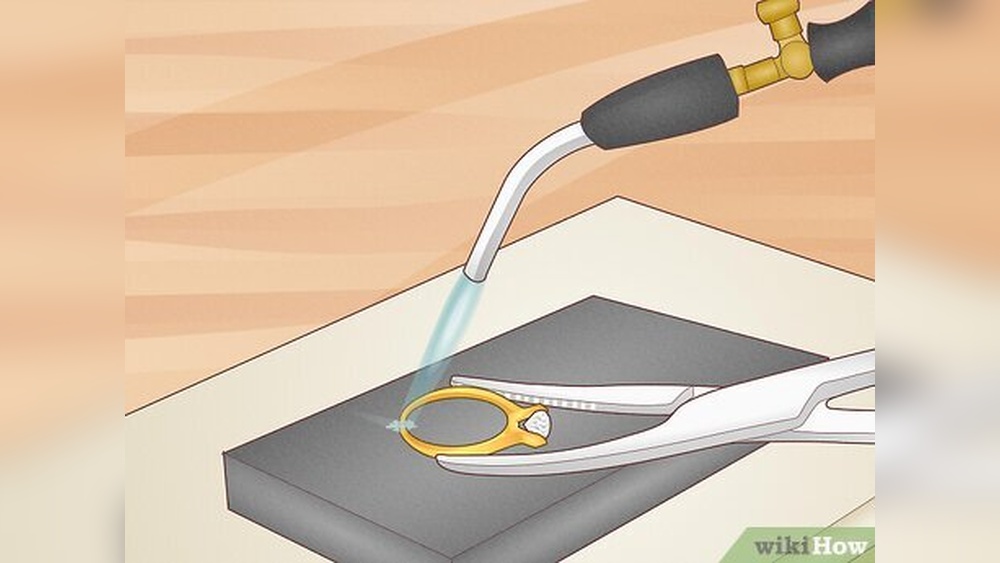
Credit: www.wikihow.com
The Science Behind Melting Metals
Understanding the science of melting is vital for anyone working with metals. Melting involves overcoming the bonds holding the metal’s atoms together.
Heat Transfer And Metal Melting
Metals melt when enough heat energy is applied to break their atomic bonds. The rate and effectiveness of heat transfer depend on:
- Thermal conductivity: Gold is highly conductive, but needs intense heat to melt.
- Heat source: The power and temperature of the source are critical.
- Contact area: Larger contact areas transfer more heat.
Soldering Vs Melting
Soldering is not melting. Soldering involves heating a filler metal (solder) below the melting point of the workpieces. Melting, by contrast, involves heating the metal until it becomes liquid.
- Soldering temperature: Always lower than the melting point of the metals being joined.
- Melting temperature: The point at which the metal itself liquefies.
Example: Soldering Gold Jewelry
When repairing gold jewelry, a jeweler uses a soldering iron to melt solder, not gold. The gold remains solid, while the solder flows and bonds the pieces.
Why Melting Gold Requires High Heat
To melt gold, the heat source must deliver continuous, intense energy. This requires:
- High wattage
- Efficient heat transfer
- Insulation to prevent heat loss
Soldering irons, designed for precision and safety, simply cannot provide these conditions.

Credit: www.youtube.com
Real-world Examples And Case Studies
Learning from real-world attempts to melt gold with soldering irons offers valuable lessons for both hobbyists and professionals.
Example 1: Attempting To Melt Gold With A Soldering Iron
In my experience, hobbyists often try to melt small gold pieces using high-end soldering irons. Despite setting the iron to maximum temperature, the gold remains solid. After several minutes, the tip begins to degrade, and the gold is unaffected. This demonstrates the gap between tool capability and metal requirements.
Example 2: Professional Jewelry Repair
Professional jewelers use butane torches or electric melting furnaces when melting gold. These tools reach temperatures far above the melting point of gold. For example, a butane torch can exceed 1,400°C, allowing the gold to liquefy and be cast into shapes. Soldering irons are reserved for attaching findings or repairing clasps with solder, not for melting the gold itself.
Example 3: Electronics Manufacturing
In electronics, gold is often used in connectors and contacts due to its conductivity. Manufacturing processes involve gold plating or bonding, not melting the gold with a soldering iron. Instead, specialized equipment vaporizes or deposits gold onto surfaces.
Example Table: Tool Effectiveness For Gold Melting
| Tool | Max Temp (°C) | Success Rate for Melting Gold | Typical Use Case |
|---|---|---|---|
| Soldering Iron | 480 | 0% | Soldering Electronic Components |
| Butane Torch | 1,430 | 95% | Jewelry Melting/Repair |
| Gold Melting Furnace | 1,600 | 100% | Gold Smelting |
Takeaway
These examples highlight the importance of choosing the right tool for the job. Soldering irons are invaluable for precision work but not for melting precious metals.
Safety Considerations And Risks
Working with high temperatures and precious metals comes with inherent risks. Understanding the limitations of soldering irons and the hazards of attempting to melt gold is crucial.
Risks Of Using Soldering Irons Beyond Their Limits
Attempting to melt gold with a soldering iron can lead to:
- Overheating: Risk of burns and electrical fires.
- Tool damage: The tip and heating element may degrade or fail.
- Material waste: Gold is expensive, and failed attempts can ruin small pieces.
Health And Safety Guidelines
Always follow established safety practices:
- Wear protective gear: Safety goggles, gloves, and heat-resistant clothing.
- Use proper ventilation: Avoid inhaling fumes from heated metals.
- Keep a fire extinguisher nearby: High temperatures pose fire risks.
- Avoid electrical hazards: Ensure tools are properly insulated.
Warning: Never attempt to melt gold with a soldering iron unless you are certain the tool can reach the required temperature. Always consult a professional or refer to industry guidelines.
Professional Recommendations
According to the Wikipedia Gold Article, melting gold is typically performed in a controlled environment with specialized equipment. The use of soldering irons is not recommended for this purpose.
Alternatives To Soldering Irons For Melting Gold
If you need to melt gold, there are several safer, more effective alternatives to soldering irons.
Gold Melting Furnaces
Gold melting furnaces are designed specifically to reach and sustain temperatures above gold’s melting point. Features include:
- Temperature control
- Insulation
- Safety mechanisms
These are the preferred method for smelting gold in jewelry and industrial applications.
Butane And Propane Torches
Butane and propane torches are popular among jewelers for melting small amounts of gold. They offer:
- Portable, high-temperature flame
- Affordable price point
- Precision and control
They can melt gold quickly and are suitable for casting and repairs.
Induction Melting
Induction melting uses electromagnetic fields to heat metals rapidly and efficiently. This method is common in industrial settings and can melt gold for mass production.
Choosing The Right Tool
Consider the following factors:
- Amount of gold to be melted
- Desired precision
- Budget
- Safety requirements
Pro Tip: For hobbyists, a butane torch is usually sufficient. For larger projects, invest in a purpose-built furnace.
Practical Applications: Soldering Vs Melting Gold
Understanding when to solder and when to melt gold is essential for both professionals and hobbyists.
Soldering Gold Jewelry
Most jewelry repairs involve soldering gold rather than melting it. Soldering joins pieces using a filler metal (solder) that melts at a lower temperature than gold.
- Process: Heat the solder until it flows between gold pieces.
- Benefits: Preserves the integrity of the gold; safer and easier.
Melting Gold For Casting
When creating new jewelry pieces or recycling gold, melting is required.
- Process: Heat gold until it liquefies; pour into molds.
- Equipment: Furnace, crucible, or torch.
Electronics: Gold Bonding Vs Melting
In electronics, gold is bonded, plated, or vaporized, not melted with a soldering iron. Bonding processes include:
- Wire bonding
- Electroplating
- Vapor deposition
Example: Gold Recycling
Gold recycling facilities use large furnaces to melt gold from old jewelry or electronics. The molten gold is then cast into bars or sheets for reuse.
Expert Opinions And Industry Standards
Industry experts and standards provide guidance on the proper handling and melting of gold.
Jewelry Industry Standards
According to the International Jewelry Federation, melting gold is performed in specialized furnaces or with torches. Soldering irons are strictly for repair work.
- Standard practice: Use soldering irons for joining, torches/furnaces for melting.
Electronics Manufacturing Standards
The IPC Electronics Standard recommends gold bonding techniques for connectors and contacts. Melting gold with soldering irons is not endorsed.
Academic And Technical Sources
The American Welding Society notes that soldering and melting are distinct processes. Only tools designed to reach the melting point of gold should be used for smelting.
Encyclopedia Britannica: Gold provides detailed information about gold’s properties and melting methods.
Professional Advice
Always consult a qualified jeweler or metalsmith before attempting to melt gold. Using improper tools can lead to safety issues and material loss.
Frequently Asked Questions
Can I Use A Soldering Iron To Melt Gold-plated Items?
No, a soldering iron cannot melt gold-plated items. Gold plating is a thin layer applied to a base metal, and the soldering iron’s temperature is not sufficient to melt gold or remove the plating. To recover gold from plated items, specialized chemical or mechanical processes are required.
What Happens If I Try To Melt Gold With A Soldering Iron?
If you attempt to melt gold with a soldering iron, the gold will remain solid. The soldering iron may overheat, potentially damaging its tip and heating element. You could also risk burns or electrical hazards. This method is not effective or safe for melting gold.
Are There Any Soldering Irons Capable Of Melting Gold?
No commercially available soldering iron reaches the temperature needed to melt gold. Even high-end models max out at around 480°C, far below gold’s melting point of 1,064°C. Only specialized gold melting furnaces or torches can achieve this.
What Is The Best Way To Melt Gold At Home?
The safest and most effective way to melt gold at home is using a butane or propane torch and a crucible designed for precious metals. Always follow safety protocols, work in a well-ventilated area, and wear protective gear. For larger quantities, consider a small electric furnace.
Why Is Gold Used In Electronics If It Requires Such High Temperatures To Melt?
Gold is used in electronics because of its superior conductivity and resistance to corrosion, not because it is easy to melt. Manufacturing processes do not require melting gold with basic tools; instead, gold is plated, bonded, or deposited onto components using advanced methods.
Gold’s value and unique properties make it a fascinating material for both artistic and industrial applications. However, melting gold requires far more heat than a soldering iron can provide. Attempting to use a soldering iron for this purpose is both inefficient and potentially hazardous.
By understanding the science, tool limitations, and industry standards, you can make informed decisions and avoid costly mistakes. Whether you’re working with gold in jewelry, electronics, or recycling, always use the proper equipment and consult professionals when needed.