

The digital multimeter (DMM) is an indispensable tool for electronics enthusiasts, electricians, engineers, and students. Its ability to measure voltage, current, and resistance with a single device has revolutionized diagnostics and troubleshooting across industries. However, despite their popularity and versatility, digital multimeters are not without significant drawbacks.
Many users, from beginners to seasoned professionals, encounter limitations that can affect accuracy, safety, and workflow. Understanding these disadvantages is crucial for making informed decisions about tool selection, maintenance, and safe operation.
This comprehensive guide explores the full spectrum of digital multimeter disadvantages, from technical pitfalls to practical concerns, using clear beginner-friendly explanations and advanced insights. Drawing on real-world examples, authoritative data, and expert recommendations, this article serves both as a learning resource and a practical handbook.
Whether you’re just starting out or you’re seeking to optimize your measurement strategy, you’ll find actionable advice, comparison tables, and nuanced perspectives to enhance your understanding.
Key Takeaways
- Digital multimeters can introduce measurement errors due to sensitivity to environmental factors and internal limitations.
- Safety risks are higher in certain DMMs, especially when measuring high voltages or currents without proper protection.
- Durability and reliability issues may occur in budget models, impacting long-term performance.
- Advanced features often require user expertise, making DMMs challenging for beginners.
- Analog multimeters and specialized instruments sometimes outperform DMMs in specific applications.
- Cost and complexity can be prohibitive for users needing only basic measurements.
Credit: www.electronics-notes.com
Accuracy Limitations Of Digital Multimeters
Sensitivity To Environmental Factors
Digital multimeters, while generally accurate, are susceptible to temperature fluctuations, humidity, and electromagnetic interference. For example, in my experience working in an industrial setting, ambient electromagnetic fields from nearby equipment caused erratic readings in a mid-range DMM. Beginners often overlook these influences, assuming digital readouts guarantee precision, but even advanced models can drift under adverse conditions.
- Temperature compensation is rarely perfect, and readings may shift as devices warm up.
- Humidity can affect internal circuits, especially in cheaper models lacking sealed enclosures.
- EMI (Electromagnetic Interference) from nearby radio transmitters or power lines can skew measurements.
Warning: Always check your DMM’s specifications for operating conditions and avoid using it in environments outside those limits.
Internal Circuit Limitations
The input impedance of digital multimeters can introduce errors, particularly when measuring voltage in high-impedance circuits. Most DMMs feature input impedances of 10 MΩ, but some cheaper devices may fall below this, leading to significant loading effects and inaccurate voltage readings.
| Specification | Typical Value (High-End DMM) | Typical Value (Budget DMM) |
|---|---|---|
| Input Impedance | 10 MΩ | 1-2 MΩ |
| Accuracy (DC Voltage) | ±0.05% | ±0.5% |
| Temperature Range | 0, 50°C | 5, 40°C |
Example: Measuring across a large resistor network with a budget DMM can result in readings off by several percent, potentially misleading diagnosis.
Resolution And Display Artifacts
While DMMs often boast high resolution (e.g., 4.5 digits), display artifacts such as rounding errors and unstable least-significant digits can confuse beginners. Advanced users recognize that more digits do not always mean more accuracy, a phenomenon known as “false precision.”
- Autoranging may introduce additional delays or errors if the DMM fails to select the optimal range.
- Display lag can misrepresent rapidly changing signals.
Pro Tip: Always cross-check critical measurements with another device or method, especially in sensitive applications.
Credit: smartshop.lk-ea.com
Safety Concerns And Risks
Overvoltage And Fuse Failure
One of the most significant disadvantages is the risk of overvoltage. Digital multimeters are rated for specific voltage and current ranges, and exceeding these can lead to blown fuses, damaged components, or even personal injury. According to Wikipedia, improper use of DMMs accounts for a notable percentage of electrical accidents in laboratories.
- CAT (Category) ratings designate the safe working environment; using a CAT II DMM for CAT III/IV tasks is hazardous.
- Fuse type and quality vary, with some budget models using glass fuses that fail to interrupt current quickly.
Warning: Always inspect fuses and verify CAT ratings before measuring high-energy circuits.
Lack Of Isolation In Cheaper Models
Many entry-level DMMs lack proper isolation between measurement circuits and user interfaces. This exposes the user to shock hazards, especially when measuring mains voltage or industrial systems. In advanced applications, such as power electronics, isolation is critical; professional-grade DMMs use opto-isolators or reinforced insulation.
- No isolation can result in electrical shocks or equipment damage.
- Insufficient insulation is common in low-cost models, posing a risk during accidental contact.
Example: An electrician measuring a high-voltage panel with a poorly insulated DMM may receive a shock if the probe slips.
User Error And Training Deficits
Even the best DMM is only as safe as its operator. Beginners frequently:
- Select the wrong measurement mode, causing short circuits.
- Use damaged probes or leads, increasing risk.
- Fail to understand the consequences of incorrect range selection.
Pro Tip: Invest time in safety training and regularly inspect your DMM and accessories for wear or damage.
Durability And Reliability Issues
Physical Durability
Digital multimeters, especially inexpensive models, often lack robust construction. Dropping a DMM may result in:
- Broken displays or cracked housings.
- Damaged internal circuitry, rendering the device unreliable.
In my experience, dropping a mid-tier DMM from a workbench resulted in permanent loss of resistance measurement, an expensive lesson in durability.
Battery Dependency
Unlike analog meters, DMMs rely on batteries for operation. Battery failure can cause:
- Sudden shutdowns during critical measurements.
- Reduced accuracy as battery voltage drops.
For beginners, neglecting battery replacement can result in misleading readings or unexpected downtime. Advanced users monitor battery health regularly, but even then, some DMMs lack low-battery indicators.
| Feature | Digital Multimeter | Analog Multimeter |
|---|---|---|
| Battery Dependency | Essential | Optional |
| Low Battery Warning | Available (High-End) | N/A |
| Impact on Measurement | High if battery low | Low |
Calibration Drift And Maintenance
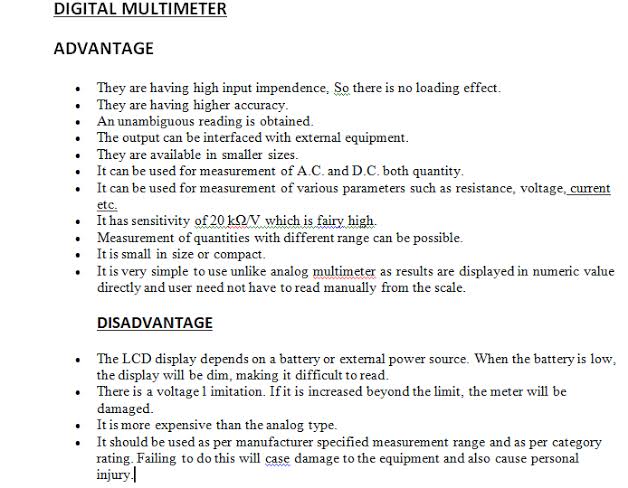
Over time, digital multimeters can suffer from calibration drift. Regular calibration is required to maintain accuracy, especially in professional environments. However, many beginners neglect this step, and even advanced users may struggle to find accredited calibration facilities.
- Annual calibration is recommended, but costs can add up.
- Uncalibrated DMMs may produce unreliable results, particularly in legal or regulated settings.
Pro Tip: Keep calibration certificates and schedule routine maintenance for your DMM, especially if used for critical measurements.
Credit: www.teachmint.com
Limited Measurement Capabilities
Restricted Measurement Types
While digital multimeters excel at basic measurements (voltage, current, resistance), they are limited in other areas:
- Capacitance, frequency, and temperature are only available on advanced models.
- Inductance and power measurements often require specialized instruments.
Beginners may not realize the limitations until they attempt a measurement outside the DMM’s capabilities.
Inability To Measure Complex Signals
Most DMMs are designed for DC and low-frequency AC measurements. When faced with complex waveforms, such as those in audio or radio circuits, DMMs struggle:
- True RMS capability is required for accurate measurement of non-sinusoidal signals; many budget DMMs lack this feature.
- Peak and average readings may differ significantly, confusing users.
Example: A technician troubleshooting a motor control circuit found that a standard DMM displayed incorrect values due to the presence of harmonics.
| Measurement Type | Standard DMM | Specialized Instrument |
|---|---|---|
| True RMS AC | Optional | Essential |
| Inductance | Unavailable | Available |
| Power Factor | Unavailable | Available |
Limited Sampling Rate
DMMs generally have low sampling rates, making them unsuitable for capturing fast transient signals or monitoring rapidly changing voltages. Oscilloscopes or data loggers are better suited for such tasks.
Pro Tip: Use a DMM only for steady-state measurements; for dynamic signals, consider investing in an oscilloscope.
Complexity And Learning Curve
Overwhelming Features For Beginners
Modern DMMs often include:
- Autoranging
- Hold functions
- Advanced modes (frequency, temperature, continuity)
These features, while useful, can overwhelm beginners. Misunderstanding how to use them may lead to incorrect readings or accidental damage.
Example: A student using autoranging for resistance measurement did not realize the DMM defaulted to kilo-ohms, resulting in misinterpretation of circuit values.
Advanced Functions Require Expertise
Advanced DMMs offer features like data logging, min/max recording, and PC connectivity. However, these functions require:
- Understanding of software interfaces
- Familiarity with data analysis techniques
- Ability to troubleshoot device-to-PC communication errors
Without proper training, users may never utilize these features, wasting investment.
Non-intuitive User Interface
Some DMMs have complex menus, poorly labeled buttons, or difficult-to-read displays. Beginners struggle with:
- Navigating settings
- Interpreting error messages
- Locating the correct measurement mode
Pro Tip: Choose a DMM with clear labeling and intuitive controls if you are new to electrical measurements.
Risk Of Incorrect Operation
Incorrect operation can result from:
- Setting wrong measurement mode (e.g., measuring voltage in current mode)
- Using incompatible probes
- Failing to zero the meter before resistance measurements
Warning: Always consult the user manual and perform a test measurement in a safe environment before using the DMM on live circuits.
Cost And Value Considerations
Price Vs. Performance Trade-off
Digital multimeters range from under $20 to over $500. The cheapest models are often plagued by:
- Inaccurate readings
- Poor build quality
- Lack of essential safety features
Higher-end DMMs provide:
- Greater accuracy
- Enhanced safety
- Extended measurement capabilities
However, the cost may be prohibitive for beginners or those needing only basic functionality.
| Feature | Budget DMM | Professional DMM |
|---|---|---|
| Price | $20, $50 | $200, $500 |
| Accuracy | ±0.5% | ±0.05% |
| Safety Features | Minimal | Comprehensive |
| Advanced Functions | Limited | Extensive |
Hidden Costs
Beyond the initial purchase price, consider:
- Replacement probes and fuses
- Calibration fees
- Battery costs
Example: Over two years, maintaining a mid-range DMM cost me almost as much as its initial purchase due to calibration and battery replacements.
Value For Specialized Tasks
For tasks requiring high precision or specialized measurements (e. g. , RF, power analysis), digital multimeters may not provide adequate value. Investing in dedicated instruments is often more efficient.
Pro Tip: Assess your measurement needs before purchasing a DMM; sometimes, renting or borrowing specialized equipment is more cost-effective.
Comparison With Analog Multimeters And Specialized Instruments
Analog Multimeters: Pros And Cons
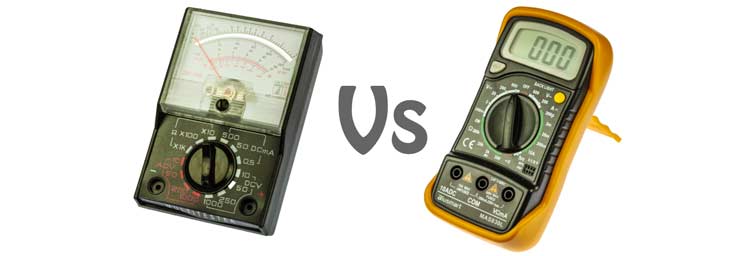
Analog multimeters, though largely superseded by DMMs, offer advantages in certain situations:
- Instantaneous response to changing signals
- No battery dependency for voltage/current measurements
- Better for observing trends or fluctuations
However, analog meters suffer from:
- Lower accuracy
- Difficult-to-read scales
- Fragility
| Feature | Digital Multimeter | Analog Multimeter |
|---|---|---|
| Accuracy | High | Moderate |
| Ease of Use | Complex (Advanced) | Simple |
| Battery Dependency | Yes | No (for V/I) |
| Trend Observation | Limited | Good |
Example: For quick diagnostics of fluctuating signals, an analog meter can be more informative than a DMM, despite lower precision.
Specialized Instruments Outperform Dmms
For advanced tasks, instruments like oscilloscopes, LCR meters, and power analyzers outperform DMMs:
- Oscilloscopes capture fast transients and visualize waveforms.
- LCR meters measure inductance and capacitance with high accuracy.
- Power analyzers provide detailed insights into power consumption and quality.
Fluke recommends choosing instruments based on task requirements, not defaulting to DMMs for every measurement.
Pro Tip: For specialized measurements, use the right tool, don’t rely solely on DMMs.
Real-world Examples And Case Studies
Example 1: Measuring High Voltage In Industrial Settings
An industrial electrician used a budget DMM to measure 480V in a distribution panel. The device lacked CAT III/IV ratings and proper insulation. The DMM failed, blowing its fuse and narrowly avoiding a serious injury. This case highlights the importance of safety ratings and robust construction.
Example 2: Diagnosing Audio Equipment
A hobbyist attempted to troubleshoot a guitar amplifier with a standard DMM. The device could not accurately measure the complex AC signals, resulting in misdiagnosis. Switching to a true RMS DMM improved results but still fell short compared to an oscilloscope.
Example 3: Calibration Drift In Laboratory Applications
A university research lab relied on mid-range DMMs for routine measurements. Over time, readings drifted due to lack of calibration, leading to erroneous data in published research. Annual calibration and documentation resolved the issue, emphasizing the need for maintenance.
Advanced Suggestions For Mitigating Disadvantages
Best Practices For Beginners
- Read the manual thoroughly before using the DMM.
- Start with basic measurements (DC voltage, resistance) and master them before exploring advanced functions.
- Inspect probes and leads regularly for damage.
- Always set the correct measurement mode to avoid accidents.
Advanced Strategies For Professionals
- Invest in high-quality DMMs with proper safety ratings and advanced features.
- Schedule annual calibration and keep records for compliance.
- Use specialized instruments for tasks beyond DMM capabilities.
- Integrate DMMs with data logging systems for enhanced analysis.
Maintenance And Safety Protocols
- Store DMMs in protective cases.
- Replace batteries and fuses proactively.
- Avoid exposing DMMs to extreme temperatures or humidity.
- Conduct training sessions for all users.
Pro Tip: Develop a checklist for DMM use and maintenance to ensure reliability and safety.
Frequently Asked Questions
What Should I Do If My Digital Multimeter Gives Inconsistent Readings?
If your DMM provides fluctuating or inconsistent measurements, first check the battery status. Weak batteries can cause erratic behavior. Next, verify that the probes are clean, undamaged, and properly connected. Environmental factors such as electromagnetic interference or temperature extremes may also influence readings.
For persistent issues, consider recalibrating the DMM or consulting a technician.
Are Digital Multimeters Suitable For Measuring High-frequency Signals?
Most standard digital multimeters are not designed for high-frequency signals. Their sampling rates and bandwidth are limited, which can result in inaccurate measurements. For frequencies above a few kilohertz, oscilloscopes or specialized frequency meters are recommended. Always check your DMM’s specifications for frequency measurement capability before use.
How Can I Ensure My Digital Multimeter Remains Accurate Over Time?
Regular calibration is key to maintaining accuracy. Schedule annual calibration through accredited laboratories and keep documentation for reference. Avoid exposing your DMM to extreme environments, and store it in a protective case. Replace batteries proactively and inspect probes for wear.
Using your DMM within its specified ranges also helps preserve reliability.
What Safety Features Should I Look For In A Digital Multimeter?
Essential safety features include proper CAT ratings (II, III, IV), high-quality fast-acting fuses, reinforced insulation, and overload protection. Some advanced DMMs offer warning indicators, isolation circuitry, and automatic shutdown. Choose models from reputable manufacturers and avoid using low-cost devices for high-voltage or industrial applications.
Is It Possible To Use A Digital Multimeter For Data Logging And Remote Monitoring?
Certain advanced DMMs offer data logging and PC connectivity, allowing remote monitoring and analysis. These features require compatible software and proper setup. For continuous measurement or trend analysis, ensure your DMM has sufficient memory and interface options. Consult the user manual and manufacturer resources for configuration guidance.
Understanding the disadvantages of digital multimeters is essential for making informed decisions, ensuring safety, and achieving reliable measurements. By recognizing the limitations in accuracy, safety, durability, measurement capability, and cost, users can select the right tools, adopt best practices, and mitigate risks.
Whether you’re a beginner learning the basics or a professional optimizing your workflow, combining practical knowledge with advanced strategies will enhance your electrical measurement experience.