
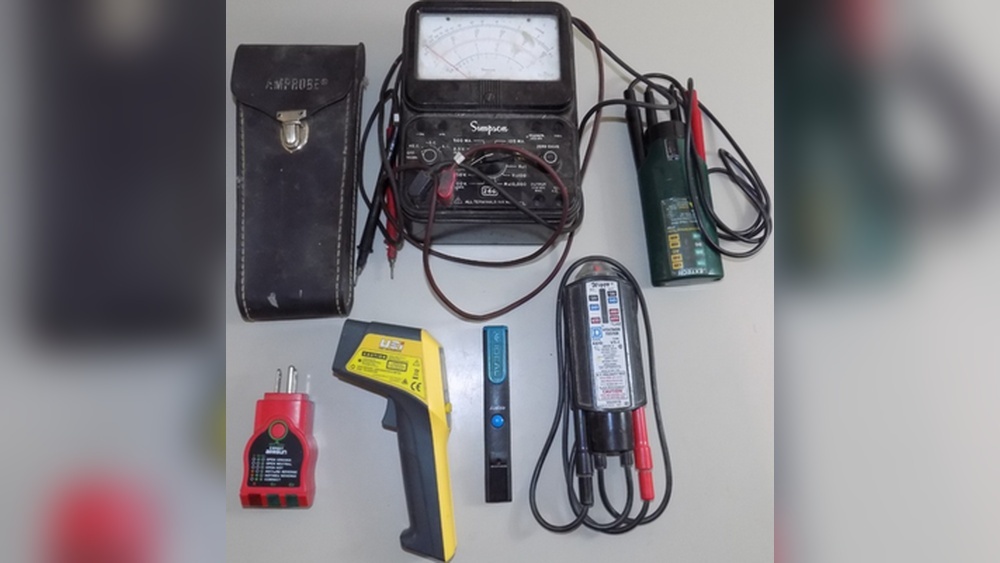
Choosing the right tool for electrical testing can make the difference between safe, accurate diagnostics and costly mistakes. Two devices stand out in the toolbox of electricians, technicians, and DIY enthusiasts: the Wiggy tester and the multimeter. Both are designed to measure electrical parameters, but their applications, precision, and user-friendliness vary significantly. Whether you’re a beginner trying to understand basic voltage checks or an advanced user needing comprehensive diagnostics, knowing when to use a Wiggy versus a multimeter is essential.
This article unpacks the strengths, limitations, and real-world uses of Wiggy testers and multimeters. Through detailed comparisons, practical examples, and expert advice, you’ll gain the knowledge to select the right device for your electrical tasks. We’ll address not only their technical differences but also safety practices, best use cases, and how to interpret readings for both novice and seasoned professionals.
Key Takeaways
- Wiggy testers excel in robust, straightforward voltage detection with minimal settings and are ideal for quick checks and rough environments.
- Multimeters offer precision, versatility, and advanced measurement functions, making them indispensable for troubleshooting and electronics work.
- Beginners benefit from Wiggy’s simplicity, while advanced users leverage multimeters for detailed diagnostics.
- Safety, accuracy, and application-specific choice are crucial, understanding each tool’s strengths prevents errors and hazards.
- Practical examples, tables, and expert tips guide both novices and experienced users in selecting and using Wiggy testers and multimeters.
Understanding Wiggy Testers
The Wiggy tester, sometimes called a solenoid voltage tester, has been a staple in electrical work for decades. Its simplicity and ruggedness have made it a favorite among electricians, especially in construction and industrial settings.
What Is A Wiggy Tester?
A Wiggy tester is a handheld device designed primarily to detect AC and DC voltage. It uses a solenoid mechanism: when probes touch a live circuit, the solenoid activates, causing a physical movement (often a pointer or a vibration), indicating voltage presence and approximate level.
- Voltage Range: Typically from 24V to 600V (varies by model)
- Display: Mechanical pointer or vibration, no digital readout
- Operation: No batteries required; powered by circuit being tested
Basic Use Cases And Benefits
For beginners, Wiggy testers offer several advantages:
- Simplicity: No settings or modes to adjust; just connect probes.
- Durability: Designed for rough environments, resistant to drops and dust.
- Safety: No batteries, minimizing risk of malfunction due to battery failure.
Pro Tip: Wiggy testers are ideal for quickly checking if a wire or outlet is live, especially in industrial or construction environments where speed and ruggedness matter most.
Limitations And Advanced Considerations
Advanced users should note:
- Limited Precision: Wiggy testers provide only approximate voltage readings.
- No Current Measurement: Cannot measure amperage or resistance.
- No Continuity Testing: Not suitable for checking circuit continuity.
For tasks requiring detailed diagnostics or precise values, such as electronics troubleshooting or complex wiring, Wiggy testers fall short.
Credit: lifetips.alibaba.com
Understanding Multimeters
The multimeter is a versatile tool, essential for both basic and advanced electrical work. It combines several measurement functions into one device, offering detailed information about electrical systems.
What Is A Multimeter?
A multimeter can measure voltage, current, resistance, and often more (like continuity, capacitance, frequency). Models range from simple analog devices to advanced digital multimeters (DMMs) with data logging and connectivity.
- Display: Digital or analog, typically with precise numerical readouts
- Functions: Voltage (AC/DC), current (AC/DC), resistance, continuity, diode testing, and advanced features
- Operation: Requires batteries for display and some functions
Core Use Cases And Benefits
For beginners and advanced users alike:
- Versatility: Can perform multiple types of measurements with one tool.
- Precision: Provides exact values, critical for troubleshooting and diagnostics.
- Adaptability: Suitable for home, industrial, and electronics work.
Example: If you need to troubleshoot a malfunctioning circuit board, a multimeter will help you pinpoint faulty components by measuring voltage drops, resistance, and continuity.
Limitations And Advanced User Advice
- Complexity: Beginners may find multimeters confusing due to multiple settings and ranges.
- Fragility: Digital multimeters can be sensitive to drops, moisture, and electrical overloads.
- Battery Dependence: Dead batteries can compromise operation.
Advanced users benefit from models with True RMS, auto-ranging, and data logging, features that improve accuracy and efficiency in complex environments.

Credit: www.youtube.com
Wiggy Vs Multimeter: Technical Comparison
Understanding the technical differences between Wiggy testers and multimeters is crucial for making informed decisions. The following table summarizes their main attributes:
| Feature | Wiggy Tester | Multimeter |
|---|---|---|
| Measurement Types | Voltage (AC/DC) | Voltage, Current, Resistance, Continuity, More |
| Display Type | Mechanical pointer/vibration | Digital or analog readout |
| Precision | Approximate | High (exact values) |
| Durability | Very rugged | Varies (less rugged) |
| Battery Requirement | No | Yes |
| Safety Features | Solenoid provides physical feedback | Overload protection, fuse, auto shutoff |
| Cost | Low to moderate | Wide range ($20-$500+) |
Key Distinctions
- Wiggy testers are best for quick voltage checks in tough environments.
- Multimeters excel in diagnostics, electronics, and advanced troubleshooting.
When Precision Matters
If your project requires exact voltage or current readings, especially for electronics or sensitive equipment, a multimeter is the clear choice. For rough, high-voltage environments or quick “live/dead” checks, Wiggy testers offer unmatched simplicity and safety.
Practical Applications: Beginner To Advanced
Choosing between a Wiggy tester and a multimeter depends on your skill level and specific tasks. Here’s a guide for beginners and advanced users.
Wiggy Tester: Beginner-friendly Scenarios
For those new to electrical work, Wiggy testers:
- Identify live wires and outlets quickly.
- Test basic circuits without needing to interpret complex measurements.
- Reduce risk of incorrect settings, as there’s only one function.
Example: A homeowner troubleshooting a non-working outlet can use a Wiggy tester to quickly determine if voltage is present, without worrying about setting ranges.
Multimeter: Beginner Tips
Although multimeters have more functions, beginners can:
- Start with voltage measurement, set to AC for household outlets, DC for batteries.
- Use continuity mode (with audible beep) to check if a wire or fuse is intact.
- Practice reading resistance to identify faulty components.
Pro Tip: Always double-check the setting and range before testing. Incorrect settings can damage the meter or yield misleading results.
Advanced Applications And Suggestions
For experienced technicians:
- Use multimeters for diagnosing complex faults, measuring current draw, and checking component values.
- Leverage features like auto-ranging, True RMS, and min/max recording for accuracy.
- For harsh environments (industrial sites), use Wiggy testers to avoid risking expensive multimeters.
Example: When troubleshooting a three-phase motor, advanced users combine a Wiggy tester for quick voltage checks with a multimeter for precise current and resistance measurements.
Safety Considerations
Regardless of experience, safety is paramount:
- Always wear insulated gloves when testing live circuits.
- Test the device on a known live source before use to verify operation.
- Never use a multimeter or Wiggy tester beyond its rated voltage/current.
Warning: Faulty or misused testers can lead to injury or equipment damage. Consult the manufacturer’s manual and adhere to local electrical codes.
Real-world Examples And Case Studies
Examining real-world scenarios highlights the practical value of each tool.
Example 1: Residential Troubleshooting
A homeowner notices several outlets are not working after a storm. Using a Wiggy tester, they confirm voltage absence at the outlets, indicating a tripped breaker. After resetting the breaker, the Wiggy tester shows voltage presence, confirming restoration. For more detailed diagnostics, a multimeter checks the outlet’s voltage level, ensuring no abnormal voltage drops.
Example 2: Industrial Maintenance
An industrial electrician must quickly check dozens of circuits in a manufacturing plant. The Wiggy tester’s ruggedness and speed allow rapid checks without worrying about settings or battery failure. For in-depth troubleshooting of machinery, the electrician switches to a multimeter, measuring current and resistance to pinpoint faulty components.
Example 3: Electronics Repair
A technician repairing a power supply uses a multimeter to measure voltage, check continuity, and assess component values. The precision and multiple functions enable thorough diagnostics, identifying defective capacitors and resistors.
| Scenario | Recommended Tool | Reason |
|---|---|---|
| Outlet check (home) | Wiggy tester | Quick, no settings |
| Circuit board repair | Multimeter | Precision, multiple functions |
| Industrial voltage survey | Wiggy tester | Rugged, fast checks |
| Motor troubleshooting | Multimeter | Current/resistance measurement |
Pros And Cons: Wiggy Vs Multimeter
Evaluating the strengths and weaknesses of each tool helps clarify their ideal use cases.
Wiggy Tester
Pros:
- Simple operation
- No batteries needed
- Rugged construction
- Quick voltage detection
Cons:
- Limited functions (only voltage)
- Approximate readings
- No current, resistance, or continuity measurement
Multimeter
Pros:
- Multi-function (voltage, current, resistance, continuity, more)
- Precise readings
- Suitable for electronics, home, and industrial applications
- Advanced features (auto-ranging, True RMS, data logging)
Cons:
- Requires batteries
- More complex to operate
- Can be fragile
- Higher cost (for advanced models)
Choosing The Right Tool: Beginner And Advanced Guide
Selecting between a Wiggy tester and a multimeter hinges on task requirements, user skill level, and environment.
Beginner Guide
For those starting out:
- Use a Wiggy tester for simple live/dead checks.
- Learn basic multimeter functions, voltage, continuity, resistance.
- Practice safe handling and double-check device operation.
Pro Tip: Invest in a basic multimeter with auto-ranging for easier operation.
Advanced Suggestions
For experienced users:
- Select multimeters with True RMS for accurate AC measurements.
- Use data logging and min/max features for monitoring fluctuations.
- Keep a Wiggy tester for rapid checks in harsh environments to preserve expensive equipment.
Example: In my experience, using a Wiggy tester during rough construction saves time and reduces wear on sensitive multimeters.
Safety, Standards, And Best Practices
Electrical testing carries inherent risks. Adhering to safety protocols and standards is non-negotiable.
Essential Safety Practices
- Inspect tools for damage before use.
- Use proper personal protective equipment (PPE).
- Never exceed tool voltage/current ratings.
- Store testers in dry, dust-free environments.
Standards And Certifications
Choose tools compliant with recognized safety standards:
- UL Listing: Ensures electrical safety.
- CAT Ratings: Category ratings (CAT III, CAT IV) define safe usage environments.
- IEC Standards: International safety and performance benchmarks.
Consult official guidelines, like those from the Occupational Safety and Health Administration (OSHA), for detailed safety information.
Maintenance And Calibration
- Regularly calibrate multimeters for accuracy.
- Clean probes and contacts to prevent false readings.
- Replace batteries in multimeters before they fail.
Warning: Using uncalibrated or damaged equipment can lead to inaccurate readings and safety hazards.
Advanced Features And Innovations
Modern multimeters and Wiggy testers have evolved, offering features that cater to advanced users and enhance safety.
Multimeter Innovations
- True RMS: Accurate measurement of AC voltage/current, even with non-sinusoidal waveforms.
- Auto-Ranging: Eliminates manual setting of measurement range, reducing user error.
- Bluetooth/Data Logging: Enables recording and remote monitoring of measurements.
Example: Advanced digital multimeters can store hundreds of readings, making it easier to track electrical trends over time.
Wiggy Tester Updates
- LED Indicators: Some models include LEDs for clearer voltage level indication.
- Improved Durability: Enhanced materials for resistance to chemicals and extreme temperatures.
Integration With Other Tools
Experienced technicians may combine Wiggy testers and multimeters for optimal efficiency:
- Use Wiggy for quick checks, then multimeter for detailed analysis.
- Pair with clamp meters for current measurement in industrial settings.
Wikipedia offers additional information on multimeter technology and advancements.
Frequently Asked Questions
What Is The Main Difference Between A Wiggy Tester And A Multimeter?
The core difference lies in functionality and precision. A Wiggy tester is designed solely for detecting voltage presence, offering an approximate indication via solenoid movement. In contrast, a multimeter provides exact readings for voltage, current, resistance, and more, making it suitable for comprehensive diagnostics.
Is It Safe For Beginners To Use A Multimeter?
Yes, but beginners should start with basic functions like voltage and continuity measurement. Always read the user manual, wear protective gear, and ensure the device is rated for the environment and voltage being tested. If unsure, consult a qualified electrician before attempting complex measurements.
Can A Wiggy Tester Be Used For Electronics Repair?
No, Wiggy testers are not suitable for electronics repair due to their limited precision and functions. Electronics work requires exact measurements of voltage, resistance, and continuity, which only a multimeter can provide. Using a Wiggy tester for electronics may lead to missed faults or incorrect diagnostics.
How Often Should A Multimeter Be Calibrated?
The frequency of calibration depends on usage and manufacturer recommendations. For professional environments, annual calibration is standard. If the multimeter is used infrequently or only for non-critical tasks, calibration every 2-3 years may suffice. Always check calibration after drops or exposure to extreme conditions.
What Precautions Should I Take When Using Electrical Testers?
- Inspect testers for damage before use.
- Verify operation on a known live circuit.
- Use tools with proper CAT rating for the environment.
- Wear insulated gloves and safety glasses.
- Never test circuits beyond the tester’s rated voltage/current.
Selecting the right electrical tester is vital for safety, accuracy, and efficiency. Wiggy testers offer rugged simplicity for quick voltage checks, making them ideal for beginners and harsh environments. Multimeters provide comprehensive, precise measurements, indispensable for advanced diagnostics and electronics work.
Understanding the strengths, limitations, and proper usage of each tool ensures you’ll tackle electrical tasks with confidence and reliability. Whether you’re starting out or seeking advanced features, the right tester empowers you to work smarter and safer.