
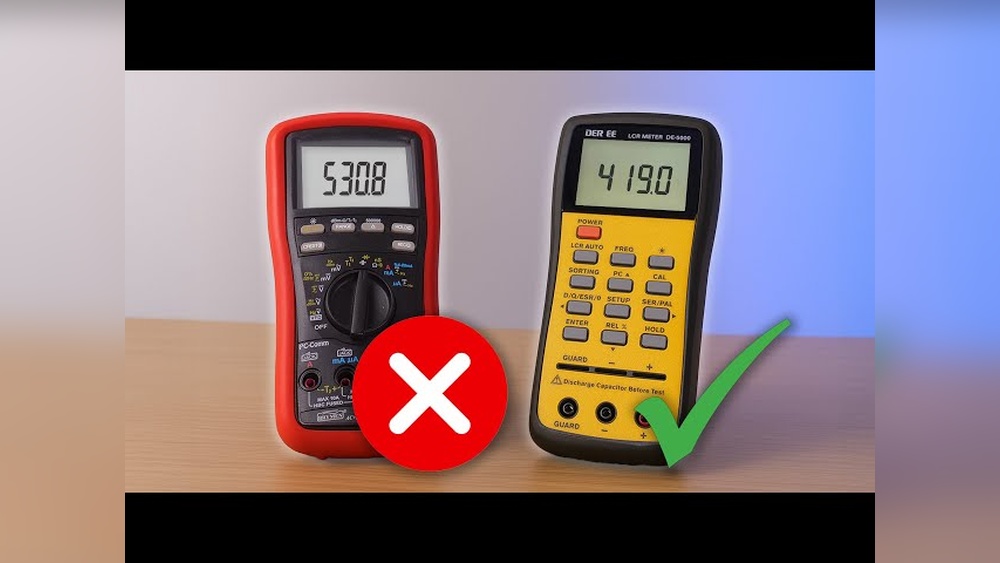
When working with electronics, choosing the right measurement tool can make all the difference between an efficient workflow and a frustrating experience. Two of the most common instruments in any electronics lab are the LCR meter and the multimeter. While both serve vital functions for diagnosing and characterizing electronic components, their capabilities, accuracy, and applications differ significantly. For beginners, the subtle differences can be confusing; for professionals, making the right choice impacts project outcomes and operational efficiency.
Whether you’re a hobbyist just learning the ropes, a student preparing for lab work, or an engineer working on intricate circuits, understanding the differences between LCR meters and multimeters is essential. This guide breaks down the principles, features, and use cases for each instrument, offering practical advice and advanced insights so you can confidently select the right tool for your needs.
Key Takeaways
- LCR meters are specialized instruments for measuring inductance (L), capacitance (C), and resistance (R) with high precision, often at multiple frequencies.
- Multimeters are versatile, general-purpose tools ideal for measuring voltage, current, and basic resistance, but lack advanced component analysis.
- The choice between LCR meter and multimeter depends on your project requirements, desired measurement accuracy, and budget.
- For component testing and quality control, LCR meters provide superior accuracy and advanced features.
- Beginners should start with a multimeter, while advanced users benefit from adding an LCR meter for in-depth analysis.
- Understanding the strengths and limitations of each tool helps prevent costly mistakes and improves troubleshooting efficiency.

Credit: www.youtube.com
Understanding The Basics: What Are Lcr Meters And Multimeters?
What Is A Multimeter?
A multimeter is a multifunctional electronic instrument that combines several measurement functions into one unit. Most commonly, it measures:
- Voltage (AC and DC)
- Current (AC and DC)
- Resistance
- Some models also measure continuity, diode function, and even basic capacitance and frequency.
Modern multimeters are usually digital (DMMs), featuring an easy-to-read display, auto-ranging capabilities, and compact designs. Analog multimeters, while still available, have largely been replaced due to the greater accuracy and usability of digital models.
What Is An Lcr Meter?
An LCR meter is a specialized instrument designed specifically to measure:
- Inductance (L)
- Capacitance (C)
- Resistance (R)
Unlike a multimeter, an LCR meter often allows measurements at various frequencies, which is crucial for accurately characterizing passive components under real-world operating conditions. Advanced models provide additional parameters such as dissipation factor (D), quality factor (Q), and impedance (Z).
Key Differences At A Glance
| Feature | Multimeter | LCR Meter |
|---|---|---|
| Primary Measurements | Voltage, Current, Resistance | Inductance, Capacitance, Resistance |
| Accuracy (L/C) | Low | High |
| Test Frequencies | Single (DC or 50/60Hz AC) | Multiple (100Hz, 100kHz+) |
| Advanced Parameters | Rarely | D, Q, ESR, Z, θ |
| Component Testing | Basic (resistors/diodes) | Comprehensive (R, L, C, ESR, etc.) |
| Price Range | $10, $300 | $50, $5,000+ |
Principles Of Operation: How These Instruments Work
The Operating Principle Of Multimeters
Multimeters function by applying a small voltage or current to a circuit and measuring the resulting response. For resistance, the meter applies a known voltage and measures the current, using Ohm’s Law to calculate resistance. For voltage and current measurements, the device directly samples the circuit and displays the results.
Basic capacitance and frequency measurements, if available, are typically approximate and should not be relied upon for precise component characterization.
- Auto-ranging helps beginners by automatically selecting the best measurement range.
- Manual ranging gives advanced users more control and can prevent misreadings in noisy environments.
The Operating Principle Of Lcr Meters
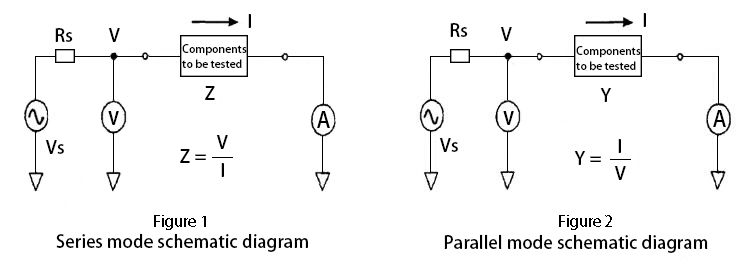
LCR meters use AC test signals at selectable frequencies to measure how a component responds. By analyzing the voltage and current through the device under test (DUT), the meter can separate the resistive and reactive parts of impedance, allowing for accurate L, C, and R measurements.
- Multiple frequencies (from 100 Hz up to 100 kHz or more) simulate real-world circuit conditions.
- Four-terminal (Kelvin) measurements on advanced models eliminate errors from lead and contact resistance, vital for low-value components.
Example: Measuring A Ceramic Capacitor
- With a multimeter: The meter may only provide a capacitance reading at one fixed low frequency or DC, resulting in a rough estimate.
- With an LCR meter: You can select the test frequency (e.g., 1 kHz, 10 kHz) and measure not only capacitance but also ESR (Equivalent Series Resistance), which is crucial for high-frequency applications.

Credit: www.yamanelectronics.com
Key Features And Specifications: What To Look For
Essential Features Of Multimeters
- Measurement Range: Voltage (up to 600V), current (up to 10A), resistance (up to 40MΩ or more).
- Display: Large digital displays with backlighting for readability.
- Accuracy: Typically ±0.5% to ±2% for voltage, less for current/resistance.
- Safety Ratings: CAT II, III, or IV for protection against electrical surges.
- Additional Functions:
- Continuity tester (with audible beep)
- Diode check
- Basic capacitance and frequency (in some models)
- Data hold and auto power-off
Essential Features Of Lcr Meters
- Measurement Parameters: L, C, R, plus D, Q, ESR, Z, phase angle (θ).
- Test Frequencies: Ranging from 100 Hz up to 100 kHz or higher for high-end models.
- Display Resolution: Typically 4 to 6 digits, allowing fine granularity.
- Measurement Modes:
- Series or parallel equivalent circuit selection
- Auto and manual ranging
- Advanced Features:
- Four-terminal Kelvin connections
- Data logging and PC connectivity
- Bin sorting for component QC
Comparison Table: Features Breakdown
| Specification | Typical Multimeter | Typical LCR Meter |
|---|---|---|
| Resistance Accuracy | ±1% | ±0.1% |
| Capacitance Range | Up to 200μF (basic) | Up to 100mF (advanced) |
| Inductance Measurement | Rarely available | Standard (nH, H) |
| Test Signal Frequency | DC or single AC frequency | Selectable (100Hz, 100kHz+) |
| ESR Measurement | No | Yes |
| PC Connectivity | Rarely | Often (USB/RS232) |
| Component Sorting | No | Yes (binning) |
Credit: www.ato.com
Applications And Use Cases: When To Use Each Tool
Everyday Use Cases For Multimeters
Multimeters are the go-to instrument for:
- Troubleshooting electrical circuits: Checking continuity, finding shorts, and verifying voltage levels.
- DIY electronics projects: Measuring supply voltage, battery health, or current draw.
- Home electrical work: Verifying outlets, testing fuses, and ensuring safety before maintenance.
Example: When replacing a power supply in a desktop PC, a multimeter helps confirm proper output voltages and ground continuity before powering up sensitive hardware.
Specialized Applications Of Lcr Meters
LCR meters excel in scenarios where component precision is paramount:
- Component testing and sorting: Verifying manufacturer specifications for capacitors, inductors, and resistors.
- Quality control in manufacturing: Automated bin sorting to ensure components meet production tolerances.
- RF and audio circuit design: Measuring ESR and Q factor of capacitors and inductors for optimized performance.
- Academic research and advanced hobby projects: Detailed analysis of passive component behavior under varying frequencies.
Example: In audio amplifier design, an LCR meter is used to select capacitors with a low ESR and high Q for the signal path, directly impacting audio clarity and noise performance.
Pro Tip: Use Both Instruments Together
For complex projects, it’s common to use a multimeter for general circuit checks and an LCR meter for detailed component analysis. This combination ensures both circuit-level health and component-level precision.
Real-world Examples And Scenarios
Case Study 1: Diagnosing A Faulty Power Supply
A technician suspects a failed capacitor in a switching power supply. With a multimeter, the technician measures voltage across the suspected capacitor but finds it within expected range. Using an LCR meter, the technician measures the capacitor’s ESR, discovering it is much higher than specified, confirming degradation and preventing further equipment failure.
Case Study 2: Building A Radio Frequency (rf) Filter
An electronics hobbyist is designing an RF filter that requires precisely matched inductors and capacitors. The hobbyist’s multimeter cannot measure inductance accurately, but an LCR meter provides exact L and C values at the operating frequency, ensuring the filter performs as designed.
Case Study 3: Academic Lab Experiment
In a university lab, students must characterize unknown passive components. The multimeter gives a rough resistance value, but the LCR meter enables them to determine whether the component is a resistor, capacitor, or inductor, and to measure its value and quality factor at different frequencies, deepening their understanding of component behavior.
Advantages And Limitations: Choosing The Right Tool
Pros And Cons Of Multimeters
Advantages:
- Versatility: Measures voltage, current, resistance, and sometimes other parameters.
- Portability: Compact and easy to carry in a tool bag.
- Affordability: Wide range of models for every budget.
- Beginner-friendly: Intuitive operation, ideal for basic troubleshooting.
Limitations:
- Limited component analysis: Poor accuracy for capacitance and inductance.
- No frequency selection: Can’t simulate real-world operating conditions for components.
- Lacks advanced parameters: No ESR, Q, or D measurement capabilities.
Pros And Cons Of Lcr Meters
Advantages:
- High accuracy: Superior for L, C, R measurements, especially at multiple frequencies.
- Advanced diagnostics: Measures ESR, Q, D, phase angle, and more.
- Component sorting: Essential for quality control in manufacturing.
- Four-terminal measurements: Eliminates lead/contact resistance errors.
Limitations:
- Specialized use: Not suitable for voltage or current measurements.
- Cost: Entry-level models start higher than basic multimeters; advanced units can be expensive.
- Learning curve: More complex operation, especially for beginners.
When Should You Upgrade To An Lcr Meter?
If your projects involve:
- Designing or repairing high-frequency circuits (RF, audio, power supplies)
- Testing large batches of components for quality assurance
- Reverse engineering or characterizing unknown components
- Academic research requiring precision measurement
…an LCR meter is a worthwhile investment. For everyday electrical work or hobbyist use, a quality multimeter remains indispensable.
Advanced Measurement Techniques And Tips
Getting The Most Out Of Your Multimeter
- Use the correct jacks and settings: Always double-check before measuring current to avoid blowing a fuse.
- Calibrate regularly: For consistent accuracy, especially in professional settings.
- Test leads matter: High-resistance or damaged leads can skew readings.
Mastering The Lcr Meter
- Select the right frequency: Match the test frequency to your application (e.g., use 1 kHz for audio circuits, 100 kHz for RF).
- Series vs. parallel mode: Choose according to the component and test standard for most accurate results.
- Four-terminal (Kelvin) measurements: Use this for low-value components to avoid lead resistance errors.
- Zero compensation: Before measuring small L or C values, perform open/short compensation to eliminate stray capacitance and inductance.
Example: Esr Measurement In Electrolytic Capacitors
Electrolytic capacitors degrade over time, increasing their Equivalent Series Resistance (ESR). A high ESR can cause power supply ripple and instability. While a multimeter may show the capacitance as “normal,” only an LCR meter can reveal a dangerously high ESR, helping prevent premature circuit failures.
Pro Tip: Document And Compare Results
For component matching or troubleshooting, keep a log of measurement results. This is invaluable for quality control, future repairs, or circuit optimization.
Buying Guide: How To Choose The Right Meter
Factors To Consider For Multimeters
- Measurement needs: Do you need AC/DC voltage, current, and resistance only, or additional features like temperature or frequency?
- Accuracy and resolution: Higher precision is better for advanced work.
- Safety ratings: Look for CAT III or IV for work on mains circuits.
- Build quality: Sturdy casing, reliable rotary switch, and good test leads.
- Brand reputation: Brands like Fluke, Keysight, and Extech are known for reliability.
Factors To Consider For Lcr Meters
- Frequency range: Higher maximum frequency for RF and advanced audio work.
- Display and interface: Clear, easy-to-read, and ideally with PC connectivity for data logging.
- Measurement parameters: Ensure it offers all needed parameters (ESR, Q, D, etc. ).
- Accuracy: Look for low tolerance specs, especially for precision applications.
- Calibration: Ability to perform open/short compensation and zeroing.
Example: Entry-level Vs. Advanced Meters
- Entry-level multimeter: Suitable for home repairs, hobby projects, and basic troubleshooting.
- Professional multimeter: Required for industrial, automotive, and high-precision applications.
- Basic LCR meter: Adequate for hobbyists wanting to sort components or perform simple checks.
- Laboratory-grade LCR meter: Essential for R&D, manufacturing, and quality assurance.
Cost Comparison Table
| Device Type | Entry-level Price | Professional Price | Laboratory Grade Price |
|---|---|---|---|
| Multimeter | $10 – $40 | $50 – $300 | N/A |
| LCR Meter | $50 – $150 | $200 – $700 | $1,000 – $5,000+ |
Warning: Don’t Rely On Price Alone
Higher price doesn’t always guarantee better performance for your specific needs. Carefully review specifications and user reviews before making a purchase. Sites like EEVblog Forum offer in-depth discussions and real-world feedback from experienced users.
Calibration, Maintenance, And Safety
Multimeter Care And Calibration
- Replace batteries regularly: Low battery can cause incorrect readings.
- Fuse replacement: Use only specified ratings to avoid fire hazards.
- Periodic calibration: Send to an accredited lab annually for professional use.
Lcr Meter Maintenance
- Clean contacts: Ensure Kelvin clips or test fixtures are free from oxidation.
- Open/short compensation: Regularly perform to maintain measurement accuracy.
- Firmware updates: For digital models, keep firmware current to avoid bugs.
Safety Tips
- Never measure voltage in resistance or capacitance mode: This can damage the meter.
- Observe CAT ratings: Only use meters rated for the voltage and environment in which you’re working.
- Disconnect power: When measuring components out of circuit, always power down and discharge capacitors before testing.
Frequently Asked Questions
What Is The Main Difference Between An Lcr Meter And A Multimeter?
The primary distinction is that a multimeter measures voltage, current, and basic resistance, making it suitable for general electrical troubleshooting, while an LCR meter specializes in measuring inductance, capacitance, and resistance with high accuracy, especially at various frequencies. LCR meters also provide advanced parameters like ESR and Q factor, which are essential for component characterization.
Can A Multimeter Replace An Lcr Meter For Component Testing?
While some advanced multimeters can measure capacitance, their accuracy is limited, and they usually lack inductance measurement. For precise analysis of capacitors or inductors, or for measuring parameters such as ESR or Q, an LCR meter is indispensable. Beginners may start with a multimeter, but professionals should consider both tools for comprehensive diagnostics.
Is It Safe To Measure Live Circuits With An Lcr Meter?
No, LCR meters are not designed for live circuit measurements. They apply their own test signals and assume the device under test is isolated from any external voltage. Always remove components from powered circuits and discharge capacitors before using an LCR meter. For live circuit testing, use a multimeter with appropriate safety ratings.
How Do I Choose The Right Lcr Meter For My Application?
Consider your required measurement range, accuracy, test frequencies, and whether you need advanced features like ESR or PC connectivity. For instance, audio engineers often need ESR and Q measurement at 1 kHz, while RF engineers may require test frequencies up to 100 kHz or higher.
Review specifications carefully and consult user forums or manufacturer datasheets.
Are There Any Alternatives To Lcr Meters And Multimeters For Electronics Testing?
Yes, there are component testers that can identify and measure resistors, capacitors, inductors, and even some semiconductors automatically. These are user-friendly and popular among hobbyists for quick checks. However, they lack the precision and advanced features of dedicated LCR meters or high-quality multimeters. For professional or high-accuracy work, stick with specialized instruments.
Whether you’re just starting or refining your skills, understanding the distinct roles of LCR meters and multimeters is crucial for effective electronics work. In my experience, investing in the right tool saves countless hours and avoids costly errors. Begin with a reliable multimeter for everyday tasks, and as your projects demand deeper insight, add an LCR meter to your toolkit. With both instruments at your disposal, you’ll be well-equipped for any electronics challenge. For further technical details, authoritative resources like Wikipedia offer comprehensive explanations and background.