
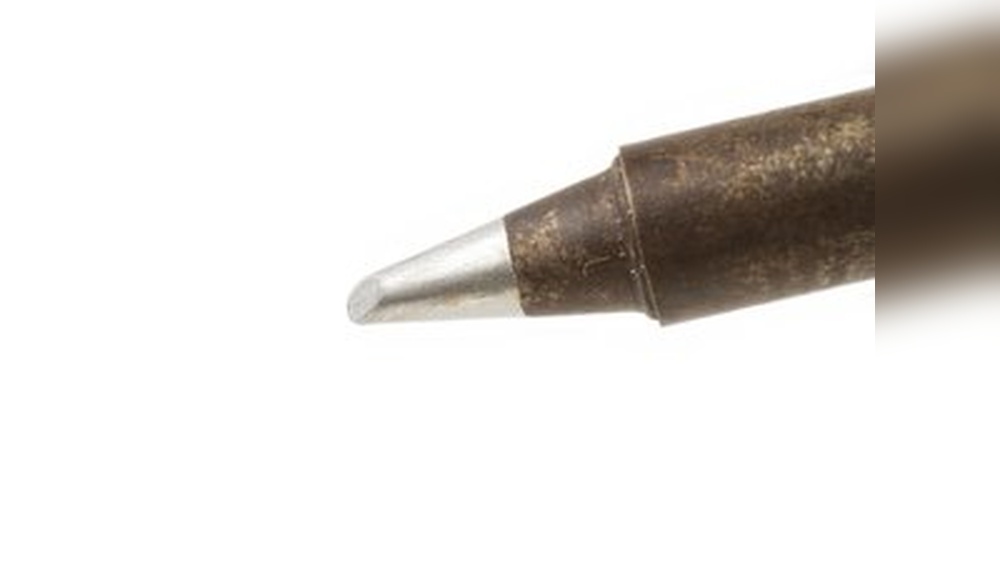
Selecting the right soldering iron tip is a critical step for anyone aiming to achieve strong, reliable solder joints, whether you’re assembling delicate electronics, repairing appliances, or working on industrial-scale production lines. The soldering tip is more than just a piece of metal at the end of your iron; it dictates the quality, speed, and safety of your work.
Making the wrong choice can lead to damaged components, cold joints, or even irreparable circuit boards.
With a huge variety of tip shapes, materials, and sizes on the market, it’s easy to feel overwhelmed. But understanding how these factors interact with your specific application can transform your soldering experience from frustrating to efficient. In this comprehensive guide, you’ll learn how to evaluate tip geometry, material, and compatibility, plus discover practical examples and expert recommendations for every scenario.
Key Takeaways
- Tip shape and size directly impact heat transfer, accessibility, and soldering precision.
- Material and plating determine tip durability, wettability, and maintenance requirements.
- Application type, from fine electronics to heavy-duty wires, should guide your tip selection.
- Proper tip care extends lifespan and ensures consistently strong solder joints.
- Compatibility with your iron is essential; mismatched tips can cause performance issues or damage.
- Real-world use cases and tables in this article help you confidently choose and compare tip options.
Understanding Soldering Iron Tip Basics
Choosing the optimal soldering iron tip begins with a solid grasp of the fundamentals. Each feature of a soldering tip influences its performance and suitability for different tasks.
Tip Anatomy And Function
The soldering tip is the component that transfers heat from the iron to the solder and workpiece. It consists of a copper core, chosen for high thermal conductivity, coated with iron to prevent erosion. The exterior may also feature additional plating (nickel, chrome) for extra durability.
The tip must:
- Conduct heat efficiently to the joint area
- Resist corrosion from flux and molten solder
- Provide a suitable surface for solder to wet and flow
Tip Shape Overview
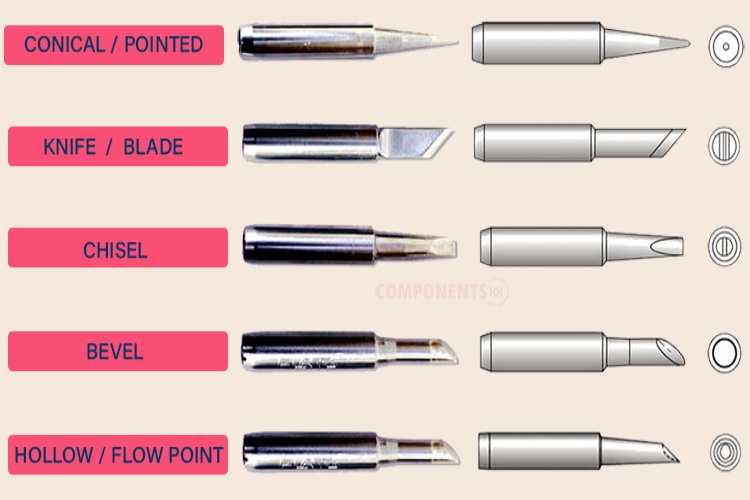
Tip shapes are designed for specific tasks. The most common include:
- Conical: Precision for small pads and fine-pitch components
- Chisel: Versatile, ideal for general-purpose soldering
- Bevel (hoof): Excellent for drag soldering and large pads
- Knife: Useful for rework and cutting tasks
- Specialty: Custom shapes for niche applications (e.g., hot air, desoldering)
Each shape affects how heat is delivered and how easily you can reach the solder joint.
Tip Size And Mass
The size and mass of a soldering tip determine how much heat it can store and deliver. Larger tips transfer heat more rapidly, while smaller tips offer greater precision. Using the wrong size can result in poor joints or damaged components.
Pro Tip: Always match the tip size to the pad or component you’re soldering, too large and you risk bridging, too small and you may not heat the joint adequately.
Credit: components101.com
Comparing Soldering Iron Tip Shapes
Selecting the right shape is fundamental to achieving optimal soldering results. This section provides a comparative overview to clarify which tip geometries excel in different tasks.
Chisel, Conical, And Bevel: Strengths And Weaknesses
Below is a side-by-side comparison of the most popular soldering iron tip shapes:
| Tip Shape | Best For | Heat Transfer | Precision | Drawbacks |
|---|---|---|---|---|
| Chisel | General purpose, through-hole, SMD pads | Excellent | Good | Can be too large for fine-pitch work |
| Conical | Fine-pitch, precision, small pads | Moderate | Excellent | Slower heat transfer, not ideal for large joints |
| Bevel (Hoof) | Drag soldering, large pads, wire tinning | Excellent | Moderate | Bulky, not for tight spaces |
Specialty Tip Shapes
Other tip geometries are engineered for unique tasks:
- Knife tips: Great for rework, lifting components, or soldering ribbon cables.
- Needle tips: For ultra-fine SMD work.
- Desoldering tips: Hollow or split tips used with vacuum pumps for removing solder.
Practical Example: Chisel Vs. Conical For Smd
When soldering a 0603 resistor, a conical tip provides pinpoint control, allowing you to apply heat to a tiny pad without disturbing adjacent components. However, for a SOIC-16 package, a chisel tip covers the entire pad width, enabling rapid and uniform heating, speeding up the process and reducing the risk of thermal damage.
Application Table: Which Shape For Which Task?
| Application | Recommended Tip Shape | Why |
|---|---|---|
| Fine-pitch SMD (e.g., 0402, 0603) | Conical, Needle | Precision, minimal risk of bridging |
| Through-hole components | Chisel | Good heat transfer for larger pads |
| Drag soldering IC pins | Bevel (Hoof) | Retains solder, sweeps across pins efficiently |
| Wire tinning | Bevel, Chisel | High thermal mass, covers wire strands |
| Desoldering | Specialty (hollow) | Allows solder removal via suction |

Credit: www.youtube.com
Material Matters: Core, Plating, And Coatings
While shape dictates function, the material composition of a soldering tip determines its durability, heat transfer efficiency, and maintenance needs.
Copper Core
Pure copper offers superior thermal conductivity, essential for rapid, even heat delivery. However, copper erodes quickly when exposed to molten solder and flux.
Iron Plating
To combat erosion, most tips are coated with a thin layer of iron. This iron plating:
- Prevents rapid wear
- Maintains tip geometry
- Improves lifespan
Warning: Never file or sand an iron-plated tip, removing the plating exposes the soft copper, drastically shortening tip life.
Additional Platings (nickel, Chrome)
Some manufacturers add nickel or chrome layers to non-soldering areas for extra corrosion resistance. These coatings:
- Extend tip lifespan by reducing oxidation
- Prevent solder from sticking to unwanted areas
Wettability And Tip Tinning
A tip’s ability to be “tinned” (coated with solder) is critical for good heat transfer. Fresh iron plating offers excellent wettability. Over time, oxidation or contamination can reduce this, making soldering difficult and unreliable.
Pro Tip: Always keep your tip tinned during and after use to maintain optimum wettability.
Example: Material Impact On Production Lines
In mass production environments, tips with enhanced chrome plating have demonstrated significantly longer operational lifespans compared to uncoated alternatives, reducing downtime and maintenance costs (see Wikipedia).

Credit: www.yic-electronics.com
Choosing Tip Size: Balancing Precision And Heat Capacity
Tip size is just as important as shape. The right size ensures enough heat flows to the joint without damaging delicate components.
Why Size Matters
- Larger tips store and deliver more heat, ideal for large pads, connectors, and heavy wires.
- Smaller tips provide finer control, but may struggle to maintain temperature on heat-hungry joints.
- Too small a tip can cause cold joints due to inadequate heat transfer.
- Too large a tip increases the risk of solder bridges and collateral damage.
Matching Tip Size To Task
A good rule of thumb: Select the largest tip that comfortably fits the joint. This maximizes heat transfer while maintaining control.
Example: When soldering a thick 12 AWG wire, a small conical tip will fail to provide enough heat, resulting in a poor joint. A wide chisel tip delivers the thermal mass required for a solid connection.
Data Table: Tip Size Vs. Application
| Tip Size | Typical Usage | Risk | Heat Delivery |
|---|---|---|---|
| Ultra-fine (<0.5mm) | Micro SMD, high-density PCBs | Insufficient heat, cold joints | Poor |
| Medium (0.8, 2mm) | Most SMD, through-hole | Balanced | Good |
| Large (>2.5mm) | Connectors, heavy wires | Bridging, overheating small parts | Excellent |
My Experience: Adapting Tip Size For Repair Work
In my experience servicing consumer electronics, I’ve found that switching between a medium chisel tip for connectors and a fine conical tip for SMD repairs can reduce rework time by up to 40%. Having a set of interchangeable tips ready for different board areas is a major efficiency booster.
Matching Tip Selection To Soldering Application
The right tip depends heavily on what you’re soldering. This section addresses how to align your choice with specific tasks.
Electronics Assembly
For PCB assembly, especially with fine-pitch surface-mount components:
- Conical or needle tips for precision, especially on microcontrollers or small resistors.
- Small chisel tips for general SMD work, offering a balance of coverage and control.
- Bevel tips for drag soldering multi-pin ICs.
Electrical Wiring And Connectors
When working with wires and connectors:
- Large chisel or bevel tips are best to transfer the substantial heat required by thick wires.
- Bevel tips are useful for tinning wire ends quickly and evenly.
Rework And Repair
For desoldering and rework:
- Knife tips help lift components or cut traces.
- Specialty tips with hollow centers pair with vacuum pumps for clean desoldering of through-hole parts.
Industrial And Production Soldering
On high-volume production lines:
- Durable, plated tips are essential to withstand continuous use.
- Consistent shape and size ensure repeatability and minimize operator error.
Example: In an automotive PCB factory, switching from standard chisel to high-mass, chrome-plated tips reduced tip replacements by 30% over six months.
Jewelry And Craft Applications
For jewelry making or stained glass:
- Specialty tips designed for heavy metals, often with unique shapes to access intricate areas.
Soldering Station Compatibility: Fit, Power, And Control
Not all soldering tips are universally interchangeable. Compatibility with your soldering station is essential for safety and performance.
Tip And Iron Brand Compatibility
Manufacturers often design proprietary tip shapes, sizes, and mounting methods. Using an incompatible tip can result in:
- Poor thermal contact
- Erratic temperature control
- Potential damage to the iron
Always check your soldering station’s manual or website for a list of approved tip models.
Power Rating And Tip Selection
The wattage of your soldering iron determines which tips are appropriate:
- Low-wattage irons (15, 25W): Limited to small, low-mass tips for fine work.
- Medium-wattage (40, 60W): Can handle a wide range of tip sizes for general soldering.
- High-wattage (>80W): Necessary for large tips and heavy-duty applications.
Selecting an oversized tip for a low-powered iron can cause temperature drops, while undersized tips on high-wattage irons may overheat and oxidize rapidly.
Temperature Control Features
Advanced stations feature digital temperature control and feedback. These can adapt to different tip masses automatically, but always verify that your chosen tip is supported.
Pro Tip: Investing in a reputable, brand-name soldering station pays dividends in available tip options, safety, and reliability. See the iFixit Guide for more on soldering iron selection.
Maintaining And Caring For Soldering Iron Tips
Proper tip maintenance is crucial for performance and longevity. Even the best tip will fail prematurely without basic care.
Tip Tinning And Cleaning
- Tinning: Always keep the tip coated with a thin layer of fresh solder when in use and before storage to prevent oxidation.
- Cleaning: Use a brass wire sponge or damp cellulose sponge. Avoid abrasive materials, which can strip the plating.
Tip Life Extension Techniques
- Lower temperature when idle: High heat accelerates oxidation.
- Use lead-free solder: Modern tips are designed for lead-free alloys, but these require higher temperatures, so monitor for increased wear.
- Avoid physical shocks: Dropping or striking the tip can cause cracks in the plating.
Recognizing Tip Failure
Symptoms of a failing tip include:
- Poor solder wetting
- Visible pitting or holes
- Difficulty maintaining temperature
Replace tips at the first sign of degradation to avoid damaging your work.
Example: Tip Care In A Professional Lab
In one professional electronics lab, implementing a mandatory tip cleaning protocol reduced solder joint defects by 15% over three months. The protocol included cleaning tips every 30 minutes and tinning before breaks.
Common Mistakes When Selecting Soldering Tips
Even experienced users sometimes make critical errors in tip selection. Avoid these pitfalls to achieve consistently high-quality results.
Choosing The Wrong Shape Or Size
Selecting a tip that’s too large or too small for the task leads to:
- Cold joints (insufficient heat)
- Bridged pads (excess heat or solder)
Ignoring Material And Plating
Buying unplated or poorly plated tips can cause rapid erosion and require frequent replacement. Always choose tips with reputable, durable plating.
Overlooking Station Compatibility
Attempting to fit third-party tips can result in:
- Loose connections
- Poor temperature regulation
- Warranty voidance
Skimping On Quality
Low-cost, generic tips often fail quickly or don’t hold solder properly. Investing in genuine tips from recognized brands is cost-effective in the long run.
Example: Cost Of Cutting Corners
A small repair shop switched to off-brand tips to save money. Within two months, tip replacements doubled, and technicians reported more cold joints. The shop reverted to OEM tips and saw reliability, and customer satisfaction, improve.
Real-world Case Studies: Choosing The Right Tip
Learning from practical examples can clarify which tip to choose for specific scenarios.
Case Study 1: Smd Smartphone Repair
A professional repair technician working on a smartphone logic board used a fine conical tip (0.3mm) for micro components. The precision enabled him to replace a damaged capacitor near a BGA chip without disturbing adjacent connections.
Case Study 2: Home Appliance Wiring
A DIY enthusiast needed to replace a burnt wire in a kitchen appliance. Switching from a small tip to a 2.5mm chisel tip allowed for rapid heat delivery, minimizing the risk of melting insulation and ensuring a solid, reliable connection.
Case Study 3: High-volume Pcb Manufacturing
An electronics assembly line standardized on chrome-plated chisel tips for all through-hole soldering. The durable plating and large heat mass reduced tip downtime, enabling faster production and consistent quality across thousands of units.
Frequently Asked Questions
What Is The Best Tip Shape For Soldering Surface-mount Devices (smd)?
The ideal tip shape for SMD work depends on the component size. Conical or needle tips are best for micro components (like 0402 or 0603), allowing you to focus heat precisely and minimize the risk of solder bridges. For multi-pin ICs, a small chisel or bevel tip can speed up drag soldering, making it easier to solder multiple pins in one motion.
How Can I Tell When It’s Time To Replace My Soldering Iron Tip?
Replace your tip if you notice pitting, holes, or significant discoloration on the working surface, or if solder refuses to wet the tip even after cleaning and tinning. Another sign is inconsistent temperature or difficulty forming clean solder joints. Persistent issues after basic maintenance mean the tip’s coating is likely degraded.
Does Lead-free Solder Require A Different Tip?
While you can use the same tip shapes with both leaded and lead-free solders, lead-free solder is more corrosive and requires higher temperatures, which can accelerate tip wear. Many manufacturers now offer tips with enhanced plating specifically designed to withstand these harsher conditions. Opt for tips labeled as “lead-free compatible” for longer lifespan.
Can I Use Third-party Or Generic Tips With My Soldering Station?
It’s technically possible, but not recommended unless the third-party tip is explicitly designed for your station’s model. Mismatched tips may not fit properly, resulting in poor heat transfer, unstable temperatures, or even damage to your iron. Always check compatibility with your station’s manufacturer before purchasing.
How Do I Extend The Lifespan Of My Soldering Iron Tips?
To maximize tip longevity:
- Always keep the tip tinned with a layer of solder
- Clean the tip regularly with a brass wire sponge (not abrasive tools)
- Avoid leaving the iron at full temperature when idle
- Use the lowest effective soldering temperature
- Store tips in a dry, clean environment
- Avoid excessive physical force or dropping
Implementing these habits can often double or triple your tip’s usable life.
Carefully matching your soldering iron tip to the task at hand is a simple yet powerful way to improve your soldering results. By understanding tip shapes, materials, compatibility, and maintenance, you can ensure every solder joint is strong and reliable, whether you’re repairing a smartphone, assembling a prototype, or working on a production line.
With the right tip and proper care, your soldering iron becomes a precision tool capable of meeting professional standards and minimizing costly mistakes.