
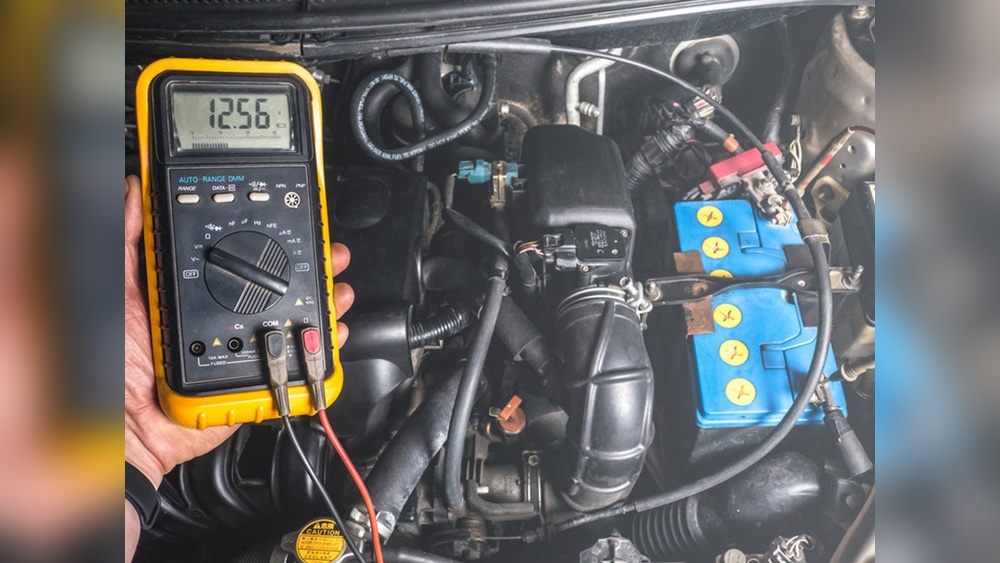
Testing a 12-volt battery is a vital skill for car owners, hobbyists, and professionals working with electrical systems. Whether you’re diagnosing why your vehicle won’t start or ensuring your backup power supply is ready, using a multimeter effectively can help you avoid costly mistakes and unexpected failures.
With just a basic digital multimeter and a few minutes, you can determine if your battery is healthy, needs charging, or is ready for replacement.
For beginners, the process may seem intimidating. Multimeters have numerous settings and symbols, and batteries can behave unpredictably under load. However, once you understand each step, from initial safety checks to interpreting voltage readings and performing advanced diagnostic tests, you’ll gain confidence in evaluating battery health.
This comprehensive guide walks you through every aspect of testing a 12-volt battery with a multimeter, offering both simple instructions and advanced troubleshooting tips for reliable results.
Key Takeaways
- Testing a 12-volt battery with a multimeter is straightforward and essential for diagnosing battery health.
- Accurate testing involves both open-circuit voltage and load testing for deeper insights.
- Safety precautions are critical to prevent injury or equipment damage.
- Comparison tables help distinguish between healthy and weak batteries based on voltage.
- Advanced users can analyze internal resistance and state-of-charge (SOC) for more precise diagnostics.

Credit: www.youtube.com
Understanding 12-volt Batteries
What Is A 12-volt Battery?
A 12-volt battery is commonly used in automobiles, motorcycles, RVs, and backup power systems. It typically consists of six 2-volt cells connected in series, providing a nominal voltage of 12 volts. There are various types, including lead-acid, AGM (Absorbent Glass Mat), and lithium-ion batteries.
Common Applications
- Automobiles: Starter, lighting, and ignition systems.
- Marine vehicles: Power for electronics and trolling motors.
- Solar systems: Energy storage for off-grid setups.
How 12-volt Batteries Work
Batteries store chemical energy and convert it to electrical energy on demand. Over time, discharge and recharge cycles affect their ability to hold and deliver power. Monitoring their condition ensures reliability and safety.
Battery Health Indicators
- Cranking difficulty
- Dim headlights
- Slow or no engine start
- Electrical accessory failure
If you observe these symptoms, testing with a multimeter can help identify battery issues before they lead to breakdowns.
Credit: executivetowingservices.com.au
Tools And Preparation
Required Tools
Before beginning, gather the following:
- Digital multimeter (with DC voltage and resistance functions)
- Protective gloves and eyewear
- Battery terminal cleaner or wire brush
- Notebook and pen for recording measurements
Setting Up Your Multimeter
- Set the dial to DC Volts (V with straight and dotted line).
- Ensure the range is set to at least 20V if not auto-ranging.
- Insert the black lead into the COM jack and the red lead into the VΩmA jack.
Safety Precautions
- Work in a well-ventilated area free from sparks or flames.
- Disconnect the battery from the device or vehicle if possible.
- Avoid touching both terminals at once with your hands or metal objects.
- Wear protective gear, especially if the battery shows signs of leaking or bulging.
Warning: Batteries contain acid and can produce explosive gases. Handle with care.
Battery Types And Considerations
Different battery chemistries may have slightly different voltage characteristics. Always check the manufacturer’s specifications for your battery type.
Step-by-step Guide: Testing A 12 Volt Battery With A Multimeter
This section covers 12 key steps, each explained for beginners and with advanced insights.
1. Inspect The Battery Physically
Beginner: Look for obvious signs of damage, such as cracks, leaks, bulging sides, or corrosion around the terminals. These can indicate that the battery is unsafe to test or needs immediate replacement.
Advanced Suggestion: For sealed batteries, check for swelling or changes in case color, which may indicate internal failure.
2. Clean The Battery Terminals
Beginner: Use a wire brush or terminal cleaner to remove corrosion from the terminals. Corroded connections can cause inaccurate readings.
Pro Tip: A mix of baking soda and water can neutralize acid before cleaning.
Advanced Suggestion: After cleaning, apply a thin layer of dielectric grease to prevent future corrosion.
3. Set The Multimeter Correctly
Beginner: Set your multimeter to measure DC voltage (not AC). The symbol is usually a ‘V’ with a straight and dashed line.
Advanced Suggestion: If your multimeter allows, use the “auto-range” function for more precise readings.
4. Connect Multimeter Leads To Battery Terminals
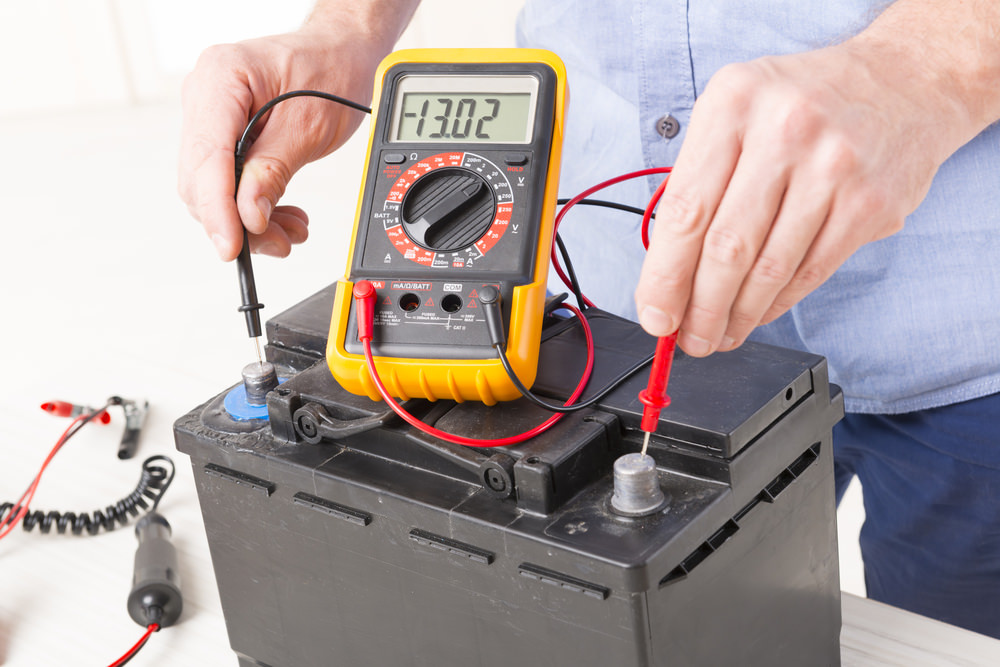
Beginner: Attach the red lead to the battery’s positive (+) terminal and the black lead to the negative (, ) terminal.
- Hold the leads firmly to ensure good contact.
- Avoid reversing the leads, as this may damage the meter or cause incorrect readings.
Advanced Suggestion: For more stable readings, use alligator clip adapters instead of holding probes by hand.
5. Measure Open-circuit Voltage
Beginner: With the battery disconnected and at rest (not charged or discharged for at least an hour), record the voltage displayed on the multimeter. A fully charged lead-acid battery should read about 12.6 to 12.8 volts.
Advanced Suggestion: For AGM or lithium batteries, consult the manufacturer’s datasheet for full charge voltage.
Example: When I tested a car battery that wouldn’t start the engine, I found an open-circuit voltage of 11.9V, indicating the battery was mostly discharged.
Open-circuit Voltage Interpretation Table
| Open-Circuit Voltage | State of Charge (%) | Battery Condition |
|---|---|---|
| 12.7 – 12.8V | 100% | Fully Charged |
| 12.4 – 12.6V | 75 – 100% | Good |
| 12.2 – 12.4V | 50 – 75% | Fair |
| 12.0 – 12.2V | 25 – 50% | Low |
| 11.8 – 12.0V | 0 – 25% | Discharged |
| <11.8V | 0% | Dead or Faulty |
6. Perform A Load Test
Beginner: Turn on the vehicle’s headlights or another significant electrical load for about 2 minutes, then re-measure voltage. Under load, a healthy battery should not drop below 12.0 volts.
Advanced Suggestion: Use a dedicated battery load tester for more accurate results, which applies a measured load based on battery capacity.
Example: A healthy battery in my garage held at 12.4V with headlights on, confirming its ability to deliver power under stress.
7. Interpret The Voltage Reading
Beginner: Compare your reading to the table above. A reading above 12.4V generally means the battery is good; below 12.2V suggests it may need charging or replacement.
Advanced Suggestion: For batteries below 12.0V, charge fully and retest. If voltage does not recover, the battery has likely lost capacity.
8. Test Battery Under Cranking (starter Test)
Beginner: Have a helper start the engine while you watch the voltage. During cranking, voltage should not drop below 9.6 volts for more than a few seconds.
Advanced Suggestion: Consistent drops below 9.6V indicate internal resistance issues or a failing battery.
Cranking Voltage Comparison Table
| Cranking Voltage | Interpretation |
|---|---|
| >9.6V | Battery OK |
| 9.0 – 9.6V | Marginal/Weak |
| <9.0V | Replace Battery |
9. Check For Parasitic Drain
Beginner: With the vehicle off, connect the multimeter (set to amps) in series with the negative terminal to measure any current draw. Anything over 50 milliamps (mA) may indicate a parasitic drain.
Advanced Suggestion: Remove and replace fuses one at a time to locate the source of abnormal current draw.
10. Measure Battery Internal Resistance (advanced)
Beginner: Most basic multimeters cannot directly measure internal resistance. However, large voltage drops under load suggest higher resistance.
Advanced Suggestion: Some advanced multimeters or battery analyzers offer an internal resistance function, typically showing values in milliohms (mΩ). Higher resistance means lower battery efficiency.
Example: An AGM battery with 5 mΩ resistance performed better under load than a flooded cell showing 20 mΩ.
11. Record And Analyze Results
Beginner: Write down all readings, including open-circuit voltage, loaded voltage, and cranking voltage. Compare these to manufacturer specs.
Advanced Suggestion: Track trends over time to identify a declining battery before failure.
12. Take Next Steps Based On Results
Beginner: If the battery is low but not dead, recharge and retest. If it’s consistently underperforming, replace it.
Advanced Suggestion: Test the charging system (alternator) if repeated battery issues occur. Sometimes the battery is fine, but the charging system is faulty.
Warning: Never attempt to open, repair, or modify sealed batteries.

Credit: www.qinxtech.com
Real-world Examples And Case Studies
Example 1: Diagnosing A Failing Car Battery
A car owner noticed slow engine cranking and dim headlights. Using a multimeter, they measured 11. 9V at rest, 11. 3V under load, and a cranking voltage of 8. 7V. The voltage recovery after charging was minimal. This matched classic signs of a failing battery needing replacement.
Example 2: Preventive Maintenance For Solar Batteries
A solar enthusiast routinely measures open-circuit and loaded voltages on their 12V AGM batteries. By tracking results monthly, they detect early signs of capacity loss and replace batteries before critical outages.
Example 3: Parasitic Drain Mystery
A vehicle owner found their battery drained overnight. With a multimeter set to amps, they found a constant 250mA draw. Systematically pulling fuses revealed an aftermarket alarm system as the culprit, allowing for repair.
Advanced Tips And Troubleshooting
Temperature Compensation
Battery voltage readings are affected by temperature. At colder temperatures, voltage readings may be lower even for healthy batteries. Some advanced chargers and analyzers automatically compensate for this.
Testing Lithium Vs. Lead-acid Batteries
Lithium batteries have different voltage profiles. For example, a fully charged 12V lithium battery may read 13. 0, 13. 6V. Always consult the datasheet.
When To Replace A Battery
- If voltage under load is consistently below 12.0V
- Cranking voltage drops below 9.0V
- Battery fails to hold charge after recharging
Maintaining Battery Health
- Keep terminals clean and tight
- Avoid deep discharges (for lead-acid types)
- Store batteries in cool, dry places
Comparison Of 12v Battery Test Results
| Test Scenario | Healthy Battery | Weak Battery | Dead Battery |
|---|---|---|---|
| Open-Circuit Voltage | 12.7V | 12.2V | 11.5V |
| Voltage Under Load | 12.4V | 11.9V | 10.5V |
| Cranking Voltage | 10.2V | 9.2V | 8.0V |
| Internal Resistance | 5 mΩ | 15 mΩ | 50 mΩ |
Common Mistakes To Avoid
Not Letting The Battery Rest
Testing immediately after charging can give falsely high readings. Let the battery sit for at least an hour after charging or discharging.
Using The Wrong Multimeter Setting
Selecting AC voltage instead of DC, or an incorrect range, can result in errors or even damage to the meter.
Ignoring Safety
Failing to wear gloves or work in a well-ventilated area can lead to acid burns or exposure to harmful gases.
Misinterpreting Results
Always compare readings to the correct battery type’s specifications. For example, a “low” voltage for lead-acid may be “normal” for lithium.
Table: Multimeter Setting Reference
| Measurement | Multimeter Symbol | Recommended Range |
|---|---|---|
| DC Voltage | V (with straight/dotted line) | 20V or higher |
| Current (Amps) | A (with straight/dotted line) | 10A (for parasitic drain) |
| Resistance (Ohms) | Ω | As needed (advanced) |
Frequently Asked Questions
How Often Should I Test My 12-volt Battery?
It’s recommended to test your battery every three to six months, or before long trips. For vehicles seldom used, test monthly to ensure readiness. Batteries in backup systems or solar setups should be checked at least quarterly.
Can I Test A Battery While It’s Still Connected To The Car?
Yes, you can test the battery while it’s installed, but for the most accurate open-circuit reading, disconnect the negative terminal and let the battery rest for an hour. This eliminates the influence of connected electronics and ensures a true voltage reading.
What Does It Mean If My Battery Voltage Is Fine, But My Car Still Won’t Start?
A healthy battery voltage does not guarantee the battery can deliver sufficient current under load. The issue could be with the starter motor, cables, or connections. Dirty terminals, corroded cables, or a faulty starter relay can also prevent starting despite a good voltage reading.
Is It Safe To Use A Multimeter On A Leaking Or Bulging Battery?
No, never attempt to test a battery showing signs of leaking, bulging, or physical damage. Such batteries are hazardous and pose risks of acid burns or explosion. Dispose of damaged batteries according to local regulations and replace them immediately.
Can A Multimeter Test Battery Capacity (amp-hours)?
A standard multimeter cannot directly measure battery capacity (amp-hours). It only measures voltage and, in some cases, current. To accurately determine amp-hour capacity, a controlled discharge test with specialized equipment is required. For routine checks, voltage and cranking tests are sufficient.
A well-maintained and regularly tested 12-volt battery ensures that your vehicle or backup system remains reliable when you need it most. By following these beginner-friendly and advanced steps, you can confidently assess battery health, prevent unexpected failures, and take action before problems arise. For further reading, consult reputable sources like the Wikipedia Car Battery Article or industry guides from organizations such as the Battery Council International. Testing with a multimeter is a foundational skill, with practice, you’ll become both efficient and precise in maintaining your 12-volt batteries.