
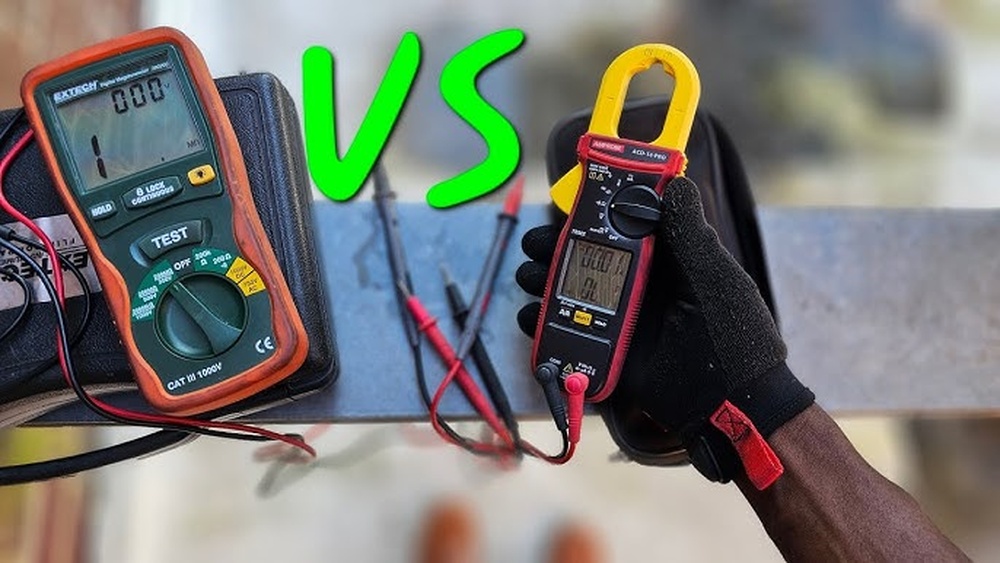
If you’ve ever peered into an electrical toolbox, you’ve likely spotted both a multimeter and a Megger. These two instruments often spark confusion among beginners, yet they serve entirely different purposes in electrical testing. Whether you’re troubleshooting a household outlet or verifying the integrity of industrial insulation, knowing which device to use, and when, can be the difference between a job well done and a costly mistake.
This guide is tailored to demystify the differences between a multimeter and a Megger. We’ll walk through not only the basics but also provide advanced insights, real-world examples, and best practices to help you confidently choose and use the right tool, regardless of your experience level. By the end, you’ll understand the theory, see the practical implications, and have actionable tips to safely and effectively employ both devices in your electrical projects.
Key Takeaways
- Multimeters measure basic electrical parameters like voltage, current, and resistance, while Meggers specialize in testing insulation resistance at high voltages.
- Choosing the correct device is crucial for both safety and accurate diagnostics in electrical work.
- Meggers are indispensable for checking insulation integrity in cables, motors, and transformers, especially in industrial settings.
- Multimeters are more versatile for everyday troubleshooting, circuit analysis, and household repairs.
- Using these tools incorrectly can result in equipment damage or inaccurate readings, understanding their functions is essential.
- Real-world examples and data-driven tables in this article illustrate key differences and best-use scenarios.

Credit: www.fluke.com
Understanding Multimeters: The Electrical All-rounder
What Is A Multimeter?
A multimeter is a handheld instrument designed to measure several basic electrical parameters. It typically combines the functions of a voltmeter, ammeter, and ohmmeter into a single device. Multimeters come in two main types: analog (with a moving needle) and digital (with an LCD display). The digital multimeter (DMM) is far more common due to its accuracy, ease of use, and additional features.
Key Functions And Capabilities
A typical digital multimeter can measure:
- Voltage (AC/DC): Checks the electrical potential difference in a circuit.
- Current (AC/DC): Measures how much electric charge is flowing.
- Resistance: Assesses how much a material resists electrical flow.
- Continuity: Tests if a circuit is complete.
- Other features (on advanced models): Capacitance, frequency, temperature, diode testing.
Multimeters operate at low voltages, usually up to 600V or 1000V for industrial models, making them suitable for most household and commercial applications.
How Multimeters Work
Multimeters function by sampling the circuit under test. When measuring voltage, they connect in parallel; for current, in series; for resistance, with power off. Internally, they use a combination of analog-to-digital converters, shunt resistors, and sometimes microcontrollers to process and display readings.
Strengths And Limitations
Strengths:
- Versatility, one tool for many measurements.
- Portability and ease of use.
- Affordable for beginners and professionals.
Limitations:
- Not designed for high-voltage insulation testing.
- Cannot measure insulation resistance beyond a few megaohms accurately.
- May be damaged if used on circuits with voltages or currents exceeding their ratings.
Pro Tip:
Always check your multimeter’s maximum voltage and current ratings before measuring unknown circuits to avoid damaging the device or causing injury.
Exploring Meggers: The Insulation Resistance Specialist
What Is A Megger?
A Megger is a specialized instrument designed to measure insulation resistance using high-voltage DC output (typically 250V, 500V, 1000V, or higher). The term “Megger” originated as a brand name but has become synonymous with all insulation resistance testers.
How Meggers Differ From Regular Ohmmeters
While an ohmmeter (like that in a multimeter) measures low resistance, a Megger is engineered to test very high resistances, on the order of megaohms (MΩ) to gigaohms (GΩ). This is essential for detecting insulation breakdown in electrical equipment, which could otherwise lead to dangerous faults or failures.
Typical Applications
- Cables and Wiring: Verifying the integrity of insulation in new and existing wiring.
- Motors and Transformers: Assessing winding insulation before commissioning or after repairs.
- Switchgear and Panels: Ensuring safe operation and compliance with safety standards.
Meggers are particularly prevalent in industrial, utility, and commercial settings where electrical safety is paramount.
How Meggers Work
A Megger applies a high DC voltage across the insulation and measures the resulting leakage current. The insulation resistance is calculated using Ohm’s Law (R = V/I). A high resistance reading indicates good insulation; a low value signals potential problems.
Safety Considerations
The high test voltages generated by Meggers can be hazardous. Only qualified personnel should use Meggers, always following safety protocols such as de-energizing equipment and using proper personal protective equipment (PPE).
Example:
During routine maintenance, an industrial electrician uses a 1000V Megger to test the insulation resistance of a 3-phase motor. The reading comes back as 500 MΩ, well above the minimum safe threshold, confirming the motor is safe for continued operation.
Direct Comparison: Multimeter Vs. Megger
Understanding the core differences is best achieved through side-by-side comparison. Below is a detailed table outlining how multimeters and Meggers stack up across key parameters.
| Feature | Multimeter | Megger |
|---|---|---|
| Primary Function | Measures voltage, current, resistance, and more | Measures insulation resistance |
| Test Voltage | Low (battery powered, up to 9V internally; can measure up to 1000V) | High (250V, 500V, 1000V, or higher applied to circuit) |
| Resistance Range | Ohms to megaohms (typically up to 40 MΩ) | Megaohms to gigaohms (up to 1000 GΩ) |
| Application | General electrical troubleshooting | Insulation testing in cables, motors, equipment |
| Safety | Relatively safe; low internal voltage | Requires caution due to high output voltage |
| Cost | Lower (basic models $20, $100) | Higher (typically $200, $2,000+) |
| Display Type | Analog or digital | Mainly digital |
| Portability | Highly portable and compact | Larger, less portable |
When To Use Each Device
- Use a multimeter for routine checks: Voltage, current, resistance, and continuity in everyday electrical work.
- Use a Megger when you need to verify insulation integrity, especially after installation, repair, or in preventative maintenance.
Example:
A homeowner troubleshooting a dead outlet should use a multimeter to check for voltage and continuity. An electrician inspecting a newly installed cable run in a commercial building would use a Megger to ensure insulation resistance is within safe limits.
Practical Scenarios: Choosing The Right Tool
Residential Electrical Work
For household troubleshooting, such as identifying why a light switch isn’t working, a multimeter is the go-to. It can quickly test for live voltage, check continuity in wires, and confirm that outlets are wired correctly. A Megger, however, is generally overkill for basic home repairs and could even risk damaging sensitive circuits.
Industrial Maintenance
In industrial settings, equipment failure due to insulation breakdown can have severe consequences. Here, the Megger shines. Maintenance teams routinely use Meggers to check the insulation resistance of motors, switchgear, and cables. For example, before restarting a motor after repairs, a Megger test ensures the windings haven’t absorbed moisture or suffered damage.
Preventative Testing In Utilities
Power utilities rely on Megger testing as part of routine checks on high-voltage lines and transformers. Insulation resistance values are tracked over time to spot degradation before it leads to costly outages. Meanwhile, multimeters serve for control panel checks and low-voltage diagnostics.
Case Study: Data Center Commissioning
During the commissioning of a new data center, both tools play crucial roles. Technicians use multimeters to verify correct wiring, voltage levels, and grounding. Once the basic checks are done, Meggers are used to test the insulation of power feeds, ensuring that no latent faults exist before servers go live.
Example:
When I tested a series of office outlets during a renovation, a multimeter helped me quickly identify a wiring error. Later, a Megger was essential for verifying that the newly installed feeder cable’s insulation resistance met the building code requirements.
Technical Deep Dive: Measurement Principles And Best Practices
How Multimeters Measure
- Voltage: Multimeters use high-resistance voltage dividers to measure potential difference without loading the circuit.
- Current: A low-resistance shunt allows current to flow through the meter, with the resulting voltage drop used to calculate amperage.
- Resistance: The meter applies a small known voltage and measures the resulting current, using Ohm’s Law to display resistance.
How Meggers Measure Insulation Resistance
- The Megger generates a controlled high DC voltage (250V, 500V, etc. ).
- This voltage is applied between the conductor and insulation (or ground).
- The Megger measures the leakage current that flows through (or across) the insulation.
- The insulation resistance is calculated: Resistance (MΩ) = Applied Voltage (V) / Leakage Current (A).
Advanced Usage Tips
- For multimeters: Always start with the highest range when measuring unknown voltages or currents. Use the hold function to capture readings in hard-to-reach locations.
- For Meggers: Disconnect sensitive equipment before testing to prevent damage. Record insulation resistance values over time to spot trends that indicate aging or moisture ingress.
Pro Tip:
Label and date every insulation test result. Over time, declining readings can alert you to developing issues long before a failure occurs.
Safety, Limitations, And Common Mistakes
Multimeter Safety Best Practices
- Always inspect leads and probes for damage before use.
- Never measure resistance on a live circuit, this can damage the meter and pose a shock hazard.
- Use appropriate personal protective equipment, especially when working near high-voltage sources.
Megger Safety Essentials
- Warn others before using a Megger, as its high voltage output can be hazardous.
- Always discharge the circuit under test after insulation testing to prevent residual charge buildup.
- Never use a Megger on electronic or sensitive devices, its high voltage can destroy semiconductors.
Common Mistakes And How To Avoid Them
- Using a multimeter for insulation testing: A multimeter simply cannot provide the high voltage required for accurate insulation checks.
- Meggering live circuits: This is extremely dangerous and can result in equipment damage or personal injury.
- Incorrect range selection: Using too low a range can overload the meter; too high, and you may miss subtle but important measurements.
Example:
A novice technician once attempted to check the insulation resistance of a motor using a multimeter, failing to detect a critical insulation breakdown. Only when a Megger was used did the fault become evident, preventing a potential fire hazard.
Advanced Guidance: Selecting, Maintaining, And Calibrating Instruments
Choosing The Right Multimeter
When selecting a multimeter, consider:
- Measurement range: Ensure it meets your application’s maximum voltage and current requirements.
- Accuracy: Look for models with a reputable brand and published accuracy specs (e.g., ±0.5%).
- Safety ratings: For industrial work, choose multimeters rated CAT III or CAT IV for high-voltage environments.
- Extra features: Some models include True RMS measurement, data logging, or wireless connectivity.
Selecting A Megger
Key factors include:
- Test voltage options: Choose a Megger with selectable test voltages matching the ratings of your equipment.
- Resistance range: Higher-end models can measure up to 1000 GΩ or more.
- Portability: Consider whether you need a handheld unit or a larger, benchtop model.
- Data recording: Useful for long-term maintenance tracking.
Maintenance And Calibration
- Regular calibration: Both devices should be calibrated annually to maintain accuracy, ideally by a certified laboratory.
- Battery checks: Low batteries can cause erratic readings; replace as needed.
- Cleanliness: Keep input jacks and test leads clean and free of corrosion.
Pro Tip:
If your readings seem inconsistent, test your meter on a known reference source or calibration device before assuming a circuit problem.
Real-world Examples And Case Studies
Example 1: Diagnosing A Motor Failure
A maintenance engineer suspects a motor’s insulation has failed after a short circuit. A multimeter shows continuity between windings and ground, but the reading is inconclusive. Using a Megger at 1000V, the insulation resistance measures only 5 MΩ, well below the manufacturer’s recommended 100 MΩ.
The motor is flagged for repair, preventing a costly outage.
Example 2: Routine Building Inspection
During annual inspections in a hospital, electricians use multimeters to confirm outlet wiring and voltage stability. They then deploy a Megger to test the insulation resistance of power feeders, ensuring compliance with safety standards and minimizing the risk of electrical fires.
Example 3: Educational Training
In a vocational training course, students learn to use both instruments. They practice measuring resistance with a multimeter and then compare results with a Megger on a sample cable. The multimeter reads “infinite” resistance, but the Megger reveals subtle insulation degradation, a valuable lesson in using the right tool for the job.
Data Table: Typical Measurement Ranges
To further clarify the operational ranges of both devices, consider the following table:
| Parameter | Multimeter Range | Megger Range |
|---|---|---|
| Voltage (AC/DC) | Up to 1000V | Typically not used for voltage measurement |
| Current | Up to 10A (standard) | Not applicable |
| Resistance | 0.1Ω to ~40 MΩ | 1 MΩ to 1000 GΩ |
| Test Voltage Output | Internal, <10V | 250V, 500V, 1000V, or higher |
Industry Standards And Compliance
Relevant Standards For Multimeters
- IEC 61010: Specifies safety requirements for electrical equipment for measurement, control, and laboratory use.
- CAT Ratings: Category ratings (CAT I, IV) define the level of transient overvoltages the meter can withstand.
Standards For Meggers
- IEC 61557: Covers requirements for insulation resistance testers.
- IEEE 43: Recommends minimum insulation resistance values for rotating machinery, providing guidelines for Megger testing.
Regulatory Compliance
Using properly rated and calibrated instruments ensures compliance with national electrical codes and workplace safety regulations. Always consult documentation and, when in doubt, refer to guidelines from reputable sources like the National Fire Protection Association (NFPA) for the latest requirements.
Advanced Suggestions And Best Practices
For Beginners
- Start with a quality digital multimeter: Practice measuring voltage and continuity on simple circuits.
- Read manuals thoroughly: Each instrument has unique features; understanding them prevents mistakes.
- Practice safe habits: Always verify circuits are de-energized before testing resistance or continuity.
For Advanced Users
- Trend analysis: Record insulation resistance values from Megger tests over time; a downward trend may signal impending failure.
- Use True RMS meters: For accurate current and voltage readings on non-sinusoidal (distorted) waveforms, especially with variable frequency drives.
- Calibration logs: Maintain a logbook of calibration dates and test results for both multimeters and Meggers.
Troubleshooting Workflow
- Initial assessment: Use a multimeter to check for live voltage and continuity.
- Deeper analysis: If insulation failure is suspected, switch to a Megger for a high-voltage insulation resistance test.
- Documentation: Record all readings, noting environmental conditions and test voltages.
- Follow-up: Investigate any abnormal readings immediately to prevent equipment failure.
Example:
A facility manager noticed rising downtime in a production line. Using a Megger, he tracked insulation resistance on critical motors monthly. When readings on one motor began to drop, preemptive maintenance was scheduled, avoiding a costly breakdown.
Pro Tip:
Never skip documentation. Thorough records make troubleshooting faster and help justify preventative maintenance expenditures.
Frequently Asked Questions
What Happens If I Use A Megger On An Electronic Circuit?
Using a Megger on electronic or semiconductor-based circuits can cause irreversible damage. The high test voltage (often 500V or more) can break down sensitive components, such as integrated circuits or transistors. Always ensure the circuit under test is suitable for Megger use, typically, this means only applying it to wiring, cables, motors, and other non-electronic insulation tests.
Can A Multimeter Measure Insulation Resistance At All?
A multimeter can measure resistance, but only at low voltages and within a limited range, usually up to 40 MΩ. This is often insufficient for detecting subtle insulation failures, especially in industrial equipment where values above 100 MΩ are considered safe.
For proper insulation resistance measurements, a Megger is necessary as it provides both the required high test voltage and accurate high-resistance readings.
How Often Should I Calibrate My Multimeter And Megger?
Both instruments should be calibrated at least once a year, or more frequently if used in critical applications or harsh environments. Calibration ensures the accuracy of measurements and compliance with quality and safety standards. Refer to the manufacturer’s recommendations and consider using a certified calibration laboratory for best results.
What Should I Do If My Megger Reading Is Lower Than Expected?
A low insulation resistance reading may indicate moisture ingress, contamination, or insulation breakdown. First, confirm the circuit is disconnected and free from residual voltage. Retest to rule out testing errors. If low readings persist, investigate environmental factors (humidity, temperature) and consider drying or cleaning the equipment.
If the issue remains, consult a qualified electrician or engineer for further diagnostics and repairs.
Are There Alternatives To Meggers For Insulation Testing?
Some advanced insulation testers use different technologies, such as polarization index testers or dielectric absorption ratio meters, to provide deeper insights into insulation quality. However, the Megger remains the industry standard due to its reliability and ease of use. For highly sensitive applications, consult with a specialist to select the most appropriate testing method and equipment.
References
- Wikipedia: Multimeter
- Fluke: What is an Insulation Tester?
Knowing the difference between a multimeter and a Megger is essential for anyone working with electrical systems, from homeowners to advanced professionals. While multimeters are the everyday workhorses for circuit troubleshooting, Meggers play a critical role in ensuring the safety and longevity of electrical installations through insulation resistance testing.
By selecting the right instrument and applying best practices, you can prevent hazards, extend equipment life, and achieve accurate, reliable results in your electrical work.