
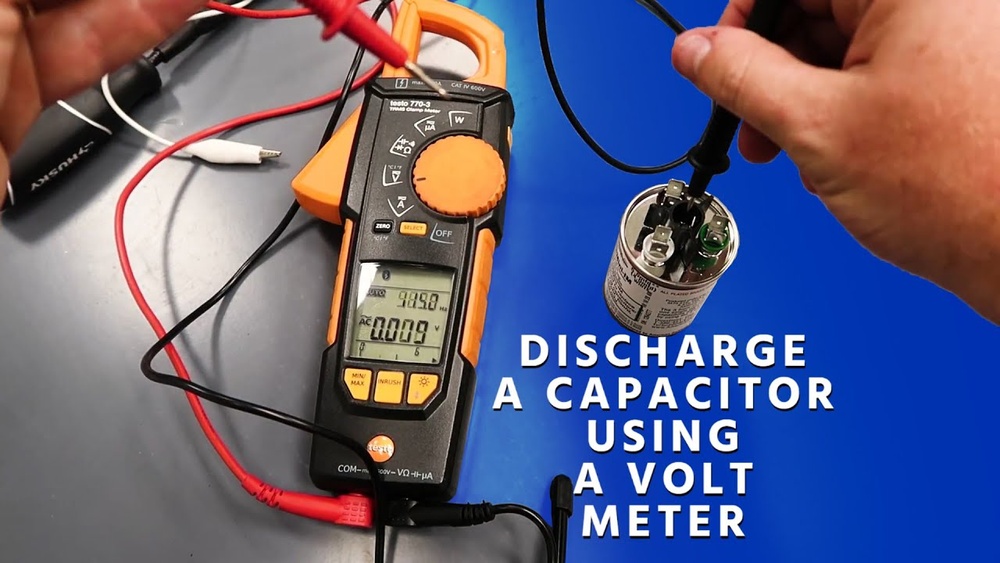
Is It Safe To Discharge A Capacitor With A Multimeter?
Capacitors are fundamental electronic components, storing and releasing electrical energy in circuits ranging from small household devices to industrial machinery. While they may appear harmless, improperly handling or discharging capacitors can lead to dangerous shocks, equipment damage, or even fires. One question that often arises, especially among beginners and electronics hobbyists, is: Is it safe to discharge a capacitor with a multimeter? The answer is nuanced and depends on several factors, including the type of capacitor, the voltage and charge level, the kind of multimeter used, and best safety practices.
This comprehensive guide explores the science behind capacitor discharge, real-world risks, safe procedures, and expert recommendations. Whether you’re a beginner just starting out in electronics or an advanced technician seeking deeper insights, this article walks you step-by-step through the essentials and advanced tips for safely discharging capacitors, while debunking myths and highlighting proven strategies.
Key Takeaways
- Discharging a capacitor with a standard multimeter is generally unsafe and not recommended, especially for high-voltage or large capacitors.
- Multimeters are designed for measuring, not discharging, and may be damaged or provide insufficient protection when used incorrectly.
- Safe capacitor discharge requires the proper tools and procedures, such as resistors or discharge sticks.
- Understanding capacitance, voltage, and safety risks is crucial before attempting any discharge.
- Always prioritize personal safety, use PPE (Personal Protective Equipment), and consult professional resources before working with capacitors.

Credit: www.bestpcbs.com
Understanding Capacitors: Basics And Safety Implications
Capacitors are among the most common passive components in electronics. Their function and behavior directly influence the safety considerations when working with them.
What Is A Capacitor?
A capacitor is an electronic device that stores energy in an electric field, created between two conductive plates separated by an insulating material (dielectric). When connected to a voltage source, such as a battery or power supply, a capacitor charges up and holds the voltage until it is discharged.
Key characteristics include:
- Capacitance (Farads): The amount of electric charge the capacitor can store.
- Voltage Rating: The maximum voltage the capacitor can safely hold.
- Energy Storage: Calculated as E = 0.5 × C × V².
Capacitors come in various shapes and sizes, from tiny ceramic discs in computers to large electrolytic capacitors in power supplies.
Why Are Charged Capacitors Potentially Dangerous?
A charged capacitor can release energy very rapidly if shorted or discharged improperly. Even after being disconnected from power, high-voltage capacitors can store enough energy to cause:
- Severe electric shock
- Burns
- Damage to sensitive equipment
- Explosions in rare cases
For example, the filter capacitors in a microwave oven or a CRT monitor can store hundreds to thousands of volts, enough to be lethal.
Common Types Of Capacitors And Their Risks
| Capacitor Type | Common Applications | Typical Voltage | Discharge Risk |
|---|---|---|---|
| Electrolytic | Power supplies, audio circuits | 6V, 450V | High (especially above 50V) |
| Ceramic | Decoupling, timing circuits | 6V, 100V | Moderate (low capacitance, but high voltage possible) |
| Film | Motors, AC filtering | 100V, 2000V | Very High |
| Tantalum | Portable electronics | 4V, 50V | Moderate |
Safety Guidelines Before Handling Capacitors
- Disconnect all power sources.
- Wait several minutes after powering down equipment.
- Use a voltage tester to confirm zero voltage across capacitor terminals.
- Wear insulated gloves and safety glasses.
- Keep one hand behind your back to prevent current from passing through your heart.
Warning: Even “small” capacitors can pack a punch. Treat all capacitors as potentially live until proven otherwise.

Credit: www.wikihow.com
The Function Of A Multimeter And Its Limitations
A multimeter is an essential tool for anyone working with electronics. However, its purpose is to measure, not to discharge or safely handle stored energy.
What Does A Multimeter Do?
A multimeter can measure:
- Voltage (Volts)
- Current (Amps)
- Resistance (Ohms)
- Capacitance (in advanced models)
There are two primary types:
- Analog Multimeters: Use a moving needle to display readings.
- Digital Multimeters (DMMs): Provide readings on an LCD screen.
Why Multimeters Are Not Designed To Discharge Capacitors
- Low Internal Resistance: When set to measure resistance, a multimeter may briefly discharge a small capacitor, but the resistance is not enough to safely control the discharge of larger or high-voltage capacitors.
- Component Protection: Multimeters are designed to handle small currents. Discharging a charged capacitor through a multimeter can exceed its ratings, leading to blown fuses or permanent damage.
- User Safety: The probes and casing offer limited protection against high-voltage surges.
Example: In my experience, a colleague attempted to “discharge” a 450V electrolytic capacitor with a standard DMM. The meter sparked internally and failed completely, requiring costly repairs.
Measuring Capacitance Vs. Discharging
Some multimeters have a “capacitance” setting. This function applies a small, safe voltage to measure capacitance value but is not intended to discharge high-energy capacitors. Attempting to use this setting to discharge a capacitor is both ineffective and unsafe.

Credit: www.youtube.com
Risks Of Discharging A Capacitor With A Multimeter
Attempting to discharge a capacitor using a multimeter can create multiple hazards for both the user and the equipment.
Electrical Hazards
- Electric Shock: Touching the probes or terminals during discharge can cause a shock, especially with voltages above 50V.
- Arc Flash: Large capacitors can produce a visible arc when shorted, causing burns or eye injury.
Equipment Damage
- Multimeter Damage: The sudden surge of current can blow the meter’s fuse or destroy its internal circuits.
- Capacitor Damage: Discharging too rapidly can cause internal heating, potentially damaging the capacitor or causing it to burst.
Inaccurate Readings
After a failed discharge attempt, residual voltage may remain, leading to:
- False “Safe” Readings: The capacitor may appear discharged but still hold dangerous voltage.
- Misleading Capacitance Measurements: A partially discharged capacitor produces incorrect capacitance values.
Case Study: Damage Due To Improper Discharge
A repair technician working on a switching power supply used a DMM to “check” if a capacitor was discharged. The meter’s fuse blew, and the capacitor was left with a dangerous residual charge. When another technician touched the board, they received a painful shock.
This illustrates the critical importance of using proper discharge tools and methods.
Safe Methods For Discharging Capacitors
Proper capacitor discharge relies on controlled resistance to safely bleed off stored energy. Several methods are suitable for both beginners and advanced users.
Using A Discharge Resistor
A discharge resistor is a high-wattage resistor (typically 1kΩ to 100kΩ, 5W or higher) used to safely dissipate capacitor energy.
Steps:
- Select an appropriate resistor based on capacitor voltage and size.
- Attach insulated alligator clips to the resistor leads.
- Connect one end to each capacitor terminal.
- Wait several seconds to minutes (depending on capacitance and voltage).
- Verify voltage is zero using a multimeter.
Example: For a 100μF, 400V electrolytic capacitor, a 10kΩ, 10W resistor will safely discharge it in about 40 seconds.
Discharge Sticks And Commercial Tools
Discharge sticks are specialized tools with a built-in resistor, insulated handle, and grounding strap. They are commonly used in high-voltage environments like CRT monitors or industrial power supplies.
Advantages:
- Pre-designed for safety and convenience
- Often include visual indicators (LEDs) to show ongoing discharge
Using An Incandescent Bulb
A 120V or 230V incandescent bulb (40W, 100W) can act as a visible resistor for discharging large capacitors.
- Solder or clip wires from the bulb to the capacitor terminals.
- The bulb lights up and dims as energy is dissipated.
This method provides visual feedback and limits current flow.
Advanced: Automatic Bleeder Circuits
In critical applications, automatic bleeder resistors are permanently installed across capacitors to ensure they self-discharge after power-off.
Pro Tip: For high-voltage, high-capacitance circuits, always consult an experienced technician or engineer before attempting discharge procedures.
Comparison Table: Discharge Methods
| Method | Safe for High Voltage? | Equipment Needed | Pros | Cons |
|---|---|---|---|---|
| Multimeter | No | Standard Multimeter | Easy to access | Unsafe, may damage meter |
| Discharge Resistor | Yes | High-wattage resistor, clips | Controlled discharge, safe | Requires additional parts |
| Discharge Stick | Yes | Commercial tool | Purpose-built, visual feedback | Can be expensive |
| Incandescent Bulb | Limited | Bulb, wires | Visual indication | Not precise for small capacitors |
| Automatic Bleeder | Yes | Installed resistor | Always safe after power off | Not always present in old equipment |
Step-by-step Guide: Safe Capacitor Discharge For Beginners And Advanced Users
Understanding safe discharge techniques is essential for anyone working with electronic circuits. Here’s a detailed, step-by-step process.
Step 1: Preparation
- Power off and unplug the device.
- Wait at least 5, 10 minutes to allow automatic bleeder resistors (if present) to reduce residual voltage.
- Gather safety equipment: Insulated gloves, safety glasses, and insulated tools.
Step 2: Confirm The Capacitor Is Charged
- Set your multimeter to DC voltage mode.
- Carefully touch the probes across the capacitor terminals.
- Note the voltage reading.
Warning: If the voltage is above 50V, proceed with extreme caution.
Step 3: Discharge With A Resistor
- Select a resistor with a value between 1kΩ and 100kΩ, rated for at least twice the expected voltage.
- Attach insulated leads or alligator clips to the resistor.
- Connect the resistor across the capacitor terminals for 30 seconds to several minutes.
- For very large capacitors, check progress with the multimeter and repeat if necessary.
Step 4: Verify Complete Discharge
- Remove the resistor.
- Re-measure voltage across terminals; it should read zero or near zero.
- For extra safety, briefly short the terminals with an insulated screwdriver (for small capacitors only).
Step 5: Advanced Practices
- For high-energy or industrial capacitors, use a discharge stick with a built-in indicator.
- Document each step for compliance and safety audits.
- Consider permanently installing bleeder resistors in frequently serviced equipment.
Pro Tip: Never discharge high-voltage capacitors in the presence of flammable gases or liquids. The arc can ignite vapors.
Real-world Examples And Short Case Studies
Understanding theory is important, but real-world incidents highlight why correct procedures matter.
Example 1: Microwave Oven Repair
A home appliance technician attempted to service a microwave oven. The high-voltage capacitor, rated at 2100V, was assumed to be discharged after unplugging the unit. Touching the terminals with a screwdriver resulted in a loud bang and a burned screwdriver tip.
The technician was unhurt but learned that waiting alone is insufficient, proper discharge tools are essential for safety.
Example 2: Audio Amplifier Maintenance
An electronics hobbyist used a standard DMM to discharge a 100V, 4700μF capacitor in an audio amplifier. The multimeter’s fuse blew instantly, and the expensive DMM required repairs. This illustrates why multimeters are not a substitute for a proper discharge resistor, even in low-voltage applications.
Example 3: Industrial Power Supply Incident
In a manufacturing plant, a maintenance engineer followed all safety protocols, using a discharge stick with a 20kΩ resistor and a visual LED indicator to discharge a 1000V, 1000μF capacitor bank. The process was slow but safe, preventing injury and equipment damage.
This case demonstrates best practices in a high-risk environment.
Advanced Tips And Best Practices For Technicians
For advanced users and professionals, safety and efficiency are paramount. These strategies minimize risk and improve workflow.
Selecting The Right Discharge Resistor
- Calculate discharge time constant: Τ = R × C (where R is resistance in ohms, C is capacitance in farads).
- Target a discharge time of 5τ for full safety (e.g., for 100μF and 10kΩ, τ = 1 second, so 5 seconds for near-complete discharge).
- Use wirewound resistors for higher wattage handling.
Building A Safe Discharge Tool
- Mount the resistor inside a PVC or acrylic tube for insulation.
- Add banana plugs or alligator clips for easy connection.
- Integrate a neon or LED indicator across the resistor to show active discharge.
Handling High-energy Capacitors
- Use two resistors in parallel for higher safety margin.
- Always connect to ground before attaching to live terminals.
- In three-phase systems, discharge each phase separately.
Documenting And Labeling
- Mark capacitors as “discharged” with tags after safe handling.
- Keep a log of maintenance procedures, especially in regulated environments.
Professional Resources And Consultation
For further reading and safety guidelines, refer to:
Consult a licensed electrician or engineer for high-voltage or unfamiliar systems.
Common Myths And Misconceptions
Misinformation about capacitors and discharge methods is widespread, especially online. Let’s clarify the facts.
Myth 1: “capacitors Discharge Instantly When Power Is Off”
Many capacitors, especially those without bleeder resistors, can retain a dangerous charge for hours or days after power-off.
Myth 2: “a Multimeter Is A Safe Way To Discharge Any Capacitor”
As covered throughout this article, this is false and dangerous. Multimeters are not designed to dissipate significant energy and may fail or provide a false sense of security.
Myth 3: “shorting The Terminals With A Screwdriver Is Always Safe”
While this can work for small capacitors, it’s extremely unsafe for high-voltage or high-capacitance units. The resulting arc can cause injury or equipment damage.
Myth 4: “all Capacitors Are Equally Dangerous”
Risk varies dramatically by voltage, capacitance, and application. Always check specifications and treat all capacitors as potentially hazardous.
Troubleshooting And What To Do If Things Go Wrong
Mistakes can happen, even with the best preparation. Here’s how to respond.
If You Accidentally Discharge Through The Multimeter
- Disconnect the meter immediately.
- Inspect for blown fuses or visible damage.
- Test the meter on a low-voltage circuit before further use.
- Replace fuses with the correct rating if necessary.
If The Capacitor Fails To Discharge
- Double-check your resistor connections.
- Try a lower-value resistor for faster discharge (within safety limits).
- Look for parallel circuitry that may be “recharging” the capacitor.
If A Shock Or Accident Occurs
- Seek medical attention for any electric shock, especially above 50V.
- Report workplace incidents per OSHA or company policy.
- Review safety procedures and retrain as needed.
Warning: Never attempt to repair a damaged multimeter or capacitor unless you are qualified. Dispose of damaged components according to local regulations.
Comparison Table: Multimeter Vs. Proper Discharge Tools
For quick reference, here’s how a multimeter compares to purpose-built discharge tools:
| Aspect | Multimeter | Discharge Resistor/Stick |
|---|---|---|
| Designed for Discharge | No | Yes |
| Safe for High Voltage | No | Yes |
| Risk of Equipment Damage | High | Low |
| User Protection | Limited | High |
| Measurement Accuracy After Discharge | Low | High |
Frequently Asked Questions
Is There Ever A Safe Scenario To Discharge A Capacitor With A Multimeter?
While some small, low-voltage capacitors may appear to discharge when measured with a multimeter (especially on the resistance setting), this is not a controlled or reliable method. The multimeter’s internal resistance may bleed off a tiny amount of charge, but it is not designed for this purpose and can be unsafe for the user and damaging for the tool.
Always use a resistor or discharge tool, even for small capacitors.
What Kind Of Resistor Should I Use For Discharging Large Capacitors?
For discharging large capacitors, such as those found in power supplies or motor drives, use a high-wattage (at least 5W, preferably 10W or more) wirewound resistor with a resistance between 1kΩ and 100kΩ, depending on the capacitance and voltage. The resistor must be rated to handle the expected energy without overheating.
For very large industrial capacitors, consult the manufacturer’s recommendations or a professional engineer.
How Can I Tell If A Capacitor Is Truly Safe To Touch After Discharge?
After using a discharge resistor or stick, always verify with a multimeter in voltage mode that the reading is zero or close to zero. For extra safety, wait a few minutes and retest, as some capacitors may “rebound” slightly due to dielectric absorption.
Only handle the capacitor once you are confident it is fully discharged, and continue to treat the area with caution.
Are There Any Special Considerations For Discharging Capacitors In Medical Or Sensitive Electronic Equipment?
Yes, in medical devices or sensitive electronics, rapid discharge can damage circuit boards or cause data loss. Use a high-value resistor for a slow, controlled discharge, and consult the device’s service manual or a qualified technician. Some equipment may require specific ESD (Electrostatic Discharge) procedures or have built-in discharge mechanisms that must not be bypassed.
Can I Reuse A Blown Fuse From My Multimeter If It Was Damaged During A Capacitor Discharge?
No. Never reuse a blown or damaged fuse in a multimeter, especially after a discharge incident. Always replace with the exact type and rating specified by the manufacturer. Using an incorrect fuse compromises safety and measurement accuracy, and may void warranties or certification.
Proper handling and discharge of capacitors are non-negotiable for anyone working with electronics, from beginners to advanced technicians. Discharging a capacitor with a multimeter is not safe, reliable, or recommended. Instead, equip yourself with the right tools, follow tested procedures, and prioritize safety every time.
As you gain experience, these habits will protect you, your equipment, and anyone else who may work on your projects in the future.