
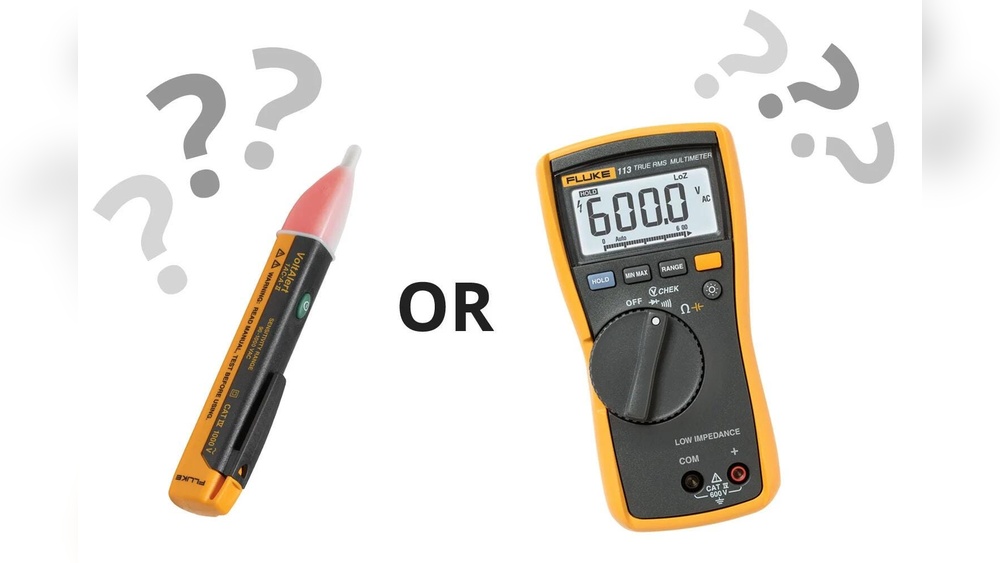
Can A Multimeter Be Used As A Voltage Detector?
Multimeters are among the most versatile tools in an electrician’s or hobbyist’s toolkit. Whether you’re a beginner just learning how to measure voltage or a seasoned professional troubleshooting complex circuits, understanding the full range of a multimeter’s capabilities, and limitations, is crucial.
One of the most common questions in the world of electrical testing is whether a multimeter can serve as a voltage detector. The answer is nuanced, and hinges on understanding both what a multimeter does and the specific requirements of voltage detection.
Voltage detection is a key part of working safely with electricity. When you need to determine if a wire or outlet is live, the tool you choose can mean the difference between safe handling and dangerous mistakes. While dedicated voltage detectors are designed for quick, contactless checks, multimeters offer a broader range of measurement capabilities but may require direct contact and a bit more know-how.
This article will walk you through the essential differences, hands-on use cases, and best practices so you can confidently decide when and how to use a multimeter as a voltage detector, regardless of your experience level.
Key Takeaways
- A multimeter can function as a voltage detector, but it is not always the safest or most convenient tool for the job.
- Dedicated voltage detectors offer non-contact detection and faster checks for live wires, while multimeters require direct probe contact.
- Proper technique and understanding of multimeter settings are critical for accurate and safe voltage detection.
- Real-world examples and data demonstrate the strengths and limitations of both tools.
- Beginners should prioritize safety and start with low-voltage circuits, while advanced users can leverage a multimeter’s full diagnostic power.
- Always consult professional guidelines and manufacturer manuals when working with electrical systems.

Credit: megadepot.com
Understanding Multimeters And Voltage Detectors
What Is A Multimeter?
A multimeter is a handheld instrument designed to measure several electrical properties, most commonly voltage, current, and resistance. Modern digital multimeters (DMMs) provide an easy-to-read display, selectable measurement modes, and probes for direct contact with the circuit under test.
Key features include:
- Voltage measurement (AC/DC)
- Current measurement (amperes)
- Resistance measurement (ohms)
- Continuity and diode testing
Some advanced models offer additional capabilities such as capacitance, frequency, and temperature readings.
What Is A Voltage Detector?
A voltage detector is a specialized tool that quickly identifies the presence of voltage in a wire, outlet, or device. There are two main types:
- Non-contact voltage detectors: These “sniff” for electric fields and can detect live wires without direct contact. They are fast, safe, and ideal for quick checks.
- Contact voltage detectors (testers): These require contact with the conductor and typically have a simple indicator light to signal voltage presence.
Key Differences Between Multimeters And Voltage Detectors
While both devices help identify voltage, their design, operation, and use cases differ significantly.
| Feature | Multimeter | Voltage Detector |
|---|---|---|
| Measurement Method | Direct contact (probes) | Non-contact or simple contact |
| Display | Numeric (exact value) | Visual/audible indicator |
| Speed | Slower (setup required) | Very fast |
| Safety | Requires circuit contact | Often safer (non-contact) |
| Use Case | Detailed diagnosis | Quick voltage presence check |
When Should Each Tool Be Used?
- Use a voltage detector for quick, routine safety checks to see if a wire or outlet is live.
- Use a multimeter when you need to know the actual voltage level, troubleshoot complex issues, or diagnose circuit problems.

Credit: www.ics-schneider.de
How A Multimeter Detects Voltage
Understanding Voltage Measurement
When set to measure voltage, a multimeter detects the potential difference between its two probes. For beginners, think of voltage as the “pressure” pushing electrical current through a wire. The multimeter displays the exact voltage present.
- AC voltage: Used in home outlets and appliances.
- DC voltage: Used in batteries and electronic circuits.
Step-by-step: Using A Multimeter As A Voltage Detector (beginner Guide)
- Set the multimeter to the correct voltage range (AC or DC).
- Insert the black probe into the COM (common) port and the red probe into the V (voltage) port.
- Touch the probes to the two points you wish to test (e.g., hot and neutral terminals of an outlet).
- Read the voltage displayed.
Pro Tip: Always start with the highest voltage range if unsure. This prevents damage to the meter.
Safety Considerations
- Direct contact is required, touching live wires carries risk.
- Hold probes by their insulated handles and keep fingers behind the guard.
- Check your multimeter’s condition (no cracks, damaged leads) before use.
- Use only on circuits rated within the meter’s specifications.
Limitations Compared To Voltage Detectors
A multimeter will not beep or light up simply by being near a live wire. It cannot detect voltage from a distance; it must touch the conductor. This makes it less convenient and, in some cases, less safe than a non-contact voltage detector for initial checks.
Practical Scenarios: Multimeter Vs. Voltage Detector
Home Electrical Outlet Testing
Voltage Detector: Quickly waves near the outlet slots. If the indicator lights or beeps, the outlet is live. No contact is needed, ideal for rapid checks.
Multimeter: Insert probes into the outlet slots (neutral and hot). The display shows the exact voltage (e.g., 120V in the US). This is essential for diagnosing under-voltage or faulty wiring.
Example: When I tested a faulty kitchen outlet, my voltage detector beeped, but the multimeter showed only 60V, revealing a poor connection rather than a completely live circuit.
Automotive Battery Diagnosis
Voltage Detector: Not suitable; most cannot detect low DC voltage.
Multimeter: Set to DC volts, touch probes to battery terminals. The display shows battery health (e.g., 12.6V fully charged, under 12V means possible trouble).
Lighting Circuit Troubleshooting
Voltage Detector: Quickly identifies if a light switch or fixture is live.
Multimeter: Measures voltage across fixture terminals, confirming not just presence but the amount of voltage (helps diagnose dimming or flickering lights).
Industrial Panel Maintenance
In high-voltage industrial environments, safety is paramount. A voltage detector is used for the initial safety check. Once confirmed safe, a multimeter is used for detailed diagnostics.
Pro Tip: Always follow lockout/tagout (LOTO) procedures and wear proper PPE.
Beginner-friendly Guide: Step-by-step Multimeter Voltage Detection
Getting Started With A Multimeter
- Select the right multimeter: Beginners should choose a digital multimeter with auto-ranging for ease of use.
- Familiarize yourself with the controls: Know where voltage, current, and resistance settings are.
- Inspect the meter and leads: Look for damage and ensure batteries are fresh.
Safe Testing Procedure
- Identify the circuit type (AC or DC).
- Turn the dial to the appropriate voltage setting.
- Plug probes into correct ports, black to COM, red to V.
- Touch probes to the test points.
- Read and interpret the display.
Pro Tip: For outlets, insert one probe into each slot. For wires, touch the tip to the exposed conductor (with power OFF, if possible, before testing live).
Common Mistakes And How To Avoid Them
- Wrong setting: Never measure voltage on the current (A) setting, this can damage the meter.
- Reverse probe placement: For DC, red to positive and black to negative; reversed probes will show negative voltage.
- Testing live circuits: Always double-check meter settings and wear safety gear.
Example: Testing An Outlet
- Set the multimeter to AC volts (often marked V~).
- Insert the black probe into the “neutral” slot and the red into the “hot” slot.
- If the display reads ~120V (US) or ~230V (EU), the outlet is live.
Table: Common Multimeter Symbols And Their Meanings
| Symbol | Meaning | When to Use |
|---|---|---|
| V~ | AC Voltage | Wall outlets, appliances |
| V- | DC Voltage | Batteries, electronics |
| A | Current (Amps) | Testing circuit current (with care) |
| Ω | Resistance (Ohms) | Checking continuity, fuses |
| Speaker icon | Continuity test | Wiring checks |
Advanced Techniques And Safety Guidelines
Measuring Live Circuits Safely
For advanced users, measuring live circuits is sometimes unavoidable. Minimize risk by:
- Using one hand only (keep other away from the circuit) to reduce shock risk.
- Wearing insulating gloves and shoes.
- Using probes with finger guards and shrouded connectors.
Interpreting Voltage Readings
- Nominal voltage: What you expect (e.g., 120V).
- Low voltage: May indicate a loose connection or faulty wiring.
- No voltage: Could mean a tripped breaker, blown fuse, or open circuit.
Pro Tip: If you measure voltage where you expect none, recheck your circuit and meter settings before proceeding.
Using Multimeter Data For Diagnostics
Beyond simple detection, a multimeter can help diagnose:
- Voltage drops (excess resistance in wires or connectors)
- Ghost voltage (phantom readings from nearby energized wires; use a load to confirm)
- Polarity issues (especially in DC circuits)
- Faulty outlets or switches
Table: Multimeter Vs. Voltage Detector, Strengths And Weaknesses
| Task | Multimeter | Voltage Detector |
|---|---|---|
| Exact Voltage Measurement | ✔️ | ❌ |
| Non-Contact Detection | ❌ | ✔️ |
| Speed of Use | ❌ | ✔️ |
| Detailed Troubleshooting | ✔️ | ❌ |
| Beginner Friendliness | ⚠️ (Some learning curve) | ✔️ |
| Safety (for Live Circuits) | ❌ (Direct contact required) | ✔️ |
Advanced Troubleshooting Example
Suppose you have a lighting circuit with intermittent problems. Using a multimeter, you can:
- Measure voltage at the breaker panel.
- Check voltage at the switch terminals.
- Test voltage at the light fixture.
If voltage drops dramatically at the switch or fixture, you may have a bad connection or damaged wire. No voltage at all? Check upstream for a tripped breaker or blown fuse.
Real-world Case Studies
Case Study 1: Homeowner Diagnosing Dead Outlets
A homeowner notices several outlets in their living room are not working. They use a voltage detector, no beep at any outlet. With a multimeter, they confirm 0V at the outlets but 120V at the breaker. This points to a wiring break between the breaker and the outlets. The multimeter’s ability to provide an exact voltage reading makes it possible to pinpoint the fault.
Case Study 2: Factory Maintenance Technician
A maintenance technician in a factory needs to check if a large motor control panel is safe to open. They use a non-contact voltage detector to scan the enclosure seams and terminals, no voltage detected. For added safety, the technician then uses a multimeter to verify zero voltage across the main terminals. This two-step process, combining the speed of a voltage detector and the precision of a multimeter, ensures safe work.
Case Study 3: Electronics Hobbyist Diagnosing A Power Supply
An electronics enthusiast is troubleshooting a DIY power supply. Their voltage detector does not register anything (since the voltage is low DC). Using a multimeter in DC mode, they confirm 5V output, but only 2V at the device, indicating a voltage drop due to a faulty connection.
Choosing The Right Tool For The Task
For Beginners
- Start with a non-contact voltage detector for basic safety checks.
- Use a multimeter only after gaining confidence and practicing on low-voltage circuits.
- Always read the user manual and consult experienced users or professionals before working with household wiring.
For Advanced Users
- Use the multimeter for comprehensive diagnostics, but never skip the initial safety check with a voltage detector.
- Learn to interpret readings in the context of the circuit and to recognize when a reading is abnormal.
Tool Selection Checklist
- Type of voltage (AC or DC)? Use a multimeter for DC, as most voltage detectors only work with AC.
- Need for exact value? Use a multimeter.
- Quick safety check? Use a voltage detector.
- Working around high voltage or dangerous circuits? Always prioritize non-contact methods first.
Pro Tip: Consider owning both tools. They complement each other and provide layered safety and diagnostic ability.
Best Practices For Safe And Effective Voltage Detection
Pre-use Inspection
- Check for damaged probes or meters.
- Test the device on a known live circuit before and after use.
During Use
- Keep fingers behind probe guards.
- Avoid working alone when testing high-voltage circuits.
- Do not touch exposed metal parts of the probes or circuit.
After Use
- Turn off and store the meter safely.
- Replace batteries as needed.
- Record measurements for future troubleshooting.
Consulting Reliable Resources
For further learning, consult authoritative sources such as the National Fire Protection Association (NFPA) electrical safety guidelines and product manuals. For detailed electrical standards, see OSHA Electrical Standards.
Common Pitfalls And Troubleshooting Tips
Multimeter Won’t Read Voltage
- Check batteries and probe connections.
- Confirm correct setting (AC/DC).
- Inspect fuse inside the multimeter (replace if blown).
False Readings (ghost Voltage)
- Can occur near live wires due to capacitive coupling.
- Use a load (e.g., plug in a lamp) to confirm real voltage.
Blowing Fuses Or Tripping Breakers
- Never try to measure voltage with probes in the current (A) sockets.
- Always start with the highest range and work down.
Inconsistent Results
- Check for loose connections.
- Try a different outlet or circuit.
- Cross-check with a voltage detector.
Integrating Multimeter Use Into Broader Electrical Safety
Layered Safety Approach
- First, use a voltage detector for a quick check.
- Second, use a multimeter for detailed measurement.
- Third, verify with a known live circuit to confirm your tools are working.
Training And Certification
Anyone working regularly with electricity should complete formal training and, where required, certification. This includes understanding the limitations of both multimeters and voltage detectors.
When To Call A Professional
If you encounter unfamiliar wiring, hazardous conditions, or readings that don’t make sense, stop work and consult a licensed electrician. Safety should always come first.
Recommended Multimeters And Voltage Detectors
Entry-level Multimeters
- Affordable, easy to use, and widely available.
- Look for models with auto-ranging, backlit displays, and good safety ratings.
Advanced Multimeters
- Offer additional measurements (capacitance, frequency, temperature).
- Higher CAT safety ratings (e.g., CAT III or IV for industrial use).
Popular Voltage Detectors
- Choose models with reliable reviews, audible and visual indicators, and wide voltage detection ranges.
For in-depth product guides, see authoritative reviews at Consumer Reports.
Frequently Asked Questions
What Should I Do If My Multimeter Shows Voltage But My Voltage Detector Does Not?
This may indicate ghost voltage or a high-impedance scenario. Ghost voltages can appear in disconnected wires near live circuits due to capacitive coupling, especially with digital multimeters. Confirm real voltage by applying a load, such as plugging in a lamp. For critical situations, always rely on multiple testing methods.
Can I Use A Multimeter To Check If An Outlet Is Safe Before Working On It?
Yes, but you must use proper technique. Set the multimeter to the correct AC voltage range, carefully insert the probes, and check for expected voltage. Remember, a multimeter requires direct contact, so there is more risk than with a non-contact voltage detector.
Always double-check with a known live circuit to verify your meter is working.
Are There Any Situations Where A Voltage Detector Is More Reliable Than A Multimeter?
A voltage detector is more reliable for quick, non-contact checks, especially in awkward or hazardous locations where using probes would be unsafe. For routine safety checks before touching wires, voltage detectors are the preferred tool. However, they cannot provide exact voltage values or diagnose complex problems.
Why Does My Multimeter Show A Negative Voltage Reading?
In DC voltage mode, a negative reading means the probes are reversed: the black (COM) probe is on the positive terminal, and the red probe is on the negative. This is not dangerous; simply swap the probes to display a positive voltage. In AC mode, polarity does not matter as AC alternates direction.
Can A Multimeter Detect Very Low Or High Voltages That A Voltage Detector Cannot?
Yes. Multimeters can accurately measure a wide range of voltages, both high and very low (down to millivolts). Most voltage detectors have a minimum detection threshold (typically 50V AC) and are not sensitive to low-voltage DC, making multimeters essential for electronics and specialized diagnostics.
Whether you’re a beginner learning to measure your first circuit or an experienced technician working on complex panels, understanding the strengths and limitations of both multimeters and voltage detectors is vital. Use each tool for its intended purpose, prioritize safety, and always consult reliable resources or professionals when in doubt.
With practice and respect for electricity, you can confidently tackle voltage detection and troubleshooting in a wide variety of real-world scenarios.