
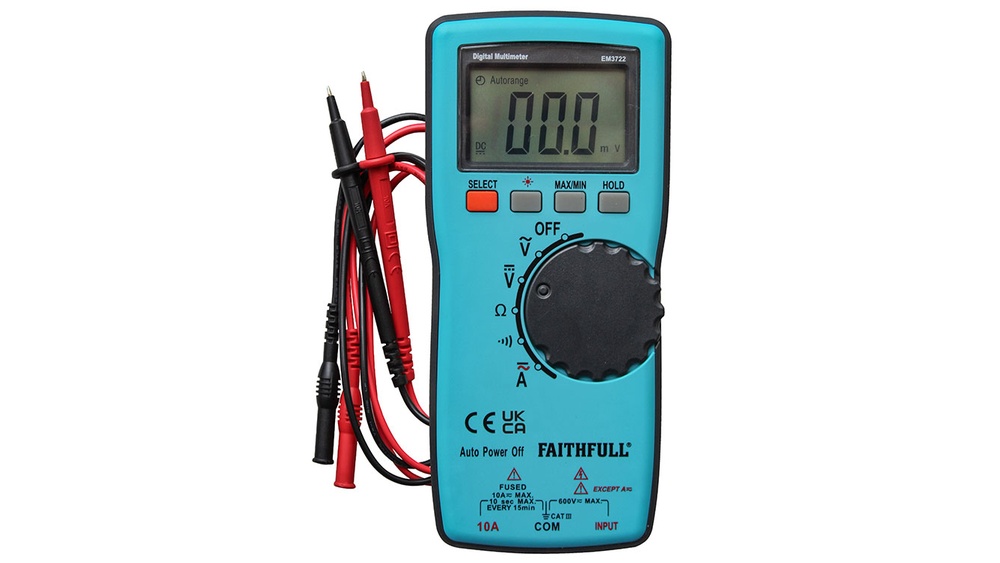
A multimeter is a cornerstone tool for anyone working with electronics, electrical systems, or even doing basic DIY repairs at home. Among the various types available, the auto ranging multimeter stands out for its ease of use, versatility, and reliability. Unlike manual ranging models that require users to select the measurement range, auto ranging multimeters automatically detect and adjust to the appropriate range, making them beginner-friendly while still powerful enough for advanced users. Whether you’re a hobbyist or a professional electrician, understanding what an auto ranging multimeter is and how it can benefit your workflow is essential for accurate and efficient measurement.
This article will provide a comprehensive, beginner-friendly guide to auto ranging multimeters, while also offering advanced suggestions for seasoned users. We’ll cover the fundamentals, compare them to manual ranging models, explore real-world applications, and provide actionable tips for buying, using, and maintaining your device.
By the end, you’ll be equipped to confidently select and use an auto ranging multimeter for a variety of tasks, ensuring safety, accuracy, and efficiency in all your electrical measurements.
Key Takeaways
- Auto ranging multimeters automatically select the correct measurement range, making them easy and safe for beginners.
- They can measure voltage, current, resistance, continuity, and often more, without manual range adjustments.
- Compared to manual ranging models, auto ranging multimeters save time and reduce the risk of measurement errors.
- Advanced features like True RMS, data logging, and wireless connectivity are available for professional use.
- Proper usage, care, and calibration extend the device’s lifespan and ensure accurate results.
- Selecting the right model depends on your experience level, budget, and the complexity of tasks you face.
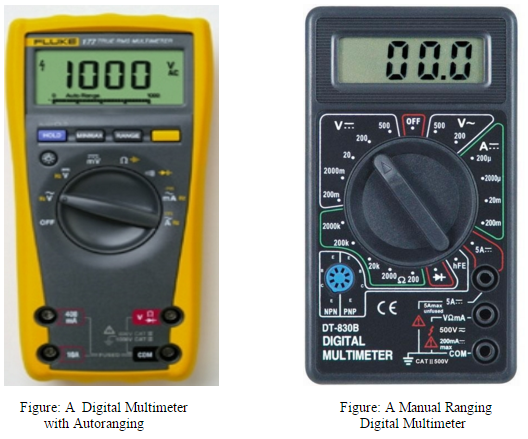
Credit: www.learningaboutelectronics.com
What Is An Auto Ranging Multimeter?
Definition And Basic Functionality
An auto ranging multimeter is a digital measuring instrument designed to automatically detect and select the most appropriate measurement range for the electrical parameter being tested. This means when you measure voltage, current, or resistance, the device figures out whether the value is in millivolts or hundreds of volts, for example, and displays the result accordingly. This feature eliminates guesswork and the need for manual range selection, which is common in traditional multimeters.
The core advantage for beginners is that you simply set the function (voltage, resistance, etc. ), connect the probes, and read the measurement, no need to know the expected value or select the range beforehand. For advanced users, this speeds up workflows and minimizes the risk of damaging the meter or the circuit by selecting an incorrect range.
Key Measurement Modes
Most auto ranging multimeters can perform the following measurements:
- Voltage (AC/DC): Measures electrical potential difference.
- Current (AC/DC): Measures the flow of electric charge.
- Resistance: Tests how much a component resists current.
- Continuity: Checks if a circuit is complete (often with an audible beep).
- Diode Testing: Verifies the function of diodes and semiconductors.
Many models also offer additional features such as frequency, temperature, capacitance, and even data logging.
Why Auto Ranging Matters
Manual ranging multimeters require the user to estimate the approximate value of the parameter being measured and select the correct range accordingly. If the range is too low, the meter may overload; if too high, the reading may lack precision. Auto ranging multimeters prevent both errors by instantly adjusting to the right range, which:
- Reduces setup time
- Improves measurement accuracy
- Minimizes risk of equipment damage
- Makes the tool more accessible for non-experts
Example: Measuring Voltage With Auto Ranging
Suppose you want to measure the voltage of a 9V battery. With an auto ranging multimeter, you simply select “DC Voltage,” connect the probes, and the device instantly displays a value around 9V, no need to worry about whether it’s in the 20V or 200V range.
How Auto Ranging Differs From Manual Ranging
Understanding the distinction between auto ranging and manual ranging is crucial for selecting the right tool. While both types can measure similar parameters, their usability and safety profiles differ significantly.
User Experience Comparison
With a manual ranging multimeter, the user must:
- Estimate the expected value (e.g., 5V, 50V, 500V).
- Set the dial to the closest higher range.
- Adjust the range if the reading is too low or if the display shows “OL” (overload).
Auto ranging multimeters streamline this process to a single step: choose the parameter (e.g., voltage), and the device handles the rest.
Speed And Safety
For professionals, speed is often of the essence. Manual range selection, especially for complex circuits with unknown values, can slow down troubleshooting and testing. More critically, an incorrect range selection can lead to:
- Inaccurate readings: Choosing a high range for a small signal reduces precision.
- Instrument damage: Selecting a low range for a high voltage input risks burning internal components.
Auto ranging eliminates these risks, making it both safer and more efficient.
Feature Comparison Table
| Feature | Auto Ranging Multimeter | Manual Ranging Multimeter |
|---|---|---|
| User Input | Set function only | Set function and range |
| Speed | Fast (automatic) | Slower (manual adjustment) |
| Ease of Use | Beginner-friendly | Requires experience |
| Risk of Error | Low | Higher (wrong range possible) |
| Cost | Generally higher | Lower |
Pro Tip:
If you’re a beginner or working in environments where speed and safety matter more than cost, auto ranging multimeters are the preferred choice.
Key Features And Advanced Functions
While all auto ranging multimeters share core measurement functions, advanced models offer a range of sophisticated features tailored to both novice and expert users.
True Rms Measurement
True RMS (Root Mean Square) meters provide accurate readings for both pure and distorted AC waveforms. This is essential in environments where the signal is not a perfect sine wave, such as with variable speed drives or non-linear loads. Standard averaging meters can under- or over-report in these situations.
- Example: Measuring the output of a modern dimmer switch with a True RMS auto ranging multimeter gives an accurate result, while a standard meter may not.
Data Logging And Storage
Some auto ranging multimeters offer data logging capabilities, allowing users to store measurements over time for later analysis. This is particularly useful for:
- Tracking voltage trends in solar installations
- Diagnosing intermittent faults in industrial machinery
Wireless Connectivity
Modern multimeters may include Bluetooth or Wi-Fi connectivity, enabling remote monitoring or integration with mobile apps for real-time data visualization and storage.
- Example: The Fluke 3000 FC series allows users to monitor measurements from a smartphone, improving safety by keeping the operator away from live circuits.
Additional Measurement Modes
Advanced auto ranging multimeters often include the ability to measure:
- Capacitance: For checking capacitors in power supplies and audio equipment.
- Frequency: Useful for testing generators and AC power supplies.
- Temperature: With thermocouple probes, for HVAC and automotive applications.
Safety Ratings And Build Quality
Look for meters with CAT (Category) safety ratings appropriate for your application (e.g., CAT II, CAT III, CAT IV). Higher ratings indicate better protection against surges and faults.
- CAT III is suitable for distribution panels.
- CAT IV is designed for utility-level measurements.
Comparison Table: Common Advanced Features
| Feature | Entry-Level Models | Advanced Models |
|---|---|---|
| True RMS | No/Optional | Yes |
| Data Logging | No | Yes |
| Wireless Connectivity | No | Yes |
| Temperature Measurement | Sometimes | Often |
| Safety Rating | CAT II | CAT III/IV |
Example: Upgrading From Basic To Advanced
When I tested a basic auto ranging multimeter for home use, I found it perfect for batteries and light fixtures. However, moving to industrial troubleshooting, features like True RMS and data logging in higher-end models proved invaluable for diagnosing complex issues.
Real-world Applications And Case Studies
Auto ranging multimeters are used across a broad spectrum of industries and applications. Below are concrete examples to illustrate their versatility.
Home And Diy Use
- Checking batteries: Easily test AA, AAA, 9V, and other household batteries.
- Troubleshooting appliances: Identify faults in toasters, lamps, or fans.
- Testing outlets: Verify AC voltage at wall sockets for safety.
Automotive Diagnostics
Auto ranging multimeters can measure:
- Battery voltage and charging system health
- Starter current draw
- Sensor testing (e.g., oxygen sensors, coolant temp sensors)
Example: An auto mechanic uses an auto ranging multimeter to quickly test alternator output without worrying about range selection, a crucial time-saver in a busy shop.
Industrial Maintenance
In complex electrical panels and machinery, auto ranging multimeters allow for:
- Rapid fault location without manual range adjustments
- Safe, accurate testing in high-voltage environments
- Data logging for preventive maintenance
Case Study: In a manufacturing plant, technicians used a high-end auto ranging multimeter with True RMS and data logging to identify intermittent voltage drops affecting production lines, reducing downtime by 15%.
Education And Training
Auto ranging multimeters are staples in electronics labs and vocational schools. Their ease of use allows students to focus on learning circuit theory rather than worrying about damaging equipment through incorrect range selection.
Advanced Electronics And R&d
Engineers and researchers use advanced models for:
- Precision measurement in sensitive circuits
- Frequency and capacitance testing for component development
- Wireless monitoring during system tests
Example: Field Service Technician
A field technician working on solar installations benefits from an auto ranging multimeter with data logging and Bluetooth connectivity. They can measure panel voltages, log data over several days, and generate reports without repeatedly returning to the site.
How To Choose The Right Auto Ranging Multimeter
Selecting the best auto ranging multimeter depends on your specific needs, experience level, and budget. Here’s a step-by-step guide:
1. Define Your Measurement Needs
- Basic Home Use: Look for reliability, simplicity, and essential functions (voltage, current, resistance).
- Automotive: Ensure it can measure DC amps and has a robust build.
- Industrial/Professional: Prioritize True RMS, high safety ratings, and advanced features like data logging.
2. Check Safety Ratings
Choose a meter with the appropriate CAT safety rating for your work environment. For home use, CAT II is sufficient; for industrial or panel work, CAT III or IV is essential.
3. Assess Build Quality And Ergonomics
- Ruggedness: Drop-resistant casings and input protection are important for field work.
- Display: Large, backlit screens are easier to read in dim environments.
- Probe quality: Sharp, insulated probes reduce the risk of accidental contact.
4. Consider Advanced Features
- True RMS: Essential for non-sinusoidal AC signals.
- Data Logging: Useful for trend analysis.
- Wireless: For remote monitoring.
- Temperature: For HVAC or automotive diagnostics.
5. Budget And Brand
Prices range from $30 for basic models to $300+ for advanced units. Opt for reputable brands like Fluke, Klein Tools, or Extech for durability and accuracy.
Comparison Table: Example Auto Ranging Multimeter Models
| Model | Best For | Key Features | Approx. Price |
|---|---|---|---|
| Fluke 117 | Professional/Electrician | True RMS, Non-contact voltage, CAT III | $180 |
| AstroAI DM6000AR | DIY/Home | Auto ranging, Temperature, Large display | $40 |
| Klein Tools MM6000 | Industrial/Advanced | Data logging, CAT IV, Capacitance, Temp | $130 |
Pro Tip:
Always read reviews and check for warranty and customer support before purchasing, especially for professional use.
How To Use An Auto Ranging Multimeter: Step-by-step Guide
Mastering the use of an auto ranging multimeter involves understanding both basic operations and advanced techniques. Here’s a practical guide suitable for beginners, with expert tips for experienced users.
1. Familiarize Yourself With Controls
Typical controls include:
- Function dial: Selects what you want to measure (voltage, current, resistance, etc.)
- Input jacks: Where you plug in the probes (COM for common/ground, VΩ for voltage/resistance, A/mA for current)
- Buttons: May include “Hold” (to freeze the display), “Range” (for manual override), and others.
2. Safety Checks Before Measurement
- Inspect the multimeter and probes for damage.
- Set the dial to the correct measurement function.
- Confirm the meter’s safety rating matches your application.
3. Measuring Voltage
- Insert the black probe into COM, red into VΩ.
- Set the dial to “V” (choose AC or DC as needed).
- Touch probes to the circuit points.
- Read the displayed value, the meter will automatically select the range.
4. Measuring Resistance Or Continuity
- Ensure the power to the circuit is OFF.
- Set the dial to Ω or continuity.
- Connect probes across the component.
- Listen for a beep (continuity) or read the resistance value.
5. Measuring Current
- Move the red probe to the correct current jack (mA or A, depending on expected current).
- Set dial to “A” (AC or DC as required).
- Break the circuit and connect probes in series with the circuit.
- Read the current value.
6. Advanced Techniques
- Data Logging: Activate if your model supports it; review stored data after testing.
- Wireless Monitoring: Use the companion app for remote readings.
- True RMS: Use for AC waveforms that are not pure sine waves.
Pro Tip:
Always start with the highest safety-rated meter and probes you can afford, especially when measuring unknown or potentially hazardous circuits.
Maintenance, Calibration, And Best Practices
Ensuring your auto ranging multimeter stays accurate and reliable requires regular care.
Maintenance Tips
- Store the meter in a dry, dust-free case.
- Replace batteries promptly to prevent leakage.
- Clean probes and meter body with a soft cloth; avoid harsh chemicals.
Calibration
Regular calibration is key to maintaining accuracy, especially for professional work. Most manufacturers recommend:
- Annual calibration for everyday users
- Semi-annual for heavy industrial use
This can be done through authorized service centers or calibration labs.
Probe And Fuse Replacement
- Inspect probes regularly for wear and replace if insulation is damaged.
- Replace internal fuses only with the exact type specified by the manufacturer.
Safety Best Practices
- Never measure current in voltage mode, this can damage the meter.
- Always connect the COM (ground) probe first and disconnect it last.
- Do not use the meter if the case is cracked or display is malfunctioning.
Pro Tip:
Keep a spare set of probes and fuses on hand, especially for field work.
Common Mistakes And How To Avoid Them
Even experienced users can make errors. Avoid these pitfalls for safe, accurate measurements.
1. Measuring Current Without Breaking The Circuit
For current measurement, you must connect the meter in series with the circuit. Measuring across a component (like voltage) will not provide a valid reading and may blow an internal fuse.
2. Using Incorrect Probe Ports
Plugging probes into the wrong jacks (e. g. , measuring voltage with probes in the “A” port) can cause inaccurate readings or damage the meter.
3. Ignoring Safety Ratings
Using a CAT II meter in a high-energy environment (like a distribution panel) is dangerous. Always match the safety rating to your environment.
4. Skipping Calibration
Uncalibrated meters drift over time, giving false readings that can lead to dangerous decisions.
5. Neglecting Probe Condition
Worn or damaged probes can introduce resistance, cause false readings, or even short circuits.
Pro Tip:
Label your probes and meter with the date of last calibration and inspection to maintain a safe, reliable workflow.
Frequently Asked Questions
What Is The Main Advantage Of An Auto Ranging Multimeter For Beginners?
The primary advantage is ease of use. Beginners do not need to know the expected value or correct range for voltage, current, or resistance measurements, the auto ranging multimeter automatically selects the optimal range, reducing the likelihood of errors or instrument damage.
Can Auto Ranging Multimeters Measure All Types Of Electrical Parameters?
Most models measure basic parameters like voltage, current, resistance, and continuity. Advanced models can also measure frequency, capacitance, temperature, and more. Always check the specifications before purchasing to ensure your needs are met.
Is Calibration Required For Auto Ranging Multimeters, And How Often Should It Be Performed?
Yes, regular calibration is necessary for accuracy, especially in professional or industrial settings. Manufacturers generally recommend calibration once a year; high-use environments may require more frequent checks. Calibration should be performed by an authorized service center or accredited lab.
Are Auto Ranging Multimeters Safe For High-voltage Work?
They are safe if they have the appropriate CAT safety rating (such as CAT III or CAT IV). Always verify the meter’s rating before use in high-voltage or industrial environments. Proper probe insulation and correct usage are also essential for safety.
What Should I Do If My Auto Ranging Multimeter Gives Inconsistent Or No Readings?
- Check for dead batteries
- Inspect probes for damage
- Ensure correct probe placement in input jacks
- Verify the circuit is powered (for voltage/current measurements)
- If problems persist, consult the user manual or seek professional servicing
For more details, see the Wikipedia: Multimeter entry or refer to the manufacturer’s official documentation.
Whether you’re just starting or seeking to upgrade your measurement toolkit, an auto ranging multimeter offers unmatched convenience, safety, and versatility. By understanding their features, selecting the right model for your needs, and following best practices for use and maintenance, you’ll ensure accurate measurements and a long service life for your instrument. For further reading and advanced techniques, consult resources like Fluke’s official multimeter guide.