
Measuring electrical properties is fundamental for everyone from electronics hobbyists to professional engineers. Two essential tools in this process are the multimeter and the ammeter. While their names are often used interchangeably by beginners, their purposes, functionalities, and use cases are distinctly different. Understanding these differences is crucial for accurate measurements, safety, and efficient troubleshooting. Whether you’re just starting to explore electronics or you’re optimizing complex industrial systems, knowing when and how to use each device can save time, prevent errors, and lead to better results.
This article provides a comprehensive, beginner-friendly yet advanced guide on the differences between multimeters and ammeters. We’ll cover their definitions, working principles, types, applications, real-world examples, and more. By the end, you’ll have actionable knowledge to confidently select and use the right instrument for any electrical measurement task.
Key Takeaways
- Multimeters are versatile instruments that can measure voltage, current, and resistance, while ammeters are specialized devices for measuring current only.
- Multimeters offer greater flexibility for both beginners and professionals, whereas ammeters are often used for dedicated current measurement in industrial and laboratory settings.
- Safety, accuracy, and ease of use vary between the two tools, making it important to understand their operational differences.
- Choosing the right tool depends on your measurement needs, required precision, and application environment.
- Real-world examples demonstrate how multimeters and ammeters are used in electronics repair, automotive diagnostics, and power system monitoring.
- Advanced users can leverage specialized ammeters and high-end multimeters for complex measurements and data logging.
Credit: electrozlab.com
Understanding The Basics: What Are Multimeters And Ammeters?
What Is A Multimeter?
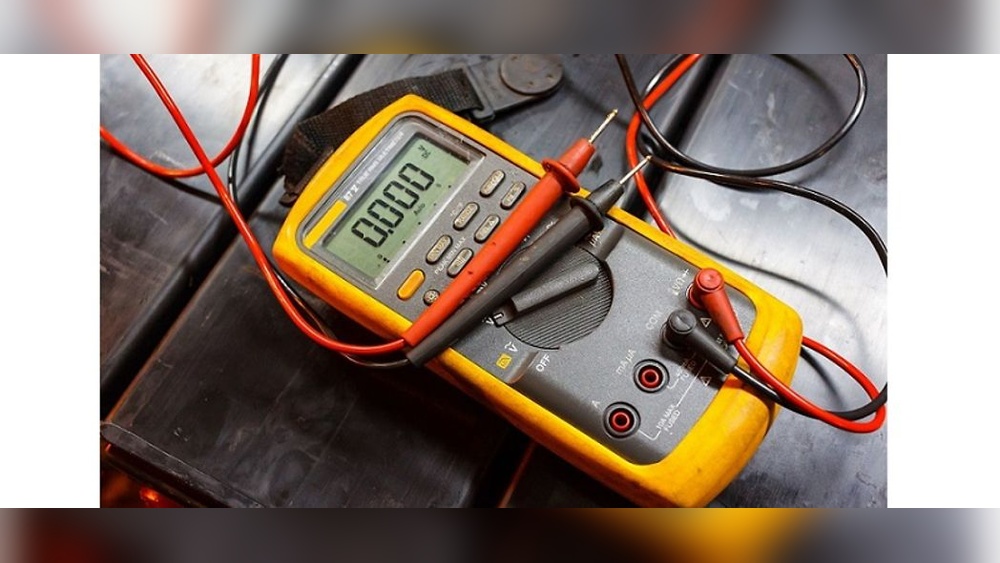
A multimeter is a handheld device that combines several measurement functions into one instrument. Most commonly, it measures voltage (V), current (A), and resistance (Ω). Modern multimeters are typically digital (DMMs), providing easy-to-read displays and additional features such as continuity testing, diode checking, and sometimes temperature measurement.
Key functions of a multimeter:
- Voltage measurement: AC and DC
- Current measurement: AC and DC
- Resistance measurement
- Continuity test
- Diode test
- Capacitance (in advanced models)
- Frequency (in advanced models)
Multimeters are indispensable in electronics, electrical maintenance, automotive repair, and household troubleshooting. Their versatility makes them the go-to tool for both beginners and experts.
What Is An Ammeter?
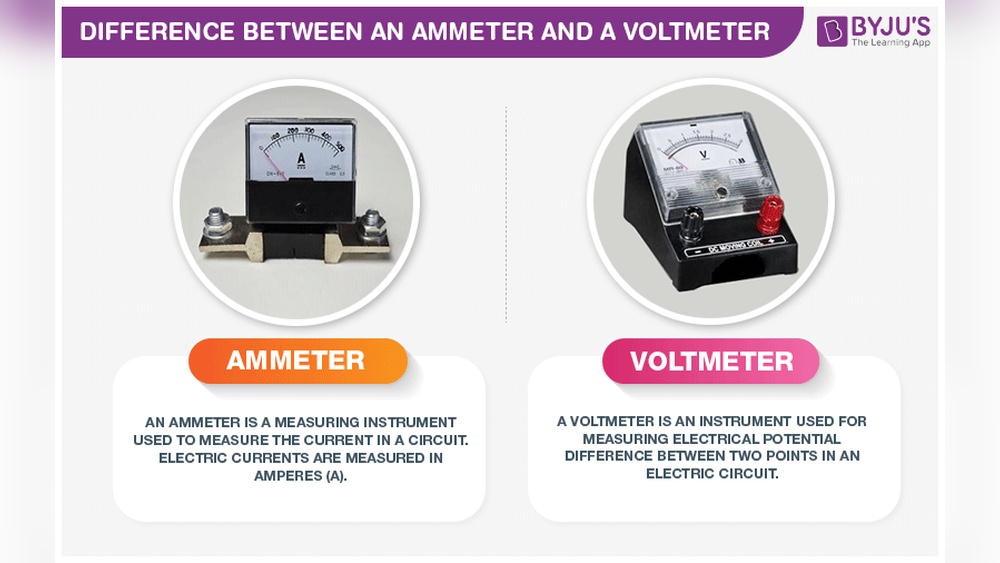
An ammeter is a specialized instrument designed solely to measure electric current flowing through a circuit. Unlike multimeters, it does not measure voltage or resistance. Ammeters can be digital or analog, but their design focuses on current measurement accuracy and range.
Key functions of an ammeter:
- Current measurement: AC and/or DC, depending on the model
- High precision: Especially important in industrial and laboratory settings
- Robust design: Often built for continuous monitoring
Ammeters are commonly used in applications where monitoring current is critical, such as power plants, laboratories, and manufacturing environments.
Core Differences At A Glance
To clarify their fundamental distinctions, here’s a comparison table:
| Feature | Multimeter | Ammeter |
|---|---|---|
| Functionality | Measures voltage, current, resistance (and more) | Measures current only |
| Versatility | Highly versatile | Specialized |
| Common Use | Electronics troubleshooting, repair, testing | Current monitoring, industrial systems |
| Accuracy (Current) | Good, but not as precise as dedicated ammeters | High precision |
| Cost | Varies; affordable to premium | Generally higher for industrial models |
| Safety Features | Integrated fuses, overload protection | Robust insulation, high-current capability |

Credit: www.pcbasic.com
Working Principles: How Do Multimeters And Ammeters Operate?
Multimeter Operation
Multimeters use internal circuitry to switch between different measurement modes. For current measurement, they must be connected in series with the circuit so that the measured current flows through the meter. For voltage, they’re connected in parallel. Resistance is measured by applying a small voltage across the component.
How a multimeter measures current:
- User selects the current measurement mode.
- Meter is connected in series with the circuit.
- Internal shunt resistor produces a voltage proportional to the current.
- The meter reads and displays the current value.
Modern multimeters often include auto-ranging features, which automatically select the best measurement range. Advanced models may offer True RMS capability for accurate AC measurements.
Ammeter Operation
Ammeters are always connected in series with the circuit to measure the total current flow. Their internal resistance is extremely low to avoid affecting the circuit operation. Analog ammeters use a moving-coil mechanism, while digital ammeters rely on precise electronic circuits.
How an ammeter measures current:
- Device is inserted in series with the load.
- Current flows through a low-resistance shunt.
- Voltage drop across the shunt is converted into a readable current value.
Industrial ammeters may include features such as data logging, alarm thresholds, and remote monitoring.
Safety Considerations
Warning: Incorrect connection of either device can lead to equipment damage or personal injury. Always check the measurement mode and ensure proper wiring.
Best Practices:
- Never measure current in parallel; always in series.
- Check meter ratings before measuring high currents.
- Use insulated probes and wear appropriate protective gear.
- Consult the user manual for your specific model.

Credit: www.viasion.com
Types And Variants: Exploring Multimeters And Ammeters
Multimeter Types
1. Analog Multimeter: Uses a needle and scale. Less common today but useful for observing trends and small changes.
2. Digital Multimeter (DMM): The standard choice, providing numerical displays and higher accuracy.
3. Advanced Multimeters: Include features like temperature measurement, frequency, capacitance, and data logging.
4. Clamp Meter: A type of multimeter that measures current by clamping around a conductor, eliminating the need to break the circuit.
Ammeter Types
1. Analog Ammeter: Uses a moving-coil mechanism. Still used for large, steady currents.
2. Digital Ammeter: Provides precise current readings and often supports integration with monitoring systems.
3. Panel Ammeter: Mounted on control panels for continuous monitoring in industrial applications.
4. Clamp Ammeter: Measures current without direct electrical contact; ideal for high-current measurements and safety.
Choosing The Right Variant
Selecting the right tool depends on your needs:
- For general troubleshooting: Digital Multimeter
- For high-precision current monitoring: Panel Ammeter
- For non-intrusive current measurement: Clamp Meter
- For laboratory experiments: Analog or Digital Ammeter
Pro Tip: Beginners should start with a basic digital multimeter, while advanced users can invest in specialized ammeters for specific tasks.
Applications: Where Are Multimeters And Ammeters Used?
Multimeter Applications
1. Electronics Repair: Diagnosing faulty components in smartphones, computers, and appliances.
2. Automotive Diagnostics: Checking battery voltage, alternator output, and current draw.
3. Household Maintenance: Testing outlets, switches, and wiring for continuity or faults.
4. Industrial Troubleshooting: Verifying voltage and current in machinery and control systems.
5. Educational Labs: Teaching students about electrical principles.
Ammeter Applications
1. Power System Monitoring: Measuring current in generators, transformers, and distribution panels.
2. Manufacturing Processes: Ensuring machines operate within safe current ranges.
3. Laboratory Research: Monitoring current for experiments involving precise electrical control.
4. Renewable Energy Systems: Tracking current flow in solar panels and wind turbines.
5. Battery Testing: Ensuring proper charging/discharging cycles.
Case Study 1: Electronics Workshop
In a university electronics workshop, students frequently use multimeters to check circuit voltages, resistance, and continuity. When measuring current, they switch to ammeters for greater accuracy, especially when testing power supplies and load circuits. This dual approach ensures safety and precise measurements.
Case Study 2: Industrial Control Panel
A manufacturing plant uses panel ammeters for 24/7 monitoring of current in motors and transformers. Maintenance staff rely on multimeters for periodic checks and troubleshooting but trust the dedicated ammeters for real-time data and alarms.
Case Study 3: Automotive Repair Shop
Technicians use clamp meters (a variant of multimeter) to measure starter motor current without disconnecting cables. For deep diagnostics, high-precision ammeters confirm alternator output and battery charging current, ensuring reliable vehicle performance.
Accuracy, Precision, And Limitations
Multimeter Accuracy
Multimeters provide good accuracy for general measurements, typically within ±1% to ±2% for voltage and current. Advanced models offer higher precision but may still fall short of specialized ammeters, especially in high-current or sensitive applications.
Limitations:
- Limited maximum current range (usually up to 10A)
- Potential for internal fuse damage if overloaded
- Accuracy can decrease at low current ranges
Ammeter Accuracy
Ammeters are designed for high-precision current measurement. Industrial and laboratory models can achieve accuracy within ±0. 1% or better, depending on calibration and quality.
Limitations:
- Cannot measure voltage or resistance
- Requires careful calibration
- May be bulkier and more expensive
Comparison Table: Accuracy And Limitations
| Device | Typical Accuracy | Max Current Range | Limitations |
|---|---|---|---|
| Multimeter | ±1% to ±2% | Up to 10A (standard) | Limited to moderate current; less accurate for high-precision tasks |
| Ammeter | ±0.1% or better | Up to 1000A (industrial) | Measures current only; may require calibration |
Setup And Usage: Beginner Steps And Advanced Techniques
Beginner-friendly Setup
Using a Multimeter:
- Turn the dial to the correct measurement mode (current, voltage, resistance).
- Insert the probes into the appropriate ports.
- Connect the probes to the circuit (series for current, parallel for voltage).
- Read the value on the display.
- Start with the highest range to avoid overloading.
Using an Ammeter:
- Ensure the device is rated for the expected current.
- Connect the ammeter in series with the circuit.
- Observe the reading.
- For analog models, adjust zero before measurement.
Safety Tips:
- Never exceed the meter’s rated current.
- Always disconnect power before connecting the meter.
- Use insulated gloves for high-current measurements.
Advanced Suggestions For Experts
1. Data Logging: High-end multimeters and ammeters can record measurements over time, useful for trend analysis and troubleshooting intermittent issues.
2. Remote Monitoring: Industrial ammeters can connect to SCADA systems for real-time monitoring and alarms.
3. Calibration: Regular calibration ensures measurement accuracy, especially in laboratory and industrial environments.
4. Integrating Clamp Meters: For high-current circuits, clamp meters allow non-intrusive measurement, minimizing downtime and safety risks.
5. Using True RMS: For AC measurements, True RMS capability ensures accurate readings even with non-sinusoidal waveforms.
Example: An engineer monitoring a solar power system uses a data-logging ammeter to track current variations throughout the day, optimizing panel positioning for maximum efficiency.
Advanced Comparison: Multimeter Vs. Ammeter In Professional Settings
Industrial Environments
In factories and power plants, ammeters are often installed as permanent fixtures in control panels. They provide continuous current monitoring and trigger alarms if thresholds are exceeded. Multimeters are used for periodic maintenance, troubleshooting, and verification tasks.
Advantages of Ammeters:
- Real-time, accurate current monitoring
- Integration with safety systems
- High durability for demanding environments
Advantages of Multimeters:
- Flexibility for multiple measurements
- Portable for quick diagnostics
- Ideal for maintenance teams
Laboratory And Research
Researchers require precise current measurements, often down to microamps or milliamps. Digital ammeters offer the necessary precision, while multimeters serve as backup tools for voltage and resistance checks.
Example: In my experience, using a calibrated digital ammeter in a physics lab provided reliable current readings for sensitive experiments, while the multimeter was essential for verifying power supply voltages and circuit integrity.
Automotive And Field Work
Mobile technicians prefer clamp meters for quick, safe current measurement. For battery diagnostics, multimeters are the tool of choice, but dedicated ammeters ensure precise alternator and starter testing.
Comparison Table: Professional Use Cases
| Scenario | Preferred Device | Reason |
|---|---|---|
| Industrial panel monitoring | Ammeter | Continuous, accurate current tracking |
| Maintenance troubleshooting | Multimeter | Versatility for multiple measurements |
| Laboratory research | Ammeter | Precision for sensitive experiments |
| Automotive diagnostics | Multimeter/Clamp Meter | Portability and non-intrusive measurement |
Common Mistakes And Troubleshooting
Mistakes To Avoid
1. Measuring Current in Parallel: Always connect in series; parallel connection can short the circuit and damage the meter.
2. Exceeding Current Limits: Know your meter’s rated capacity. Overloading can blow internal fuses or cause injury.
3. Ignoring Calibration: Uncalibrated meters lead to inaccurate readings, especially in critical applications.
4. Using Incorrect Ports: Multimeters often have separate ports for current measurement. Using the wrong port can damage the device.
5. Neglecting Safety Gear: High-current measurements require proper insulation and protective equipment.
Troubleshooting Steps
If your meter isn’t reading correctly:
- Check battery and fuse status.
- Verify correct mode and range selection.
- Inspect probes for wear or damage.
- Confirm proper connection (series for current).
- Consult the user manual for error codes.
Pro Tip: Regular maintenance and inspection prevent most common issues.
How To Choose: Multimeter Or Ammeter For Your Needs
Beginner Selection Guide
For hobbyists and students:
- Start with a digital multimeter. It’s affordable, easy to use, and covers basic measurement needs.
For home use:
- Choose a multimeter with auto-ranging and safety features like overload protection.
For automotive diagnostics:
- Clamp meters are ideal, allowing quick current checks without disconnecting wires.
Advanced Selection Guide
For industrial applications:
- Invest in panel ammeters for continuous monitoring and alarm integration.
- Use high-end multimeters for periodic checks and troubleshooting.
For laboratory research:
- Select a digital ammeter with high accuracy and calibration certificates.
For large-scale systems:
- Combine ammeters with remote monitoring capabilities for real-time data.
External Resource
For further reading on electrical measurement tools, visit Wikipedia: Multimeter.
Real-world Examples And Case Studies
Example 1: Home Electrical Troubleshooting
A homeowner suspected faulty wiring in a wall outlet. Using a digital multimeter, they tested voltage and continuity, identifying a broken wire. For safety, they avoided current measurement due to the circuit’s high amperage.
Example 2: Solar Panel Monitoring
A technician installed a panel ammeter to monitor current flow from solar panels. This allowed real-time tracking of power generation and quick detection of faults. The technician used a multimeter for periodic voltage checks and system maintenance.
Example 3: Automotive Battery Testing
In an auto repair shop, mechanics used clamp meters to measure starter and alternator currents without removing cables. For deep diagnostics, a digital ammeter provided accurate battery charging current data, ensuring reliable performance.
Example 4: Laboratory Experiment
A physics student used a digital ammeter to measure microamp currents in a semiconductor experiment. The multimeter verified voltage supply and circuit resistance, providing comprehensive data for analysis.
Example 5: Industrial Motor Monitoring
A manufacturing engineer installed panel ammeters on motor control panels for 24/7 current monitoring. Maintenance teams used multimeters to check voltage and troubleshoot issues during routine inspections.
Best Practices And Advanced Tips
For Beginners
- Start with a digital multimeter.
- Read the user manual thoroughly.
- Practice measuring low voltage and current before tackling advanced tasks.
- Always connect in series for current measurement.
- Use the highest range first to avoid overload.
For Advanced Users
- Use True RMS meters for accurate AC readings.
- Calibrate your ammeters regularly.
- Integrate ammeters into monitoring systems for automated alerts.
- Leverage data logging for trend analysis.
- Prefer clamp meters for high-current or live circuit measurement.
Example: When I tested a power supply, using a True RMS multimeter gave me precise AC current readings, while a clamp meter allowed safe measurement without interrupting the circuit.
External Resource
For a detailed guide on ammeter types and usage, check Electronics Tutorials.
Frequently Asked Questions
What Happens If I Connect An Ammeter In Parallel?
Connecting an ammeter in parallel creates a short circuit because of its very low internal resistance. This can cause severe damage to the ammeter and the circuit, and may pose safety risks. Always connect ammeters in series with the load.
Can I Use A Multimeter Instead Of An Ammeter For High-current Measurement?
While a multimeter can measure current, most are limited to 10A or less. For high-current measurement, especially above 10A, a dedicated ammeter or clamp meter is safer and more accurate. Always check the maximum current rating before use.
How Do Calibration And Accuracy Affect Measurement Reliability?
Calibration ensures that your meter provides accurate readings. Over time, electronic components can drift, leading to errors. Regular calibration, especially for ammeters used in critical applications, helps maintain reliability and compliance with standards.
Are Clamp Meters A Good Substitute For Ammeters?
Clamp meters are excellent for non-intrusive current measurements, particularly in high-current or live circuits. They are widely used in industrial and automotive applications. However, for precision laboratory measurements, traditional ammeters are preferred.
What Safety Precautions Should I Take When Measuring Current?
When measuring current:
- Always connect the meter in series.
- Start with the highest range setting.
- Use insulated probes and safety gear.
- Never exceed the meter’s rated capacity.
- Disconnect power before connecting or removing the meter.
- For high-current circuits, consider using clamp meters.
Electrical measurements can be hazardous, consult a licensed professional for complex or high-voltage systems.
Understanding the difference between multimeters and ammeters is foundational for anyone working with electrical systems. By selecting the right tool, following best practices, and prioritizing safety, you can achieve accurate measurements and efficient troubleshooting. Whether you’re a beginner or an advanced user, the knowledge and skills outlined in this guide will help you make informed decisions and avoid common pitfalls.